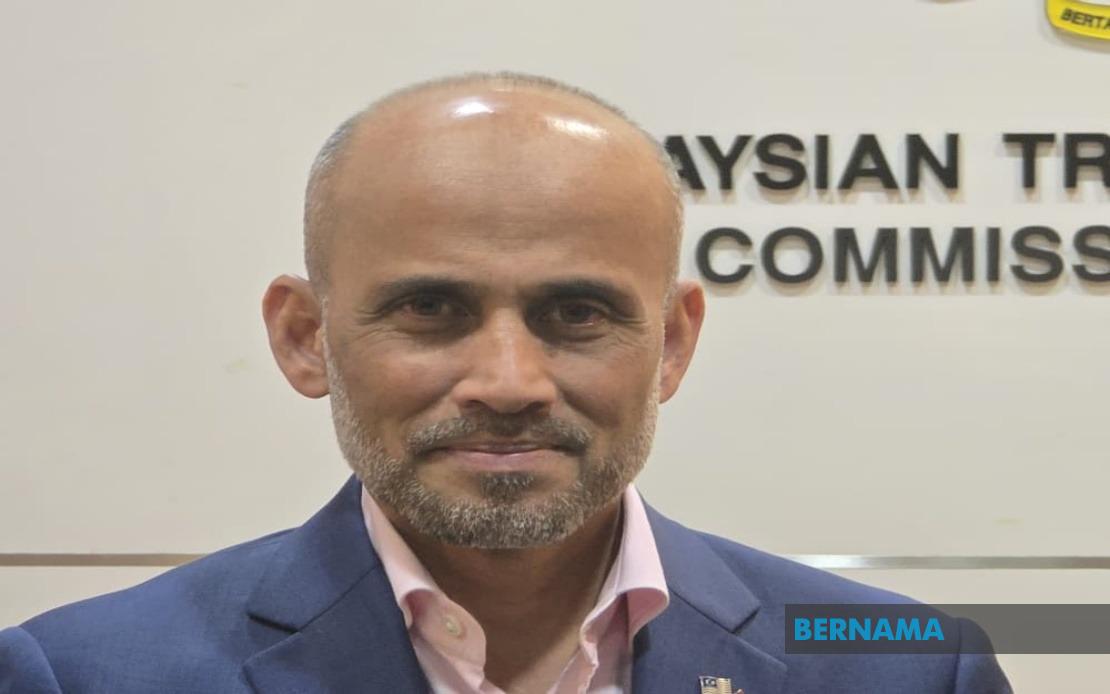
The relationship between Malaysia and Singapore has matured considerably as both countries have worked in concert to address mounting challenges, according to Datuk Dr Azfar Mohamad Mustafar, who is stepping down as Malaysia's High Commissioner to the city-state after five years in the position. Speaking as he prepared to assume his new posting as High Commissioner to the United Kingdom from July 1, Azfar emphasised that their shared commitment to resolving difficulties has been instrumental in solidifying bilateral bonds during a period marked by unprecedented disruptions and international tensions.
Azfar's tenure, which commenced in June 2021, was dominated by the twin crises of the COVID-19 pandemic and the emergence of acute geopolitical instability globally. During his time in Singapore, he worked to maintain the momentum of the Malaysia-Singapore partnership even as both nations grappled with the immediate health crisis and its cascading economic consequences. The high commissioner acknowledged that his five-year posting, while brief in diplomatic terms, allowed him to contribute meaningfully to strengthening the multifaceted dimensions of cooperation between the two neighbours, from trade and investment to people-to-people exchanges.
The pandemic presented acute challenges that tested bilateral mechanisms and consular systems in unforeseen ways. When border closures were implemented to contain viral transmission, the ripple effects were felt acutely by the substantial population of Malaysian workers and business professionals who depend on daily cross-border movement for their livelihoods. Azfar recalled that managing consular services during this period required rapid adaptation and close coordination between Malaysian and Singaporean authorities to minimise disruption to legitimate travel and commerce. The sheer volume of Malaysians requiring support during lockdown periods meant that embassy resources were stretched, yet such challenges underscored the interdependence binding the two economies.
Beyond pandemic management, Azfar highlighted the robust rebound in commercial relations following the initial contraction caused by global shutdowns. Trade volumes and investment flows between Malaysia and Singapore have not merely recovered to pre-pandemic levels but have demonstrated resilience and growth potential. Singapore remains positioned as one of Malaysia's most significant trading partners, a distinction reflecting decades of economic integration and complementary market strengths. The city-state's role as a financial hub and investor of capital has proven particularly valuable for Malaysian enterprises seeking to scale regionally and access international markets.
The launch of the Johor-Singapore Special Economic Zone represents a strategic opportunity to deepen economic ties and channel Singaporean investment toward high-growth sectors in the Malaysian state. Azfar expressed optimism that this initiative and similar emerging projects would unlock new pathways for bilateral commerce and technological collaboration. The special economic zone concept aligns with Singapore's historical pattern of leveraging geographic proximity and institutional efficiency to drive regional economic integration. For Malaysia, particularly Johor, the zone offers potential for job creation, skills transfer, and infrastructure development that extends beyond traditional bilateral trade frameworks.
Looking toward Singapore's assumption of the ASEAN chair in the coming year, Azfar reaffirmed Malaysia's commitment to supporting the republic's stewardship of regional affairs. This support carries particular significance given the complex geopolitical environment in Southeast Asia, characterised by great power competition, supply chain vulnerabilities, and concerns about maritime security in critical waterways. Singapore's agenda for deepening economic integration among the ten-member bloc aligns with Malaysia's own aspirations for a more cohesive and prosperous region capable of managing external pressures through collective action.
The ASEAN Power Grid initiative exemplifies the type of transformative regional project that both countries are committed to realising. This undertaking, designed to enhance energy security and facilitate the transition toward renewable sources across Southeast Asia, requires sustained diplomatic effort and technical cooperation. Malaysia and Singapore's collaboration on such infrastructure represents a shift from bilateral relationship management toward collaborative problem-solving at a supra-national scale. The grid initiative carries implications for economic competitiveness, environmental sustainability, and strategic resilience across the region, making it a priority for both governments.
Azfar's career trajectory reflects the long view that senior Malaysian diplomats take regarding regional relationships. His appointment as an Administrative and Diplomatic Officer in 1996 predates some of the most significant shifts in Southeast Asian geopolitics, including the Asian financial crisis, the rise of China, and the evolution of ASEAN's institutional role. His prior posting as Ambassador to France from 2018 to 2021 provided perspective on how Malaysia navigates relationships with major European powers while prioritising regional concerns. This global experience informed his approach to Malaysia-Singapore ties, framing bilateral relations within the broader context of Malaysia's strategic positioning.
The transition to his United Kingdom posting marks another chapter in a distinguished career spanning more than two decades in the Foreign Ministry. His appointment by His Majesty Sultan Ibrahim, King of Malaysia, on May 18 underscores the significance Malaysia attaches to its diplomatic presence in London, a major financial centre and political capital with which Malaysia maintains longstanding institutional connections. The shift from regional to global duties represents a natural progression for a diplomat who has worked to strengthen Malaysia's position within both Southeast Asian and international institutions.
Azfar's reflections on his Singapore posting carry weight precisely because they emanate from sustained engagement rather than short-term observation. His assessment that the Malaysia-Singapore relationship has grown stronger despite international headwinds suggests that both nations possess mechanisms and political will to navigate disagreements and coordinate on matters of mutual interest. The ability to maintain forward momentum during a period as disruptive as the pandemic and its aftermath testifies to the resilience built into bilateral structures and the pragmatism characterising decision-making in both capitals.
The broader implications of strengthened Malaysia-Singapore relations extend beyond bilateral arrangements to influence the stability and prosperity of Southeast Asia as a whole. These two neighbours, separated by the Strait of Johor but bound by history, commerce, and shared security interests, set important precedents for regional cooperation. Their collaborative approach to challenges demonstrates that economic interdependence and institutional mechanisms can mitigate historical grievances and facilitate joint problem-solving. As both nations look toward an increasingly complex global landscape marked by technological disruption, climate pressures, and strategic competition, the durability of their bilateral partnership becomes more valuable. Azfar's optimism about their shared future, articulated as he prepares to serve Malaysia in a different hemisphere, underscores confidence that the foundations laid and strengthened during his tenure will sustain Malaysian-Singaporean cooperation through future uncertainties.

