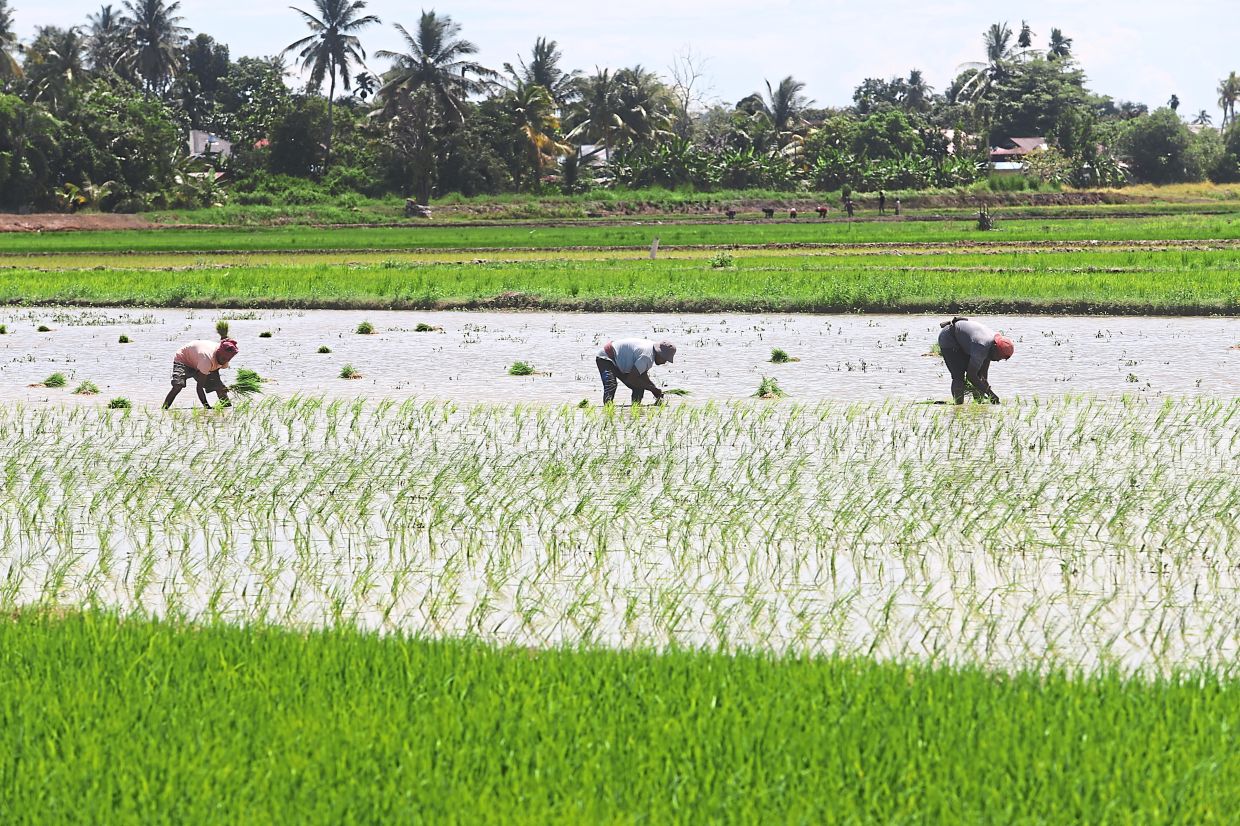
Malaysia's food prices have defied expectations and remained remarkably stable even as geopolitical tensions in the Middle East threatened to send global commodity costs soaring. When conflict disrupted shipping through the Strait of Hormuz earlier this year, the ripple effects were felt worldwide: oil supplies critical for fertiliser production and plastic materials essential for food packaging became scarcer and more expensive. Economists and consumers alike braced for the inevitable shortages and price spikes that typically follow such supply chain upheaval. Yet Malaysia has largely insulated its citizens from these external shocks through a combination of timely government interventions, strategic financial support to farmers, and careful management of domestic food reserves.
The government's response has been swift and targeted, focusing immediate relief where it matters most—on the agricultural sector that forms the backbone of Malaysia's food security. In April, the Ministry of Finance significantly ramped up the Budi Agri-Komoditi diesel subsidy programme for farming machinery, raising it from RM300 to RM400 per month, representing a substantial 33 percent increase in support. This direct financial injection helps farmers absorb the rising cost of diesel and transportation, expenses that would otherwise be passed directly to consumers at the market. Complementing this measure, the government nearly doubled the ploughing incentive known as IPKP, increasing it from RM160 to RM300 per hectare for the 2026 planting season. Peninsular Malaysian farmers also received an advance payment of RM200 per hectare under this scheme, providing crucial working capital before the planting cycle begins and allowing them to prepare their land without waiting for government payments.
Prof Datuk Dr Nasir Shamsudin, an agricultural economist at Putra Business School and professor emeritus at Universiti Putra Malaysia's Faculty of Agriculture, underscores the effectiveness of these interventions in addressing the immediate production challenges facing farmers. The RM400 monthly assistance directly offsets the rising costs farmers face when operating diesel-powered machinery and transporting goods to market, while the expanded IPKP incentive improves their cash flow precisely when they need it most—before investing in seeds, fertilisers, and labour for the upcoming planting season. By cushioning farmers against volatile input costs, these programmes have enabled them to maintain agricultural output and protect their own livelihoods, thereby preventing the cost pressures from cascading through the food supply chain to consumers. The measurable outcome speaks for itself: Malaysia's food inflation remained remarkably low at 1.4 percent year-on-year in May 2026, compared to 1.2 percent the previous month, suggesting that production cost savings generated by these subsidies are flowing through to retail prices.
Beyond these emergency measures, the government has signalled its commitment to sustained agricultural support through substantial budgetary allocations. Budget 2026 has dedicated RM2.62 billion specifically for various subsidies and assistance programmes covering paddy prices, crop cultivation costs, fertiliser provision, seeds, and production incentives across the agricultural sector. The fishing community, another crucial food producer, receives RM160 million to provide living allowances of up to RM300 monthly and catch incentives that stabilise incomes and encourage continued production. Local fruit growers have not been overlooked, with RM55 million earmarked to support cultivation of high-demand crops including pineapples, soursop, water apple and pomelo through direct incentives and infrastructure investments. This comprehensive budgetary framework reveals that Malaysia's approach to food security is not merely reactive crisis management but rather reflects a deliberate policy choice to invest in agricultural stability as an essential public good.
While these subsidy programmes were initiated before the February onset of US-Iran hostilities, they have proven invaluable in protecting Malaysia's food system against the external shocks that have now materialised. The timing of these measures, though fortuitous, demonstrates the importance of maintaining robust agricultural support during periods of relative stability, creating buffers that absorb future disruptions. However, Prof Nasir cautions that the long-term effectiveness of these interventions will ultimately depend on how efficiently the savings generated flow throughout the entire food supply chain, from farm gate to retail counter. More fundamentally, he argues that sustainable food price stability cannot rest indefinitely on subsidies alone. Instead, the nation must pursue deeper structural transformations in agricultural production and food systems, particularly through mechanisation, precision agriculture technologies, climate-smart farming methods, high-yield crop varieties, efficient irrigation systems, modern post-harvest facilities, and integrated supply chain logistics. These investments promise to permanently reduce the cost of producing food rather than merely masking higher costs through temporary financial support.
The government has provided assurance that domestic stockpiles of essential food items remain robust despite ongoing global supply chain disruptions. Supplies of chicken, eggs, fish, milk and fresh fruits are sufficient to meet demand for at least one month, providing a buffer against sudden international shortages. Rice reserves, including the strategic national buffer stock, are sufficient for five to six months of consumption, a particularly important metric given rice's foundational role in Malaysian diets. The fertiliser situation, crucial for the upcoming planting season, is similarly secure with approximately nine months of supply on hand. These substantial reserves demonstrate that Malaysia has not merely reacted to recent crises but has built systematic redundancy into critical food supply chains, allowing the nation to absorb temporary disruptions without forcing sudden adjustments to consumer access or prices.
Looking beyond immediate inventory management, Malaysia is pursuing a strategic shift toward agricultural inputs that are less vulnerable to global price volatility. The Agriculture and Food Security Ministry is actively promoting organic fertilisers, biofertilisers, and products based on Effective Microorganisms as alternatives to chemical fertilisers whose prices fluctuate sharply in response to global market conditions. A RM5.5 million initiative under the 13th Malaysia Plan aims to strengthen the circular economy by converting agri-food waste into usable compost and organic fertilisers, simultaneously addressing waste management challenges and reducing external input dependence. This approach recognises that true food security ultimately requires reducing the vulnerability created by dependence on imported agricultural inputs subject to international price shocks.
Yet despite these considerable achievements, Malaysia confronts a more fundamental structural vulnerability that no level of short-term subsidies can fully resolve. Prof Nasir identifies the nation's status as a net food importer as the primary long-term constraint on food security and price stability. Although domestic production has improved in recent years, Malaysia continues to rely on international markets for substantial portions of essential staples including rice, wheat, dairy products, and meat. The 2024 agri-food trade deficit reached RM39.34 billion, a striking figure that encapsulates Malaysia's profound dependence on global food supply chains. This structural imbalance inevitably exposes both Malaysian consumers and domestic producers to external price shocks whenever international markets experience disruptions, whether from geopolitical conflict, climate disasters, or pandemic-related logistics failures. Compounding this vulnerability, even sectors that appear largely self-sufficient in domestic production often depend heavily on imported agricultural inputs—fertilisers, seeds, feed supplements, and equipment—whose prices are determined by global markets beyond Malaysia's control.
Addressing this structural dependency will require investments at a different scale and timeframe than the important but fundamentally temporary measures currently in place. Malaysia must substantially expand its domestic production capacity for critical staple foods, particularly rice, through both yield improvements on existing farmland and expansion of cultivated area where feasible. The nation should accelerate investments in agricultural research and development to develop crop varieties optimised for Malaysia's tropical climate while maintaining resilience against emerging pests and diseases. Supply chain infrastructure, from modern cold storage facilities to efficient distribution networks, requires systematic upgrading to reduce post-harvest losses that currently result in significant food waste. Equally important is fostering a more dynamic agricultural entrepreneurship, particularly among younger Malaysians, through education, financing mechanisms, and policy frameworks that make farming an attractive economic pursuit rather than a declining profession. Without such deeper systemic changes, Malaysia's long-term food security will remain hostage to global events beyond its control.
The broader regional implication of Malaysia's experience is instructive for Southeast Asia more broadly. As the Middle East tensions demonstrate, global supply chain disruptions can emerge suddenly and unexpectedly, threatening food security across the region. Countries that have invested in agricultural support systems, maintained strategic reserves, and begun transitioning toward greater self-sufficiency have weathered recent shocks more successfully than those that have neglected these investments. Malaysia's approach, combining immediate relief for farmers with medium-term infrastructure investment and longer-term structural transformation, offers a template that neighbouring countries might adapt to their own circumstances. The lesson is not that any country can achieve complete food autarky in an integrated global economy, but rather that deliberate policy choices around agricultural investment, food storage, and supply chain resilience can substantially reduce vulnerability to external shocks and protect both consumer welfare and farmer livelihoods when disruptions inevitably occur.

