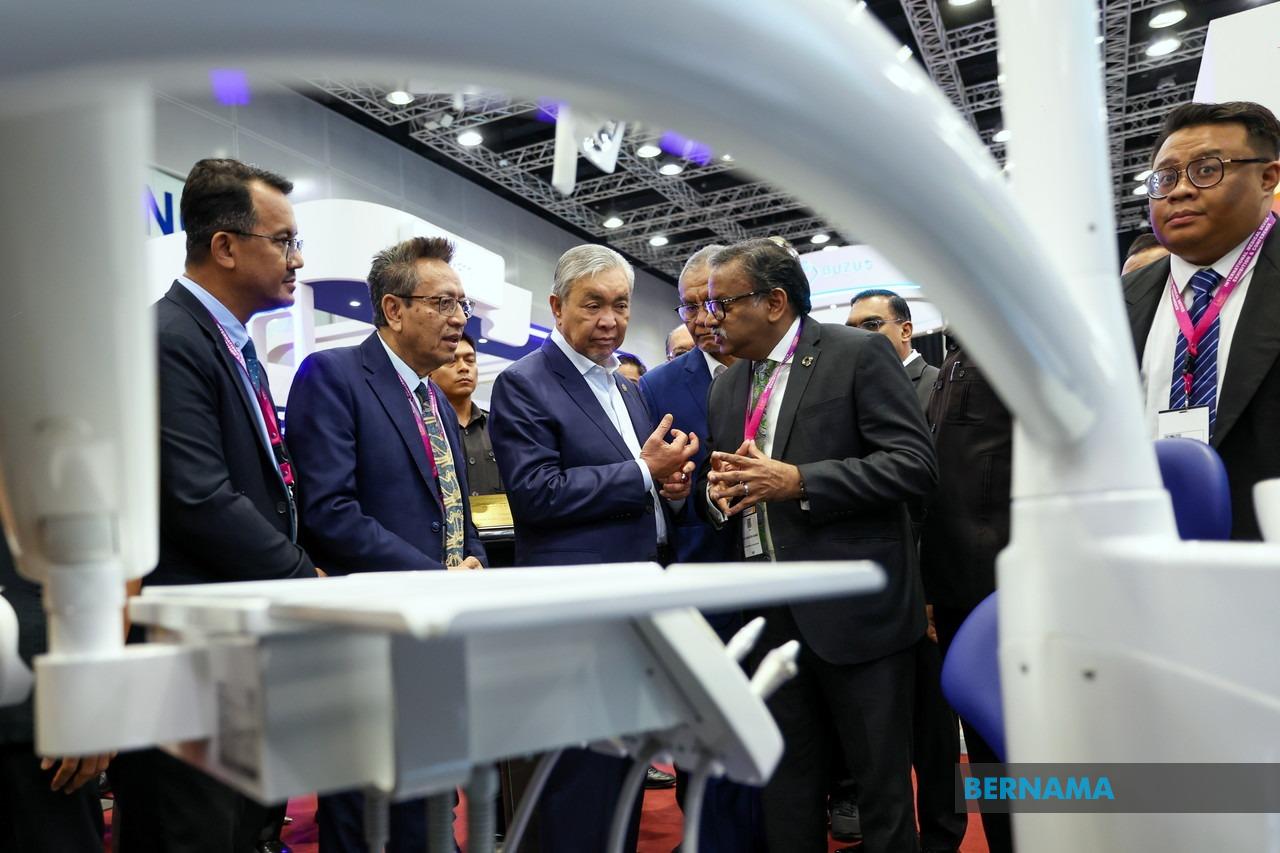
Malaysia is targeting a significant expansion of its medical device sector, aiming to surge exports to beyond RM50 billion by 2030—a substantial jump from last year's RM34.54 billion. Deputy Prime Minister Datuk Seri Dr Ahmad Zahid Hamidi unveiled this ambitious goal at the closing of the International Medical Device Exhibition and Conference (IMDEC) 2026 in Kuala Lumpur, positioning the export increase as part of a three-pronged strategy to elevate the nation's standing in global medical technology markets.
The first pillar of this strategy centres on the export target itself, reflecting confidence in Malaysia's existing strengths. The country possesses a developed manufacturing infrastructure, established international market access, and proven credibility among global investors—assets built over decades of steady growth in the sector. Yet Ahmad Zahid emphasised that future expansion cannot rely simply on volume increases. Instead, Malaysia must deliberately shift toward higher-value medical devices that command premium pricing and margins, a transition that requires innovation, research capacity, and intellectual property development rather than low-cost production alone.
Complementing this export ambition, the government has committed to nurturing at least 10 Malaysian MedTech companies capable of holding their own in regional and global competition. This represents a significant departure from a model that has historically favoured foreign multinational corporations establishing manufacturing bases in Malaysia. While welcoming continued international investment, the new strategy prioritises building local champions—firms that not only manufacture but own proprietary technology and compete on innovation rather than cost. Such enterprises would anchor higher-wage employment and retain more value creation within Malaysia's economy.
The third objective tackles employment quality, mandating that at least 50 per cent of jobs created by new MedTech investments by 2030 must be managerial, technical, and supervisory (MTS) positions. This target directly addresses a current weakness: in 2025, the sector's MTS employment index stood at only 33.1 per cent, meaning most positions remained lower-skilled assembly and labour roles. Ahmad Zahid articulated a clear logic: if Malaysia genuinely seeks to position itself as a high-value industry hub rather than a low-cost manufacturing destination, the employment it generates must reflect that status through better-paid, skill-intensive work.
Underpinning this employment pivot is a strategic rethink about talent development timing. Ahmad Zahid, who also chairs the National Technical and Vocational Education and Training Council, stressed that Malaysia must train workers and build capability before multinational companies arrive demanding a ready workforce. This inverts the reactive approach that has sometimes characterised Malaysia's industrial policy, where education and training follow investment rather than preceding it. By cultivating advanced technical skills proactively, Malaysia can offer investors access to a pre-prepared talent pool while avoiding the wage-compression and skills mismatches that can emerge when companies create more vacancies than the domestic labour market can readily fill.
The Deputy Prime Minister's call for early engagement between educational institutions and prospective investors signals a practical mechanism for achieving this shift. Rather than waiting until workforce shortages force companies to raise wages or lobby government for looser immigration, firms are encouraged to collaborate during the planning phase—helping shape training curricula, identifying emerging skill requirements, facilitating industrial placements, and expanding apprenticeship opportunities. Such partnerships can smooth the transition from classroom to shop floor and enhance the relevance of vocational education.
Context for these ambitions emerges from recent investment momentum. During 2025, Malaysia approved RM4 billion in new medical device investments spanning 46 distinct projects, generating close to 3,400 employment opportunities. While respectable, these figures underscore both the scale of existing activity and the gap between current flows and the productivity improvements needed to hit the 2030 targets. The investments demonstrate investor confidence but also highlight that growth alone will not automatically shift the sector toward higher value unless policy actively steers that transition.
Globally, the medical device market provides a tailwind for Malaysia's ambitions. Valued at over USD572 billion in 2024, the worldwide sector is forecast to exceed USD1 trillion by 2034, driven by ageing populations, rising chronic disease prevalence, and technological advancement across diagnostics, therapeutics, and digital health. Southeast Asia's expanding middle class and improving healthcare infrastructure position the region as an attractive destination for both manufacturing and consumption, meaning Malaysia's proximity to rapidly growing neighbouring markets strengthens its competitive position.
Imdec 2026, held from August 26 to 28, illustrated the ecosystem's vibrancy, drawing more than 160 exhibitors and over 50 speakers from regulatory bodies, innovation hubs, and healthcare systems across the region and beyond. Such gatherings serve as venues for knowledge transfer, business networking, and demonstration of technological capability—essential infrastructure for an industry increasingly dependent on innovation and collaboration rather than purely on cost advantage.
For Malaysia, the implicit challenge is execution. Reaching RM50 billion in exports requires not only policy signals but sustained investment in research infrastructure, intellectual property protection, and higher education aligned with MedTech needs. Developing 10 global-calibre local champions demands patient capital, risk tolerance, and potentially direct government support for early-stage technology companies. Elevating the MTS employment share necessitates wage-competitive technical training and career pathways that can retain talent within the sector amid competing opportunities in finance, technology, and other high-value industries.
Ahmad Zahid's remarks reflect a broader regional trend: Malaysia, Singapore, Thailand, and other Southeast Asian economies are competing to move beyond low-cost manufacturing toward knowledge-intensive industries. The medical device sector, with its blend of manufacturing, regulatory expertise, and innovation, represents an attractive testing ground for that transition. Success would not only boost export earnings but signal that Malaysia can credibly position itself as a regional hub for advanced healthcare technology—a claim that could attract further upstream research investment and attract regional talent seeking high-value careers.

