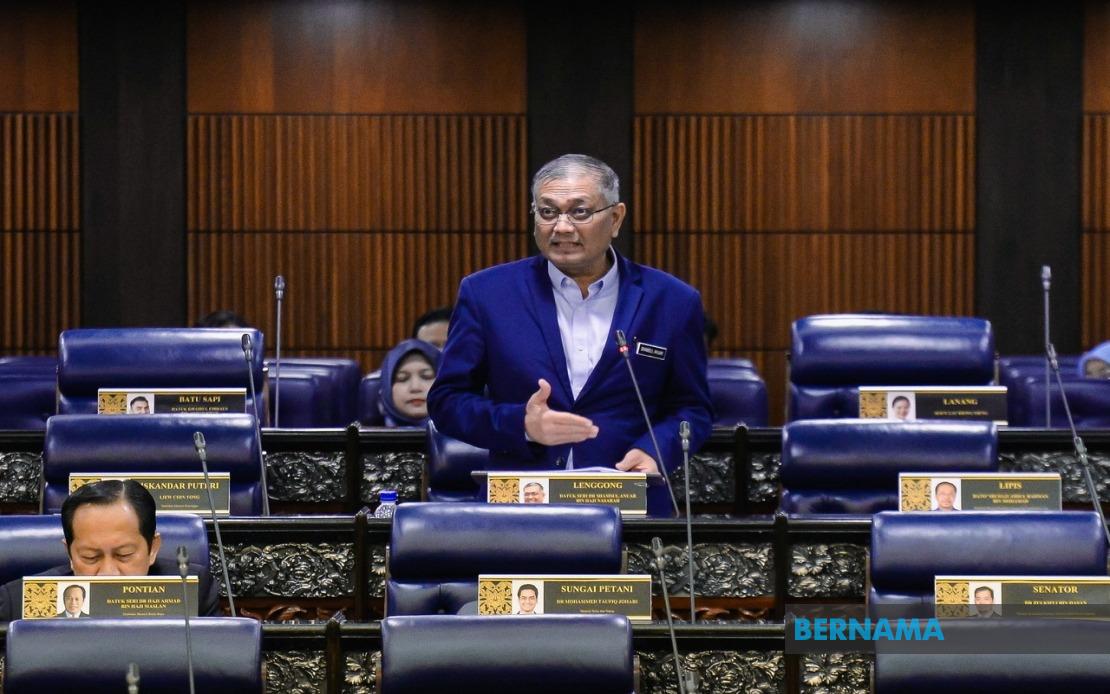
Malaysia's enforcement agencies have intensified their campaign against unlicensed cryptocurrency mining operations, with the Home Ministry disclosing that more than 75,000 mining machines have been confiscated through coordinated raids spanning the past two years. Deputy Home Minister Datuk Seri Dr Shamsul Anuar announced the scale of the crackdown while addressing parliamentary questions about illegal digital asset extraction activities, revealing that enforcement efforts have resulted in 629 criminal arrests during these nationwide operations.
The coordinated response involves multiple government and private sector partners working in concert to dismantle these illicit operations. The Royal Malaysia Police collaborates closely with Tenaga Nasional Berhad, the national power utility, along with local municipal authorities and other relevant agencies to identify and raid suspected mining facilities. This multi-agency approach reflects the complexity of tackling the problem, which extends beyond simple criminal law enforcement into infrastructure security and energy management concerns that directly affect TNB's operations and Malaysia's electrical grid stability.
The Home Ministry has shifted its operational strategy to emphasise preventive intelligence gathering and technological detection methods rather than purely reactive enforcement. Officials now focus on identifying potential mining hotspots before they become established criminal enterprises, allowing authorities to conduct more targeted and effective interventions. This intelligence-led approach represents a maturation of enforcement tactics, acknowledging that large-scale cryptocurrency mining operations leave measurable traces in power consumption patterns, network activity, and infrastructure usage that can alert authorities to emerging threats.
The persistence of illegal mining activities stems from the fundamental economics driving the underground industry. The astronomical profitability potential from cryptocurrency price appreciation attracts organised criminal groups and opportunistic operators seeking to capitalise on market volatility without regulatory oversight. However, the true financial appeal lies in dramatically reducing operational costs through electricity theft, achieved by unauthorised connections to power lines, meter tampering, and deliberate disruption of supply systems. For criminal syndicates, these savings on electricity—typically the largest operating expense in mining—transform marginal operations into highly lucrative enterprises that justify the legal risks involved.
Malaysia's regulatory framework distinguishes sharply between permitted and prohibited aspects of cryptocurrency engagement. The nation permits citizens to own and trade digital assets within existing legal parameters, recognising the legitimate commercial interest in emerging financial technologies. However, this permissive stance on asset ownership stops decisively at mining and trading operations conducted through unauthorised channels. The government explicitly classifies cryptocurrency mining as criminal activity when pursued without proper licensing, infrastructure authorisation, or legitimate electricity procurement, creating a clear legal boundary that protects the nation's energy infrastructure from exploitation.
The electricity theft dimension represents perhaps the most damaging consequence of illegal mining from Malaysia's infrastructure perspective. Large-scale mining operations consume vast quantities of power, comparable to small industrial facilities or residential neighbourhoods. When operators circumvent metering systems and draw directly from power lines, they simultaneously deprive TNB of legitimate revenue while destabilising the electrical grid through unpredictable draw patterns that complicate load management and system planning. The cumulative impact of thousands of illicit mining sites operating throughout the country creates measurable economic damage to the utility and ultimately shifts costs to law-abiding consumers through higher electricity tariffs.
Regulation of Malaysia's digital asset sector remains fragmented across multiple institutions, each addressing distinct aspects of cryptocurrency's rapid expansion. The Securities Commission Malaysia exercises regulatory authority over digital assets themselves under applicable securities and investment legislation, ensuring that cryptocurrency offerings comply with consumer protection standards and capital market rules. Simultaneously, Bank Negara Malaysia maintains oversight of financial system stability, payment infrastructure integrity, and critically, anti-money laundering compliance mechanisms that ensure digital assets do not become vehicles for proceeds of crime or sanctions evasion. This divided responsibility reflects the challenge of integrating novel technologies into existing regulatory architectures.
The magnitude of the seizures—75,000 machines across over 3,000 separate raid operations—illustrates the substantial scale of criminal enterprise involved in unlicensed mining. Each operation represents a distinct criminal undertaking, suggesting either numerous small-scale independent operators or a fragmented criminal ecosystem rather than a single centralised organisation. The geographic spread across Malaysia indicates that illegal mining constitutes a nationwide phenomenon rather than a localised problem confined to particular regions, necessitating sustained enforcement resources across all states and federal territories.
Beyond the immediate enforcement statistics lie broader implications for Malaysia's energy security and infrastructure resilience. Illegal mining operations that destabilise power systems through unpredictable consumption patterns and meter bypassing create cascading risks affecting hospital operations, industrial production, telecommunications networks, and residential services. The Home Ministry's emphasis on accelerated response times and improved precision in enforcement operations acknowledges that each delayed intervention allows additional electricity theft and potential infrastructure damage to accumulate, justifying substantial resource allocation to this enforcement domain.
The continued coordination between law enforcement and TNB demonstrates recognition that cryptocurrency mining criminality inherently connects to energy infrastructure crime, requiring specialised expertise and mutual intelligence sharing that transcends traditional policing boundaries. Going forward, Malaysian authorities face the challenge of maintaining enforcement momentum while remaining responsive to criminal adaptation, as sophisticated operators continually develop new methods to evade detection. The investment in technology-based detection systems and intelligence gathering therefore represents essential evolution in enforcement capability to sustain the campaign's effectiveness.

