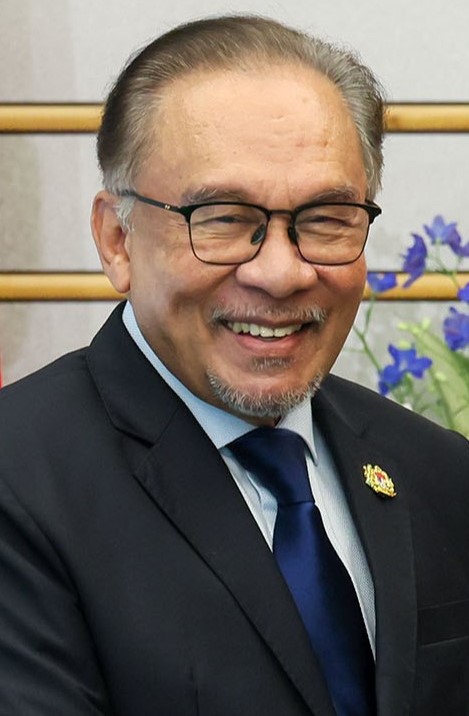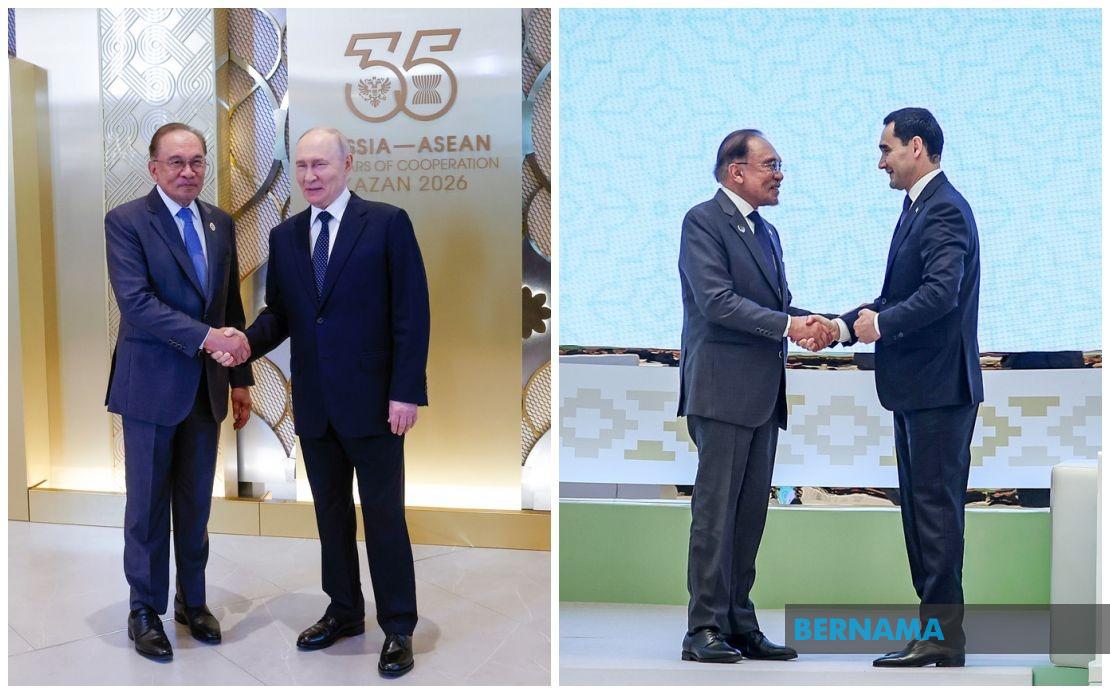
Prime Minister Datuk Seri Anwar Ibrahim has returned from official visits to Russia and Turkmenistan with a series of high-stakes energy agreements that Malaysian government officials believe will reshape the country's long-term energy security and elevate its standing in global petroleum markets. The twin missions to Kazan and Ashgabat represent a notable expansion of Malaysia's diplomatic engagement with resource-rich nations outside traditional ASEAN and Commonwealth circles, signalling a deliberate recalibration of Kuala Lumpur's energy partnerships as the nation grapples with rising demand and supply vulnerabilities.
The most immediately tangible outcome involves Moscow's commitment to supply Malaysia with crude oil and petroleum products for up to two decades, a duration that stands in marked contrast to the shorter-term, contract-renewal cycles that typically govern global energy transactions. Housing and Local Government Minister Nga Kor Ming framed this arrangement as instrumental to the government's broader energy diversification strategy, which seeks to reduce reliance on any single source while maintaining budgetary certainty for fuel subsidies. The agreement directly buttresses the BUDI MADANI RON95 programme, permitting the administration to sustain the subsidised petrol price at RM1.99 per litre without depleting reserves at an unsustainable pace—a critical consideration in Malaysia's energy-intensive economy and a politically sensitive issue affecting millions of motorists.
The Russian supply arrangement carries implications that extend beyond immediate fuel security into macroeconomic territory. Long-term supply contracts of this scale typically include provisions for price corridors, delivery schedules, and credit mechanisms that reduce spot-market volatility and allow governments to budget with greater accuracy. For Malaysia, which imports substantial quantities of petroleum products despite domestic production, such predictability reduces exposure to geopolitical shocks that periodically roil international energy markets. The agreement also signals to international investors that Malaysia is pursuing a multifaceted approach to energy sourcing rather than gambling on any single trading partner, a consideration that domestic industries dependent on stable fuel costs will welcome.
Equally significant, and potentially more transformative over the longer term, is Petronas' newly secured position as operator of a major gas field in Turkmenistan. The Central Asian nation harbours some of the world's most substantial natural gas reserves, yet has historically marketed its output through limited channels, principally pipelines flowing eastward to China and westward toward Europe. By engaging Petronas as an operator rather than merely a purchaser, the arrangement positions Malaysia's flagship energy corporation to extract expertise and management fees from one of the planet's richest energy enclaves. Human Resources Minister Datuk Seri R. Ramanan highlighted that this operational mandate elevates Petronas' competitive standing and could catalyse its ascent within global corporate rankings—the company currently ranks 139th among Fortune Global 500 enterprises, leaving considerable headroom for upward mobility if the Turkmenistan venture is executed successfully.
The operational role Petronas assumes carries broader implications for Malaysian technological prowess and soft power in energy markets. By deploying homegrown expertise in subsurface engineering, production logistics, and asset management to a world-class gas field, Malaysia demonstrates capacity to compete with multinational majors in complex hydrocarbon development—a credential that opens doors to other international opportunities and cements the nation's reputation as a dependable, technically capable partner in high-stakes resource extraction. This reputational enhancement carries particular weight in Central Asia, where energy-rich states have historically favoured Western and Chinese operators but increasingly seek to diversify their operational partnerships to avoid over-dependence on any single power centre.
The timing of these breakthroughs reflects deliberate diplomatic strategy on Anwar's part. Russia, despite international sanctions and Western energy boycotts, remains determined to sustain petroleum exports to Asian buyers, creating openings for nations willing to diversify away from traditional suppliers. Turkmenistan, similarly, faces pressure to monetise its vast gas reserves through multiple revenue streams and partnership models. By positioning Malaysia as a willing, capable partner in both nations' energy strategies, Anwar has signalled that Kuala Lumpur is prepared to engage pragmatically with geopolitical realities rather than align rigidly with Western-led sanctions regimes. This positioning carries subtle risks—potential adverse reactions from Western allies or domestic constituencies opposed to deeper Russian engagement—yet offers tangible economic benefits that may outweigh reputational costs.
The agreements also carry implications for Petronas' dividend stream and government revenues. Enhanced operational control over major international assets typically translates into higher profit margins and more stable cash flows than purely commercial purchasing arrangements. These revenues underpin Malaysian government budgets and sovereign wealth funds, creating a fiscal multiplier effect that eventually reaches healthcare, education, and infrastructure spending. The Turkmenistan gas field, operating at scale with Petronas steering technical decisions, has the potential to generate substantial remittances to Kuala Lumpur over several decades—a strategic asset that could prove more valuable than many conventional foreign direct investments.
The broader geopolitical context merits examination. Anwar's willingness to travel personally to Kazan and undertake high-profile negotiations with Russian leadership—despite international tensions surrounding Russia's invasion of Ukraine—signals that Malaysia intends to maintain energy pragmatism over ideological alignment. Similarly, the Turkmenistan engagement positions Malaysia to compete with China, which has historically dominated Central Asian energy partnerships. By inserting Petronas into a major operational role, Malaysia reduces Beijing's monopolistic leverage over Turkmenistan's output and creates a counterweight to Chinese influence in the region. This subtle repositioning may prove consequential in longer-term competition for Asian energy resources and influence in Central Asia.
The human capital dimension, though less immediately dramatic than supply contracts or asset acquisitions, merits emphasis. Minister Ramanan noted that the arrangements will generate collaborative opportunities in technology transfer and workforce skills development. Petronas and Malaysian engineers deployed to Turkmenistan will acquire expertise in Central Asian reservoir management and production systems, knowledge that flows back into the domestic talent pool and enhances the nation's technical capabilities. This virtuous cycle of international exposure, skill upgrading, and domestic capacity-building represents precisely the mechanism through which resource extraction—often derided as mere commodity trading—can catalyse broader economic development and human capital accumulation.
Implementation risks, however, deserve candid acknowledgement. Petronas must execute complex field operations in a distant, geographically challenging environment with limited Western support networks. Geopolitical instability in Central Asia, though currently contained, could jeopardise supply routes or operational continuity. Russian sanctions, if tightened or broadened, could complicate the long-term oil supply arrangement or limit Malaysia's ability to transact with Moscow. These headwinds demand sophisticated risk management and contingency planning as the agreements transition from diplomatic achievement to operational reality.
Looking forward, the Russia and Turkmenistan missions represent a strategic pivot toward energy pluralism and pragmatic engagement with non-Western partners. This approach may prove essential as global energy markets fragment and traditional supply chains face disruption. Malaysia's willingness to engage Russia despite international censure, and to assume operational responsibility for Central Asian assets, positions the nation as a reliable, unconventional partner in an increasingly multipolar energy landscape. For Petronas and Malaysian stakeholders, the coming years will determine whether these diplomatic breakthroughs translate into sustained commercial success and meaningful returns on the political capital invested in securing them.