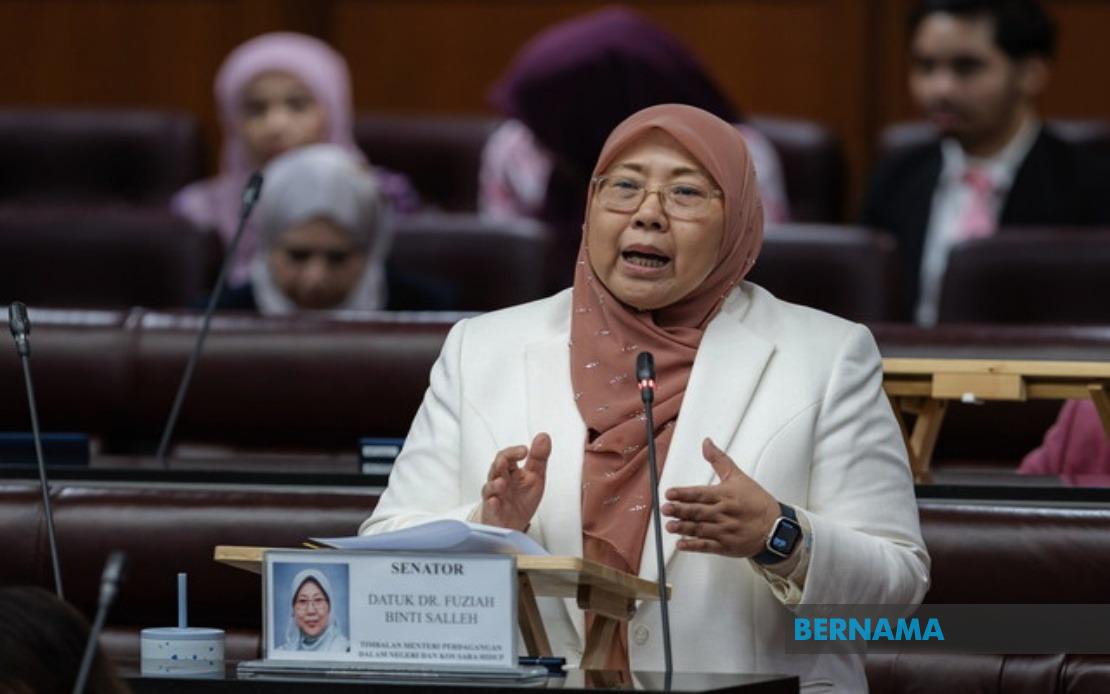
The Malaysian government has clarified that copyright owners must grant explicit permission before their works can be used to train artificial intelligence systems, establishing a clear legal framework for one of the technology sector's most contentious issues. Deputy Domestic Trade and Cost of Living Minister Datuk Dr Fuziah Salleh made this declaration during parliamentary proceedings, addressing mounting concerns from creative industry stakeholders about whether their intellectual property rights would be respected as AI development accelerates across the region.
Fuziah's statement anchors the position within Malaysia's existing Copyright Act 1987, which already mandates approval from copyright holders for any use of protected material regardless of whether the application involves AI technology. This principle, she explained, operates uniformly across all contexts—whether for traditional publishing, broadcasting, or cutting-edge machine learning applications. The government's approach avoids creating a separate regulatory regime for artificial intelligence, instead extending current copyright protections directly into this emerging technological domain.
The minister highlighted Section 27 of the Copyright Act 1987 as the legislative vehicle through which compensation mechanisms function. Under this provision, the specific terms of payment, licensing fees, and royalty rates remain subject to negotiation between copyright owners and those seeking to use their works. This flexible framework permits arrangements to be structured through direct licensing agreements between individual creators and AI developers, through the assignment of rights to technology companies, or through Collective Management Organisations that represent groups of creators. For Malaysia's creative industries, this means that established CMOs and new ones yet to be formed could become significant intermediaries in the emerging AI economy.
The government's response carries particular weight for Southeast Asia given Malaysia's position as a regional technology hub and content-producing nation. Unlike some jurisdictions where AI development has proceeded with minimal copyright oversight, Malaysia's approach signals that local creators—whether novelists, musicians, visual artists, or journalists—possess explicit legal standing to control how their works contribute to machine learning. This creates leverage for Malaysian creators in global negotiations and potentially positions the country as a more creator-friendly jurisdiction for AI development.
However, the statement also reveals significant gaps in the government's preparedness for the AI era. Fuziah acknowledged that Malaysia has not yet conducted a dedicated study examining how AI-generated content affects employment and income within the creative sectors. This absence of empirical research leaves policymakers without concrete data on whether copyright protections alone will prove sufficient to safeguard creator livelihoods as machines become capable of generating commercially viable content across more domains. The creative industries, already facing disruption from digital distribution, now confront the prospect of competition from AI-generated alternatives without a clear understanding of the economic implications.
The absence of domestic court cases involving AI copyright violations suggests that either the intersection of AI and copyright remains nascent in Malaysia, or disputes are being resolved through negotiation before reaching litigation. This quiet period may not persist as AI capabilities expand and the financial stakes grow larger. Other jurisdictions have already seen the beginning of major litigation between copyright holders and AI companies, establishing precedents that Malaysian courts may eventually need to address. The government's current legal framework may require clarification or amendment as specific conflicts emerge.
Fuziah indicated that the government is pursuing a comparative approach, studying how other countries are addressing the same tensions between technological innovation and creator protection. This reflects appropriate caution given the speed of AI development and the risk that hasty regulations might become obsolete or counterproductive. However, it also means Malaysia remains in a watching position rather than a leading position on establishing norms for responsible AI development in the Global South. Regional competitors and developed nations are simultaneously engaged in more active rulemaking, potentially creating frameworks that Malaysian policymakers will need to either adapt to or negotiate around.
The government's position on what qualifies for copyright protection in the AI age also merits attention. Malaysia's current legal framework protects only those works that demonstrate originality derived from human effort, skill, and intellectual contribution. Fully AI-generated content lacking significant human creative input does not meet this threshold and thus receives no copyright protection. This distinction matters enormously because it determines whether AI systems can freely use outputs from other AI systems without compensation. As AI systems become more sophisticated and capable of producing works with minimal human direction, the boundaries of this definition will become increasingly contested and economically significant.
For Malaysia's position in global technology markets, this policy stance represents a middle path between the interests of AI developers and creative workers. The government is not prohibiting AI training on existing copyrighted works—a position that would severely constrain AI development—but rather requiring that such use proceed through permissions and compensation mechanisms. This approach preserves space for AI innovation while protecting the economic interests of creators who generate the training data that makes AI systems valuable.
The ongoing consultations Fuziah described suggest that the government recognises the need for more sophisticated policymaking in this domain. Stakeholder engagement across the technology and creative sectors could yield insights into practical mechanisms for managing permissions and payments at scale. The involvement of Collective Management Organisations may prove particularly important, as these entities have experience managing rights across distributed groups of creators and could potentially develop standardised licensing frameworks specifically for AI training.
Looking ahead, the intersection of artificial intelligence and copyright in Malaysia will likely become increasingly significant as both technologies mature. The government's current stance provides a foundational principle—copyright owners control their works—but leaves substantial questions unresolved about implementation at commercial scale. As Malaysian companies develop or adopt AI systems, they will need practical guidance on how to navigate licensing requirements, and as Malaysian creators see their work incorporated into global AI models, they will need mechanisms to claim compensation. The legal framework exists, but the institutional infrastructure and practical guidance remain to be developed.

