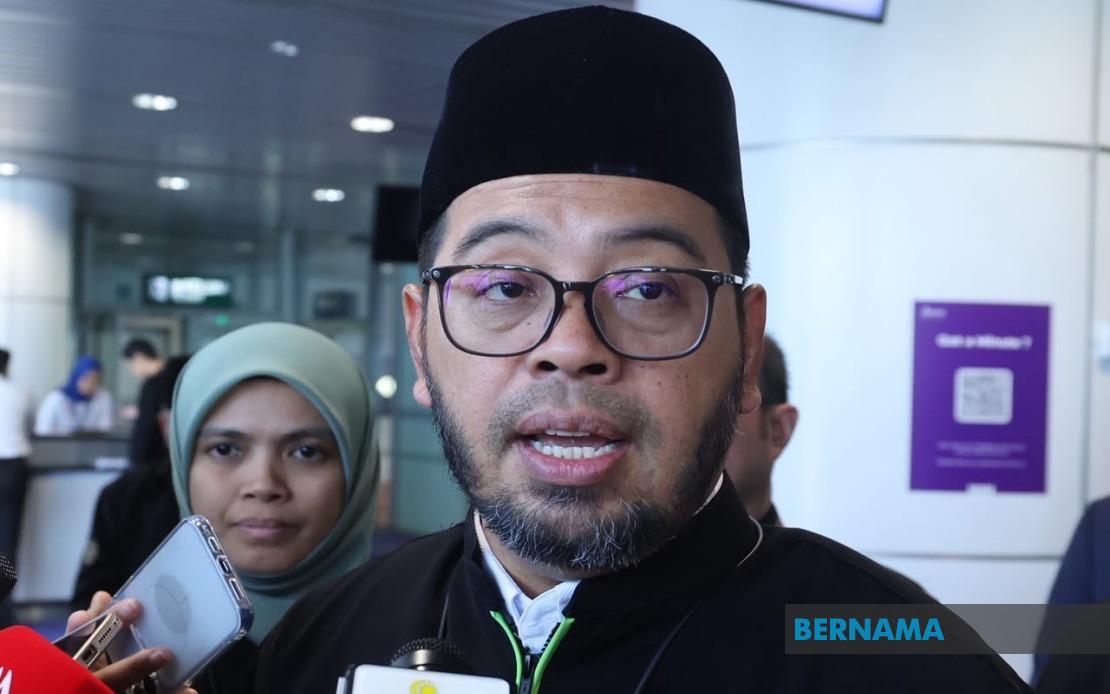
Malaysia's Religious Affairs Ministry has declared a complete absence of haj and Badal haj (proxy pilgrimage) fraud throughout the 1447H/2026M season, an achievement the government attributes to rigorous inter-agency coordination and modern surveillance techniques. Minister Dr Zulkifli Hasan made the announcement after welcoming the final batch of returning pilgrims at Kuala Lumpur International Airport on Tuesday, signalling what authorities characterise as a landmark year in protecting vulnerable Muslims from predatory operators seeking to exploit religious devotion for financial gain.
The zero-scam outcome represents a watershed moment for haj administration in Malaysia, where proxy pilgrimage arrangements have historically created opportunities for fraudsters to prey on elderly or infirm believers unable to perform the journey themselves. The scale of this year's pilgrimage—with hundreds of flights ferrying Malaysian Muslims to and from Saudi Arabia—underscores the complexity of safeguarding such large-scale religious mobilisation. The final homebound flight, Malaysia Airlines flight MH 8385 from Madinah, touched down at 12.10 pm carrying 258 returning pilgrims, capping weeks of intensive operational activity across the nation's aviation infrastructure.
The preventive apparatus deployed by authorities combined traditional physical security with digital intelligence gathering, recognising that modern scam networks operate across multiple channels simultaneously. Tabung Haji, the state-backed pilgrimage fund that manages haj logistics for Malaysian Muslims, worked alongside the Royal Malaysia Police to station monitors at KLIA, creating visible deterrence while also enabling real-time intervention had suspicious activity materialised. Simultaneously, authorities conducted surveillance on social media platforms where unlicensed operators typically recruit desperate candidates, a shift in approach that reflects evolving crime patterns in the digital age. Deputy Minister Marhamah Rosli and Tabung Haji Chairman Tan Sri Abdul Rashid Hussain jointly witnessed the final arrivals, underscoring the institutional commitment behind the achievement.
The success in eliminating fraud parallels another quantifiable improvement in haj administration: a dramatic reduction in the deferment rate among successful applicants. Tabung Haji reduced the proportion of pilgrims deferring their journey from 50 per cent in the previous year to just 18 per cent this season, a shift that reveals improved communication and preparation strategies. By notifying prospective pilgrims well in advance and conducting sustained awareness campaigns about spiritual and logistical preparation, authorities appear to have strengthened commitment among the selected candidates. This decline in deferrals carries practical implications, as consistent year-on-year participation rates enable more efficient resource allocation and reduce administrative friction in managing the pilgrimage queue, which typically extends several years in Malaysia's system.
For Malaysian Muslims awaiting their turn to perform haj, the outcome carries reassuring implications. The stringent monitoring apparatus suggests that Tabung Haji and law enforcement agencies are actively defending the integrity of a system through which hundreds of thousands of Malaysians will eventually journey. Parents and families entrusting their savings and health to the pilgrimage process gain confidence from knowing that regulatory oversight extends beyond airport terminals to encompass the online spaces where trust is first established and subsequently exploited by predators. The police and religious authorities' willingness to adapt surveillance methods demonstrates institutional learning from past episodes when scammers successfully penetrated previous defences.
Regionally, Malaysia's achievement offers a model for neighbouring Muslim-majority nations wrestling with similar challenges. Indonesia, Bangladesh, and Pakistan collectively send millions of pilgrims annually and have experienced significant fraud problems, making the Malaysian experience potentially instructive. The emphasis on early notification, continuous education, and coordinated interagency response represents a preventive philosophy that could be adapted across Southeast Asia's diverse regulatory environments. The involvement of Tabung Haji as a quasi-governmental entity also suggests that state involvement in managing pilgrimage logistics, when coupled with robust oversight, can reduce vulnerability to exploitation compared to purely private arrangements.
The reduction in deferrals also reflects broader confidence in Malaysia's haj infrastructure and the perception that official channels are reliable. When potential pilgrims feel assured that the state-managed pathway is both safe and expedient, they commit resources more readily. This psychological dimension of regulatory success—the way transparent, effective governance builds trust—extends beyond haj administration to affect broader public faith in institutional capacity. Given Malaysia's plural society and competing demands on religious ministry resources, demonstrating excellence in managing the haj portfolio serves to legitimise religious affairs administration more broadly.
However, sustaining zero-fraud outcomes requires ongoing institutional discipline. The 2026 season's success cannot be taken as permanent achievement; scam networks are adaptive and continually probe for new vulnerabilities. As digital platforms evolve and attacker sophistication increases, the monitoring approaches that worked this year may require calibration for subsequent seasons. Authorities must resist complacency and maintain the intelligence-gathering resources that enabled the current success, particularly given budget pressures that periodically constrain government security spending.
The statement by Dr Zulkifli Hasan, expressing gratitude and framing the outcome as a validation of cooperative governance, carries political dimensions as well. Haj administration represents a visible arena where government competence is directly assessed by millions of Muslim voters and their families. A fraud-free season becomes a narrative of institutional effectiveness that extends beyond religious affairs into broader perceptions of governance quality. The minister's emphasis on the words "Alhamdulillah" and "zero scammer cases" frames the achievement within Islamic discourse while simultaneously claiming credit for modern administrative capacity.
Looking forward, the challenge for Malaysian authorities lies in transparently documenting the mechanisms that produced this result so that knowledge can be institutionalised rather than personalised. If the 2026 success depended on particular individuals' initiatives or temporary resource allocations, future seasons could see performance degradation if personnel change or budgets shift. Publishing detailed reports on the monitoring infrastructure, the specific interventions undertaken, and lessons learned would serve the dual purpose of reinforcing institutional memory while demonstrating accountability to the Muslim community that depends on haj administration. The final landing of the 258 pilgrims on MH 8385 thus marks not merely the conclusion of a season but a checkpoint in an ongoing effort to safeguard one of Islam's most sacred obligations against exploitation.

