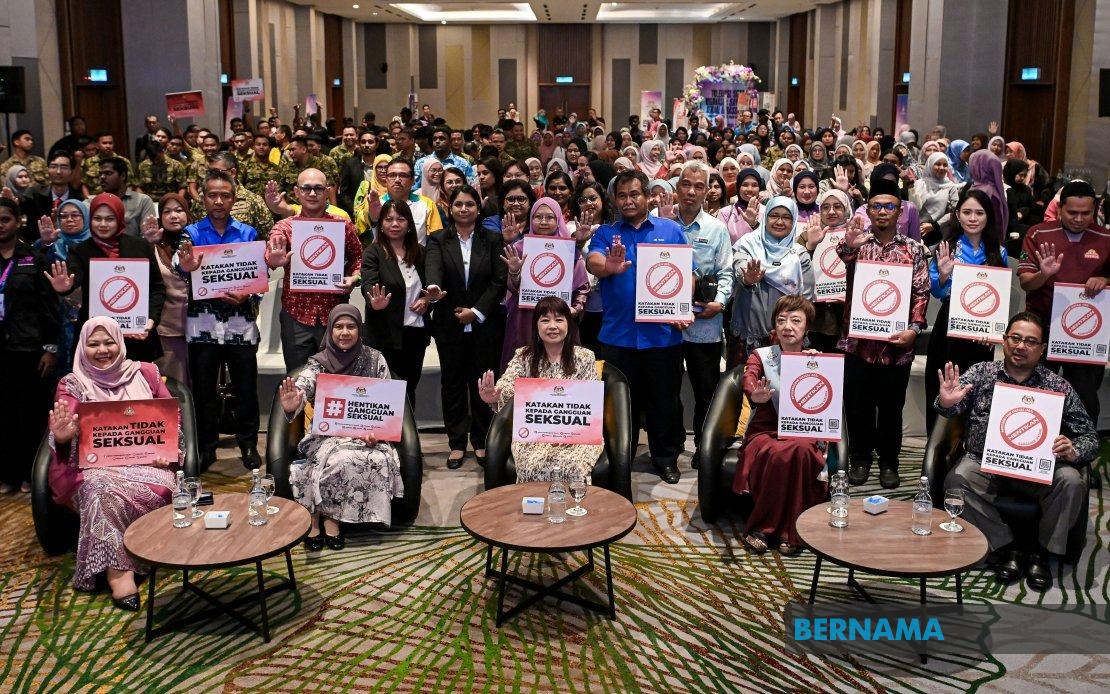
The Ministry of Women, Family and Community Development has documented 388 sexual harassment complaints during the opening five months of 2024, signalling both the persistent challenge of workplace misconduct and a notable shift in how Malaysian victims and communities respond to such violations. Deputy Minister Lim Hui Ying disclosed the figures in Port Dickson on June 18, underscoring the gravity of a problem that continues to undermine the dignity and wellbeing of those affected across multiple sectors of Malaysian society.
The trajectory of reported incidents reveals a significant upward movement over recent years, with Royal Malaysia Police statistics demonstrating a sharp climb from 477 documented cases in 2022 to 1,038 cases in 2023. Rather than interpreting this explosive growth as evidence of deteriorating conditions alone, officials have characterised the surge as partly reflective of cultural transformation—a gradual erosion of the stigma that historically silenced victims and enabled perpetrators to operate with impunity. This distinction matters crucially for policymakers attempting to calibrate responses, as distinguishing between genuine increases in misconduct and increases in reporting fundamentally alters how interventions are designed and evaluated.
The ministry's analysis reveals that workplace environments remain the dominant setting for harassment, compounded by the fact that many perpetrators maintain existing relationships with their victims, whether familial or institutional. This confluence of proximity and power imbalance creates formidable barriers to disclosure. Victims frequently weigh the psychological cost of reporting against potential career jeopardy, reputational damage to their families, and the emotional exhaustion of navigating formal processes. These calculation weights remain substantial even as legal frameworks and institutional mechanisms gradually improve, explaining why the true prevalence of harassment likely far exceeds reported figures.
Lim emphasised that sexual harassment transcends gender boundaries, though men constitute a significantly smaller proportion of complainants. This asymmetry reflects both the gendered nature of workplace power dynamics and potential underreporting among male victims, who may face additional stigma when coming forward. The ministry's recognition of this broader spectrum—rather than characterising harassment as exclusively a women's issue—signals a more nuanced understanding of workplace dynamics and the varied vulnerabilities that different groups experience.
A critical institutional development has been the establishment of the Tribunal for Anti-Sexual Harassment (TAGS), which has demonstrated measurable efficiency in accelerating justice outcomes. As of mid-June, the tribunal had processed 100 complaints with 82 cases resolved within 60 days of initial hearing. This rapid turnaround represents a substantial improvement over traditional judicial channels, which typically extend proceedings over months or years, thereby exhausting complainants and diminishing the practical value of eventual remedies. By creating a specialised, streamlined process, Malaysia has imported lessons from other jurisdictions while acknowledging that prompt resolution itself constitutes a form of justice and validation for affected individuals.
The ministry is simultaneously advancing broader preventative initiatives through its Women, Peace and Security advocacy framework, integrated into the National Action Plan 2025–2030. This expanded mandate connects workplace harassment to wider questions of national security and social cohesion, positioning gender-based misconduct not merely as an individual grievance but as a systemic challenge that undermines institutional stability and economic productivity. For Malaysian employers and policymakers, this framing creates practical incentives to address harassment comprehensively rather than treating complaints as isolated human resources problems to be minimised or contained.
Cultural transformation remains the stated priority, with officials calling for collective responsibility spanning parents, educators, employers, colleagues and students. This distributed accountability framework recognises that preventing harassment requires intervention at multiple lifecycle stages—from early socialisation through workplace norms to peer accountability among colleagues. No single institution or enforcement mechanism can suffice; instead, efficacy depends upon whether organisations embed zero-tolerance principles into everyday practice and whether individuals develop sufficient courage and supporting community structures to challenge misconduct when witnessing it.
The government has established integrated support infrastructure designed to complement formal complaint mechanisms. Talian Kasih 15999, operating continuously across 24 hours, provides counselling and psychosocial support, acknowledging that harassment victims require emotional and psychological assistance beyond legal remedies. Complementary support through local social centres ensures geographic accessibility for those in smaller cities and rural regions who might otherwise face logistical barriers to assistance. This tiered approach recognises that justice and healing unfold across multiple dimensions rather than through courtroom outcomes alone.
For Malaysian businesses and institutions, the evolving legal and cultural landscape creates both obligations and opportunities. Organisations that proactively strengthen grievance mechanisms, provide training on harassment prevention, and cultivate environments where victims feel genuinely safe reporting misconduct position themselves as employers of choice while reducing legal exposure and reputational risk. Conversely, those that maintain permissive cultures or respond punitively to disclosure face accumulating scrutiny from regulators, potential customers, and increasingly conscious workforces—particularly among younger employees who expect corporate accountability on such matters.
The challenge moving forward involves sustaining momentum as awareness inevitably plateaus. Initial surges in reporting often reflect pent-up demand from individuals previously deterred from coming forward; as this backlog clears, maintaining complaint volumes requires continuous reinforcement of the message that victims will be believed and supported. The 60-day resolution timeline through TAGS must be sustained across growing caseloads, demanding adequate tribunal resourcing and judicial commitment. Meanwhile, systemic change in workplace practices—addressing power imbalances, diversifying leadership, and establishing transparent promotion criteria—remains more elusive than institutional reform yet ultimately more consequential for prevention.
Lim's statement that unaddressed harassment tends to escalate toward more severe violence underscores the preventative logic animating these initiatives. Early intervention, whether through peer accountability, managerial response, or formal complaint mechanisms, interrupts trajectories that might otherwise culminate in assault or other criminal conduct. For Malaysian society navigating rapid economic and social change, embedding this principle across institutions represents an investment in collective wellbeing and social stability that extends far beyond the immediate interests of harassment victims themselves.

