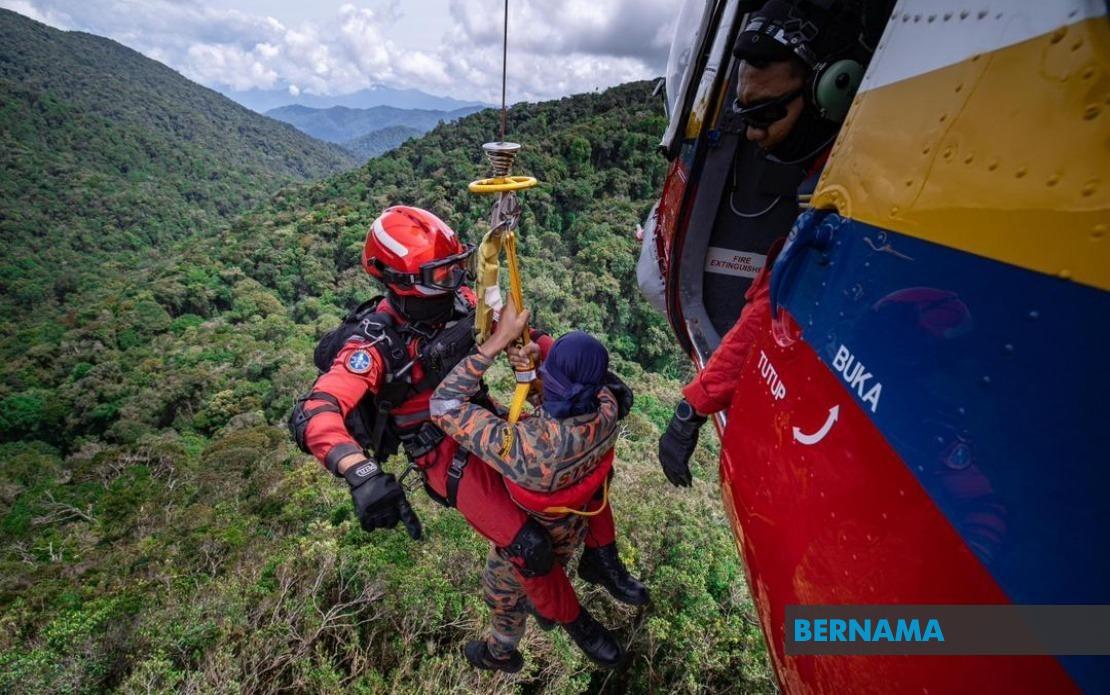
The growing appeal of hiking across Malaysia's lush forests has come at a sobering cost. Between 2021 and 2025, the country documented 1,059 accidents during hiking activities, claiming 63 lives and leaving 87 people injured, Deputy Minister of Natural Resources and Environmental Sustainability Syed Ibrahim Syed Noh revealed in Parliament on June 23. These figures underscore an escalating public health challenge as more Malaysians venture into the nation's forests and highlands for recreation, often without adequate safety preparation or professional guidance.
The sharp rise in hiking-related incidents reflects broader demographic trends across Southeast Asia. As urbanisation intensifies and disposable incomes grow, outdoor recreation has transformed from a niche pursuit into a mainstream leisure activity. Mountains like Kinabalu, Tahan, and Nuang attract thousands of visitors annually, while lesser-known trails have seen exponential increases in foot traffic. This democratisation of mountain access brings considerable benefits to local communities and tourism, yet it simultaneously stretches existing safety infrastructure and expertise beyond sustainable levels. The casualty figures Syed Ibrahim presented to Parliament paint a picture of an activity sector struggling to manage rapid growth.
To address these mounting concerns, Malaysia's Peninsular Malaysia Forestry Department has partnered with the United Nations Development Programme to develop the Mountain Risk Assessment and Management Guideline, or MoGRAM. This technical framework serves as a foundational reference for identifying hazards and calculating safe carrying capacities along hiking trails within Permanent Reserved Forests. Rather than adopting a one-size-fits-all approach, MoGRAM enables authorities to tailor safety protocols based on terrain difficulty, weather exposure, and rescue accessibility. The guideline represents a shift toward evidence-based management, moving beyond anecdotal practices toward systematic risk evaluation.
Central to the safety strategy is the Forestry Mountain Guide programme, which has certified 2,322 individuals from local and indigenous communities since its inception. These certified guides now operate across 189 designated high-risk hiking areas, serving as the human face of safety enforcement. Beyond merely leading expeditions, they facilitate emergency response coordination, educate hikers on proper techniques, and monitor compliance with established protocols. For many rural communities adjacent to popular hiking destinations, the MGP certification provides stable employment while leveraging their intimate knowledge of local terrain. This dual benefit—safety and livelihood—demonstrates how well-designed interventions can simultaneously address multiple policy objectives.
Yet certification numbers, while encouraging, reveal only part of the picture. Training 2,322 guides nationwide is substantial, but it remains unclear whether this supply adequately meets demand across the hundreds of established trails and numerous informal routes. The geographic distribution of certified guides, their average experience levels, and the quality assurance mechanisms governing their work deserve scrutiny. Additionally, the voluntary or mandatory nature of guide engagement varies by location, creating inconsistent safety standards. Some trails may operate with minimal oversight, while others benefit from rigorous professional supervision. Harmonising these disparities across state lines poses a governance challenge, given that forestry jurisdiction remains primarily a state matter.
The ministry is now advancing toward a more integrated approach through geospatial technology. In collaboration with the Malaysian Space Agency, the Peninsular Malaysia Forestry Department is developing a hiking trail management system leveraging geographic information systems and remote sensing data. This digital infrastructure would consolidate dispersed trail information into a unified, real-time database accessible to authorities and hikers alike. The potential applications extend beyond static mapping; the system could detect unauthorised trail development, monitor vegetation changes that indicate erosion risks, and identify rescue bottlenecks where emergency access remains problematic. Such technological integration represents a meaningful modernisation of hiking governance.
Currently, hiking registration occurs through a fragmented system of manual logbooks and state-operated online platforms, with no unified national standard. This decentralisation reflects Malaysia's constitutional arrangement, whereby states retain authority over forestry and land use. However, it creates practical complications. A hiker missing on a trail near the Pahang-Selangor border might trigger coordination delays between two separate registration systems. Search and rescue teams lack instantaneous visibility into trail traffic or previous incident patterns. The ministry's advocacy for a national digital registration log addresses these coordination failures without requiring constitutional change, instead leveraging federal authority over emergency management and cross-state infrastructure.
The proposed national system would maintain state ownership of permit issuance while enabling real-time data sharing among federal agencies responsible for search and rescue operations. Hikers' registration details could be immediately transmitted to rescue coordinators during emergencies, dramatically accelerating response times. Aggregate data on trail usage patterns would reveal which routes consistently experience accidents, guiding targeted safety interventions. However, such a system raises privacy considerations. Comprehensive hiking logs coupled with geolocation data create detailed records of citizen movements. Safeguarding mechanisms and transparent governance protocols would be essential to prevent mission creep or misuse.
The ministry's emphasis on guide training extends beyond mountain navigation to encompass broader competencies reflecting evolving outdoor safety standards. Programmes now cover hiking-specific first aid, wilderness survival techniques, risk assessment, and coordinated search and rescue protocols. This expansion acknowledges that hiking emergencies often involve medical complications—cardiac events, severe dehydration, snake encounters—requiring rapid assessment and stabilisation before formal medical evacuation. By elevating guide qualifications beyond route knowledge, Malaysia seeks to improve outcomes during the critical period between incident occurrence and professional rescue team arrival. Regular refresher training and certification renewal also institutionalise continuous improvement.
Looking forward, Malaysia faces the challenge of scaling safety infrastructure without imposing prohibitive barriers to recreational access. Establishing national safety standards risks creating bottlenecks in permit processing or guide availability, particularly for weekend hikers pursuing popular trails. Conversely, maintaining laissez-faire approaches invites continued casualties and reputational damage to Malaysia's tourism sector. The optimal path likely involves tiered systems, with rigorous standards for high-risk routes while enabling streamlined access to well-maintained, lower-hazard trails. Community engagement in guideline development and enforcement would enhance legitimacy and compliance.
The statistics Syed Ibrahim laid before Parliament should catalyse serious institutional reform. Sixty-three deaths over four years—approximately one fatality per month—represents a considerable loss that extends beyond individual tragedy to affect families, communities, and national image. Yet these figures also provide baseline data for measuring intervention effectiveness. Within two to three years, improvements in guide deployment, trail registration, and search and rescue coordination should yield measurable reductions in accident frequencies. Success would position Malaysia as a model for other Southeast Asian nations grappling with similar hiking safety challenges, demonstrating that rapid growth in outdoor recreation and strong safety outcomes need not be incompatible objectives.