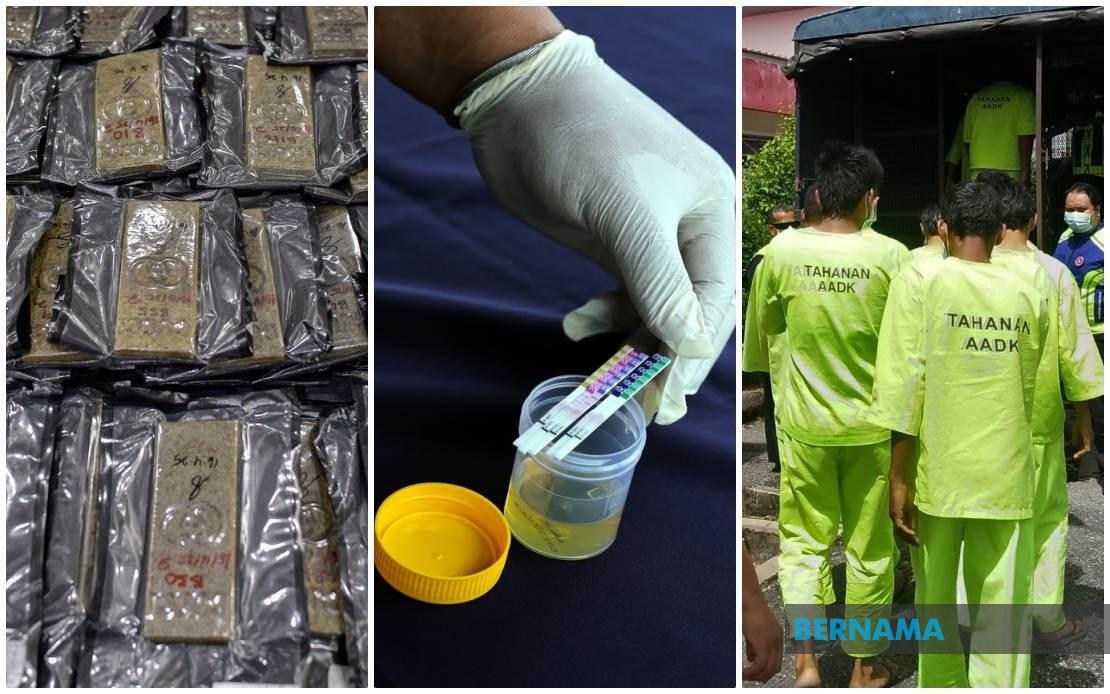
Synthetic drug abuse remains a critical public health crisis in Malaysia, with the Home Minister revealing that 141,817 cases were documented last year. Datuk Seri Saifuddin Nasution Ismail disclosed the figures during parliament's Ministers' Question Time, highlighting an ongoing challenge that shows signs of intensification despite government interventions. The trajectory of the problem has shifted dramatically over recent years, demonstrating how Malaysia's drug landscape continues to evolve in troubling directions.
The scale of the epidemic becomes clearer when examining year-on-year trends. While 145,526 cases were recorded in 2023, the number jumped substantially to 192,852 documented cases in 2024. This 32 percent surge in a single year underscores how quickly synthetic drug use is spreading across Malaysian communities. The acceleration suggests that existing prevention and enforcement strategies, while multifaceted, have not kept pace with the speed and sophistication of drug distribution networks. The dramatic increase also reflects improved monitoring and reporting mechanisms, though this distinction offers little reassurance given the underlying epidemic.
Among all illicit substances, synthetics have become the dominant drug of choice, accounting for approximately 70 percent of all abuse cases nationwide. Amphetamine-type stimulants, commonly known as ATS and colloquially as syabu, represent the primary substance driving this phenomenon. This concentration on a single drug category represents a fundamental shift from traditional patterns of abuse involving cannabis, heroin, and plant-derived narcotics. The preference for manufactured chemicals over natural substances reflects both their accessibility through modern supply chains and their potency relative to traditional drugs, making them disproportionately attractive to users and more profitable for traffickers.
Geographical analysis reveals that Malaysia's east coast corridor has emerged as a particular hotspot for synthetic drug proliferation. Data compiled from the Ministry of Health, National Anti-Drugs Agency, rehabilitation centres, and Royal Malaysia Police indicate that the problem concentrates most heavily in eastern states. Within this region, Pendang district records the highest abuse rate, followed closely by Kuala Krai, with Bachok, Besut and Mersing also appearing among the worst-affected localities. This geographic concentration suggests that enforcement resources might be strategically redeployed to address regional vulnerabilities, though the presence of major ports and cross-border proximity may explain why east coast areas serve as entry and distribution points.
A comparatively new and deeply troubling development involves fentanyl, a synthetic opioid that has recently begun circulating within Malaysia's illicit drug market. Authorities detected this substance during enforcement operations targeting adulterated vaping products, signalling how drug traffickers employ sophisticated methods to disguise dangerous chemicals. Fentanyl's potency presents an unprecedented danger to users, being dozens of times stronger than morphine and carrying severe overdose and fatality risks. Although prevalence remains limited compared with ATS, its mere emergence on Malaysian streets warrants heightened concern given the overdose epidemic it has triggered in other countries.
The government has responded by expediting regulatory measures to combat fentanyl's spread. Recent amendments to the Drug Dependants (Treatment and Rehabilitation) Act and the Dangerous Drugs Act 1952 formally designated fentanyl as a scheduled substance, enabling law enforcement agencies to prosecute traffickers and users with statutory authority. This legislative agility demonstrates recognition of how synthetic drug threats evolve faster than traditional regulatory frameworks can accommodate. However, legal designation alone cannot address supply-side challenges, particularly when fentanyl is often mixed into other drugs without users' knowledge, transforming every drug transaction into a potentially lethal encounter.
Demographic analysis of abuse cases reveals that young people form the primary vulnerable population, with nearly 75 percent of the 192,000 recorded cases since January 2024 involving individuals aged between 15 and 39 years. This age distribution indicates that Malaysian youth face particular exposure to synthetic drug markets, whether through peer networks, online platforms, or community environments where access has become normalised. The concentration among young adults raises questions about prevention effectiveness in educational and family settings, suggesting that current approaches may inadequately address the specific vulnerabilities and risk factors driving youthful experimentation.
The magnitude of drug-related incarceration vividly demonstrates how deeply synthetic drug abuse permeates Malaysian society. Of every 100 prisoners held in Malaysian facilities, approximately 70 are incarcerated for drug-related offences, either serving sentences or awaiting trial. In certain detention centres like Machang, nearly the entire population comprises drug-related offenders. This imprisonment burden reflects both the enforcement response and the criminal justice system's limited capacity to rehabilitate or divert offenders toward treatment. The figures suggest that incarceration alone has not broken the cycle of addiction and re-offending, raising fundamental questions about whether Malaysia's criminal justice approach adequately addresses the underlying demand and supply dynamics.
Digital commerce has emerged as an unexpected vector accelerating drug distribution, creating enforcement challenges that traditional policing methods struggle to address. Online platforms enable anonymous transactions without regulatory oversight of goods sold or purchased, fundamentally undermining law enforcement's ability to track supply chains and intercept shipments. Saifuddin Nasution acknowledged that technological advancement has made acquiring illicit drugs considerably easier, as buyers and sellers operate beyond conventional geographical boundaries and regulatory frameworks. This digital dimension adds complexity to an already multifaceted problem, requiring enforcement agencies to develop cyber-capabilities while operating within civil liberties constraints.
The government's response framework extends beyond enforcement, incorporating community-based prevention, educational programmes within schools, and family and workplace intervention initiatives. The National Anti-Drugs Agency collaborates with the police and Customs Department to pursue coordinated strategies addressing both supply and demand reduction. However, the persistent growth in documented cases suggests that these preventative measures, while well-intentioned, have not achieved sufficient scale or effectiveness to counteract the market forces driving synthetic drug proliferation. The gap between intervention and prevalence raises questions about resource allocation, programme design, and whether education-based approaches can compete with the powerful incentives propelling drug use among vulnerable populations.
For Malaysia and the broader Southeast Asian region, the synthetic drug phenomenon represents a transnational security challenge requiring coordinated regional responses. Malaysia's position as a major trading hub with extensive maritime borders makes it vulnerable to drug transshipment, while its young demographic and urbanisation create substantial domestic demand. The emergence of fentanyl particularly mirrors patterns observed in neighbouring countries, suggesting coordinated trafficking networks operating across Southeast Asia. Addressing this crisis effectively will demand sustained commitment to enforcement capacity-building, drug demand reduction through education and treatment access, and regional intelligence sharing with counterparts confronting similar challenges. The figures released by the Home Minister serve as a sobering reminder that Malaysia's synthetic drug problem will likely intensify without more aggressive policy interventions.

