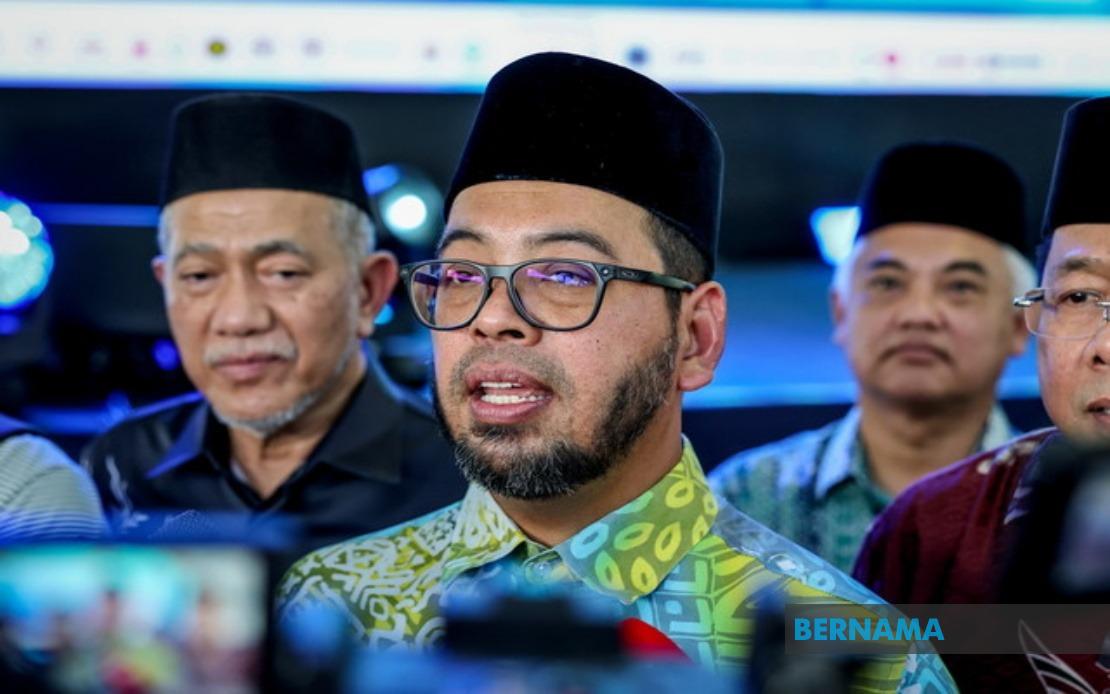
Malaysia has solidified its standing as one of the world's foremost nations in the management of Islamic affairs, drawing praise from international observers and earning validation through robust institutional frameworks and evidence-based policies. This assessment comes from Religious Affairs Minister Dr Zulkifli Hasan, who highlighted the country's accomplishments during the opening of the Northern Zone MADANI Ulama and Umara Multaqa at Masjid Timah, Permatang Pauh in Bukit Mertajam on July 5.
The minister's remarks underscore a critical narrative for Malaysia's positioning in global Islamic discourse. Rather than representing a nation where Islam faces marginalisation or threat—a concern voiced by certain domestic critics—international data and scholarly assessment paint a fundamentally different picture. Dr Zulkifli noted that his overseas engagements consistently demonstrate how other countries observe and admire Malaysia's approach to Islamic governance, suggesting that the empirical evidence contradicts claims of religious decline within the country's borders.
One cornerstone of Malaysia's international recognition rests on its halal certification system, administered by the Department of Islamic Development Malaysia (JAKIM). This regulatory framework has achieved distinction as among the world's most credible and comprehensive, reflecting both Malaysia's technical expertise in halal assurance and its credibility within global Muslim consumer networks. The system's rigour and transparency have made it a reference point for other Muslim-majority nations seeking to establish similar protocols, illustrating how Malaysia has translated institutional competence into soft power.
The Islamic finance sector represents another pillar of Malaysia's global leadership. The country has maintained its position as the world's foremost Islamic finance hub for eleven consecutive years, a distinction that extends beyond statistical ranking to reflect deep market confidence and innovation capacity. This dominance in Islamic banking, takaful insurance, and sukuk issuance demonstrates Malaysia's ability to blend religious principles with modern financial engineering, attracting investment and talent from across the Muslim world and beyond.
Malaysia's management of the hajj pilgrimage also merits international commendation. Lembaga Tabung Haji, the state-sponsored fund administering hajj arrangements for Malaysian pilgrims, has garnered multiple global accolades for its organisational efficiency and religious sensitivity. The institution's recognition reflects the practical challenges of coordinating hundreds of thousands of Malaysian worshippers through the sacred journey while maintaining financial transparency and pastoral care—a task whose successful execution elevates Malaysia's reputation in Islamic practice.
On the educational front, the government has undertaken significant modernisation of religious curricula. The introduction of KAFA 2.0 (Kelas Al-Quran dan Fardu Ain) represents a deliberate shift toward emphasising practical application of Islamic knowledge rather than purely theoretical instruction. This pedagogical approach aligns Malaysia's religious education system with contemporary needs, preparing young Muslims not merely to recite Islamic principles but to apply them meaningfully within professional and civic contexts.
The tahfiz (Quranic memorisation) ecosystem also reflects institutional maturity. Malaysia's integrated framework—comprising the National Tahfiz Council, National Tahfiz Policy, National Tahfiz Standard, and the Malaysia Tahfiz Certificate—creates structured pathways enabling huffaz graduates to transition into professional, technical, and higher education fields. This systematisation prevents hafiz credentials from becoming narrow specialisations, instead positioning them as platforms for broader national contribution, addressing long-standing concerns about the economic integration of religious graduates.
The government's commitment to producing professionally qualified huffaz signals recognition that Islamic scholarship must intersect with technical competence. Rather than isolating religious learning from secular professions, Malaysia's approach acknowledges that national development requires religiously grounded individuals equipped with contemporary skills across engineering, medicine, commerce, and governance. This integration model offers lessons for other Muslim-majority nations grappling with similar questions about religious education's role in modernisation.
Complementing policy-level initiatives, philanthropic support underscores institutional commitment to grassroots religious development. Yayasan Takwa's contribution of RM280,000 distributed among 28 Penang mosques and selected religious schools—each receiving RM10,000—illustrates how public and private sectors collaborate to strengthen mosque infrastructure and Islamic educational institutions. Such funding mechanisms ensure that recognition at the international level translates into tangible support for religious facilities and educational quality at the community level.
The convergence of Malaysia's international standing, institutional frameworks, and targeted investments creates a resilient ecosystem for Islamic affairs management. For Malaysian policymakers, this positioning carries both opportunity and responsibility. Internationally, Malaysia's leadership status enables it to export best practices, influence global Islamic standards, and shape discourse within the Organisation of Islamic Cooperation. Domestically, this reputation should reinforce policy commitment to maintaining standards and preventing institutional decay that could erode competitive advantages painstakingly built over decades.
Southeast Asian observers should note Malaysia's demonstration that Islamic governance need not conflict with pluralism, financial sophistication, or educational innovation. While each nation navigates religious affairs according to its constitutional and social contexts, Malaysia's model—emphasising institutional excellence, international engagement, and practical religious application—offers a reference point for nations seeking to strengthen religious affairs management without isolating religious institutions from broader development objectives. The minister's emphasis on data and international validation also underscores how Malaysia increasingly defends religious policy through empirical performance metrics rather than purely ideological assertion, a methodological shift with implications for regional governance discourse.

