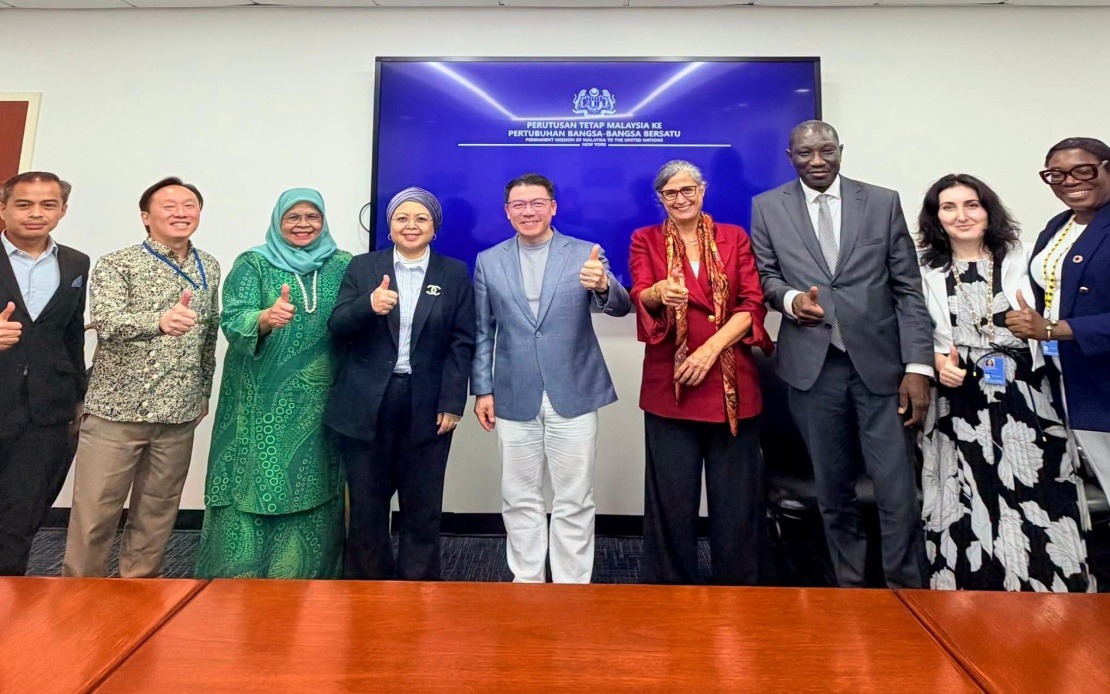
Malaysia has called upon the global community to move beyond merely discussing progress on urban development and instead deliver tangible results that will benefit billions of city dwellers worldwide. Housing and Local Government Minister Nga Kor Ming made this appeal during the High-Level Meeting on the Midterm Review of the New Urban Agenda (NUA) held at the United Nations Headquarters in New York, emphasising that the window for action is rapidly closing with just four years remaining until the 2030 deadline.
Speaking as President of the UN-Habitat Assembly, Nga stressed that this year's midterm review represents far more than a bureaucratic stocktaking exercise. Rather, he framed it as a pivotal moment where member states must fundamentally shift their approach from assessment to execution. His characterisation of the review as "an inflection point" rather than a mere documentation of shortcomings reflects growing frustration in some quarters that international commitments on sustainable development often fail to translate into meaningful on-the-ground change. The minister's stark reminder of the temporal constraint underscores the urgency with which policymakers must now confront persistent urban challenges that affect rapidly urbanising regions across the developing world.
Central to Malaysia's intervention at the UN forum were specific urban pressures that demand immediate attention. Nga identified the global housing shortage as a critical issue, noting that insufficient affordable accommodation remains a barrier to inclusive urban growth. He also highlighted the digital divide afflicting urban populations, particularly in lower-income communities, which excludes millions from participating fully in digitally-mediated economies and services. Climate resilience emerged as a third pillar of concern, reflecting the heightened vulnerability of densely populated urban centres to extreme weather events and environmental degradation. By framing these three interconnected challenges, Malaysia positioned itself as a voice for pragmatic, evidence-based urban policymaking that recognises the interdependency of housing, technology access and environmental sustainability.
The minister underscored Malaysia's own commitment to sustainable urbanisation through the country's broader MADANI Economy framework, a national initiative that aims to integrate environmental and social considerations into economic policy. This framing allowed Nga to anchor Malaysia's international advocacy in domestic policy coherence, demonstrating to other developing nations how urban sustainability objectives can align with economic development goals rather than creating false trade-offs. The reference to MADANI signals that Malaysian leadership on this agenda is not merely rhetorical but embedded within government structures and resource allocation decisions.
A significant element of Malaysia's strategy involves regional cooperation mechanisms, particularly the Asia-Pacific Urban Action Platform (AP-UAP), which the country champions alongside neighbouring partners. Rather than imposing externally-designed solutions, this platform functions as a vehicle for localising the Sustainable Development Goals within the specific contexts of Asian and Pacific nations. The mechanism facilitates cross-border learning, allowing cities facing similar challenges—from informal settlement management to public transport integration—to share successful approaches. Additionally, the platform mobilises green infrastructure financing, a crucial component for countries seeking to upgrade urban systems while meeting climate obligations.
Malaysia's track record on green building demonstrates concrete commitment beyond rhetoric. Nga cited the achievement of more than 500 million square feet of green-index buildings already constructed, with additional expansion planned before 2030. This metric reflects not merely environmental consciousness but also the substantial capital investments and regulatory frameworks required to transition construction industries toward sustainability. For other developing economies in Southeast Asia and the Asia-Pacific region grappling with rapid urban expansion and limited environmental regulation capacity, Malaysia's experience offers both an aspirational benchmark and a practical case study in how to embed sustainability standards within growth trajectories.
The minister articulated a crucial insight regarding urban transformation: meaningful progress emerges not from top-down mandates but from the convergence of strong political will, locally-designed solutions and multi-stakeholder collaboration. By emphasising "locally driven solutions," Nga acknowledged that generic international frameworks must be adapted to the specific conditions, governance capacities and social contexts of individual cities and regions. This perspective carries particular weight in Southeast Asia, where rapid urbanisation often outpaces institutional development and where top-heavy approaches frequently falter when confronted with complex local realities of informal settlement growth, migration pressures and fragmented governance structures.
The infrastructure investment imperative emerged as a key theme in Malaysia's intervention. Acknowledging that climate-resilient infrastructure requires substantial capital, Nga positioned increased investment in urban adaptation as non-negotiable for achieving the sustainable development agenda. This appeal addresses a persistent tension in international development discourse: the acknowledged gap between ambitious environmental targets and the available financing mechanisms. For middle-income countries like Malaysia and other ASEAN members pursuing rapid urbanisation while facing climate risks, mobilising sufficient capital for green infrastructure represents both an urgent challenge and an opportunity to influence global financing mechanisms toward greater support for developing economies.
The emphasis on inclusivity and leaving no community behind reflects international consensus around the equity dimensions of urban development. However, Nga's repeated stress on this principle suggests that in practice, marginalised populations—including informal settlement residents, migrant workers and lower-income households—often remain disconnected from mainstream urban development planning and benefits. By highlighting the need to ensure equitable outcomes, Malaysia positioned itself as advocating for urban development models that address not only environmental sustainability but also social justice and broad-based prosperity.
By framing the midterm review as requiring "more than just a renewed declaration," Nga implicitly critiqued the tendency of international forums to produce impressive-sounding commitments that lack enforcement mechanisms or resource backing. This pragmatic stance distinguishes Malaysia's approach from more idealistic or aspirational rhetoric, suggesting that the nation favours binding agreements, measurable targets and accountability frameworks. For Southeast Asian peers considering their own positions on global urban development agendas, Malaysia's emphasis on moving from declarations to deliverables offers a template for more results-oriented advocacy.
The breadth of stakeholders acknowledged in Nga's remarks—ranging from UN senior officials to civil society organisations and grassroots communities—underscores the multi-level governance reality of contemporary urbanisation. No single level of government or institutional actor can independently achieve sustainable urban transformation; rather, alignment across local administrators, national policymakers, international organisations and community representatives remains essential. Malaysia's positioning as President of the UN-Habitat Assembly places the country in a strategic position to help orchestrate such multi-stakeholder coordination across the Asia-Pacific region and globally.
Looking forward, Malaysia's advocacy trajectory suggests several implications for the region. First, Southeast Asian nations collectively possess significant leverage within international forums if they coordinate positions on sustainable urbanisation, allowing them to shape financing mechanisms and technology transfer arrangements more favourably. Second, the emphasis on regional platforms like the AP-UAP indicates that solutions tailored to Asian circumstances may prove more effective than generic global approaches. Third, the integration of urban sustainability into national economic frameworks like MADANI Economy demonstrates that environmental and development objectives need not compete but can be mutually reinforcing when properly structured. As the 2030 deadline approaches, Malaysia's urgent calls for acceleration and concrete action will likely intensify, establishing the foundation for more binding agreements and substantial resource commitments to sustainable urbanism across the Asia-Pacific region.

