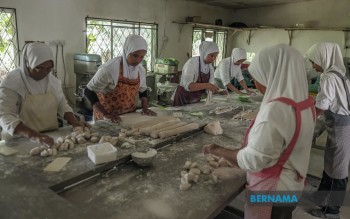
Malaysia's government is executing an ambitious 23-point programme designed to strengthen domestic production of halal ingredients and loosen the nation's dependence on international suppliers. Implemented across seven strategic pillars under the Halal Industry Master Plan 2030 (HIMP 2030), the initiatives represent a comprehensive bid to transform Malaysia's halal ecosystem from importer to producer, securing supply chain stability while creating economic opportunities in a sector increasingly central to the country's manufacturing and export profile.
The Ministry of Investment, Trade and Industry (MITI) disclosed that these initiatives have been active since late May 2026, operating through a structured phased rollout that balances immediate capacity-building with long-term structural change. Seven of the 23 projects explicitly concentrate on cultivating Malaysia's ingredient manufacturing base, backing research into novel halal products, channelling credit to small and medium enterprises struggling to access traditional financing, nurturing skilled workers, and moving innovations from laboratory to marketplace. This layered approach acknowledges that substituting imports requires more than investment alone—it demands technological advancement, human capital development, and commercial linkages across the entire value chain.
Implementation follows a deliberate sequencing framework that begins with detailed categorization of which ingredients represent strategic priorities and highest import dependency. Once these critical ingredients are identified, MITI explains, the government activates research clusters to develop local substitutes, facilitates capital flows to producers ready to scale, and actively recruits anchor companies to anchor domestic supply networks. The strategy implicitly recognises that Malaysia cannot realistically produce every halal ingredient domestically; instead, officials have elected to concentrate resources on categories where import bills are heaviest, technological feasibility is proven, and regional or global market demand is robust enough to justify investment.
A cornerstone of this infrastructure is the MyHALALINGREDIENTS platform, launched by the Department of Islamic Development Malaysia (JAKIM) in August 2025. This digital system functions as a comprehensive registry of raw materials flowing through Malaysia's halal manufacturing ecosystem, collecting data from industry players and creating an unprecedented transparency layer across the supply chain. Rather than operating in isolation, MyHALALINGREDIENTS integrates with the existing MYeHALAL certification platform, reducing bureaucratic friction and accelerating the time required for manufacturers to obtain halal certification—a crucial advantage in competitive global markets where certification delays can siphon business to competitors in Indonesia, Thailand, or Middle Eastern countries.
For Malaysian businesses, particularly MSMEs clustered in food processing, cosmetics, pharmaceuticals, and personal care sectors, the HIMP 2030 framework opens multiple pathways to expansion. Targeted financing schemes address the cash flow constraints that typically prevent small producers from investing in new equipment or scaling production to meet large-scale demand. By coupling credit access with commercialisation support, MITI aims to nurture a tier of domestic suppliers capable of replacing imported ingredients that currently represent cost pressures and supply chain vulnerabilities. This approach also generates employment, particularly in rural and secondary urban areas where ingredient cultivation and processing can anchor local economic development.
The targeting mechanism underlying MITI's approach merits particular attention. Rather than imposing blanket policies that might distort prices or create inefficiencies, the ministry has adopted a surgical strategy focused on ingredient categories meeting three criteria: strategic importance to Malaysia's halal brand and export positioning, heavy reliance on imports that creates exchange rate exposure and geopolitical risk, and demonstrated domestic production potential based on existing research or regional precedent. This framework prevents wasteful investment in unviable substitution efforts while concentrating public resources where market failures are most acute and returns most promising.
Industry collaboration forms the connective tissue holding this strategy together. MITI has actively orchestrated matching between small ingredient producers and larger manufacturers seeking to increase local content in their supply chains. These partnerships serve multiple functions: they create assured markets for emerging producers, reduce search and transaction costs for manufacturers seeking alternatives to international suppliers, and build relationships that often lead to technology transfer and continuous improvement. For multinational halal manufacturers operating in Malaysia, local sourcing initiatives also strengthen their position in markets where governments or consumers increasingly prefer products built from domestic ingredients, particularly in Organisation of Islamic Cooperation member states.
Regional context amplifies the significance of Malaysia's initiative. Indonesia, the world's largest halal product market by consumption, has long pursued domestic ingredient development, creating competitive pressure for Malaysian manufacturers to secure similar advantages. Thailand's emerging halal sector, though smaller, is rapidly professionalizing. Malaysia's HIMP 2030 must therefore be understood partly as defensive positioning—ensuring that Malaysian halal producers maintain cost advantages and supply reliability as neighbouring competitors upgrade their own capabilities. Simultaneously, Malaysia positions itself as a reliable source of halal ingredients for regional buyers and beyond, enhancing its soft power and export revenues in a sector projected to exceed USD 2.8 trillion globally by 2030.
The parliamentary response from which this disclosure emerged signals political support across parties for halal industry development. MITI's formal response to Datuk Ahmad Amzad Mohamed's query, posed through an opposition-affiliated representative, indicates that halal supply chain resilience commands consensus support in a parliament often fractured along partisan lines. This alignment reflects recognition that halal manufacturing touches fundamental national interests: economic diversification, job creation, Islamic leadership in global commerce, and reduced exposure to external supply shocks.
Longer-term success will depend on sustained execution, adequate funding flowing to MSMEs, and continuous adjustment based on market feedback. Halal ingredient substitution cannot rely solely on government mandates; producers must achieve genuine competitiveness on price, quality, and reliability metrics or face inevitable pressure to revert to cheaper imports when political attention shifts. The integration of MyHALALINGREDIENTS with MYeHALAL certification addresses one critical barrier, but others remain: building research capacity in areas like enzyme production or specialty fats requires years of investment, and global ingredient suppliers will inevitably compete fiercely to retain Malaysian customers.

