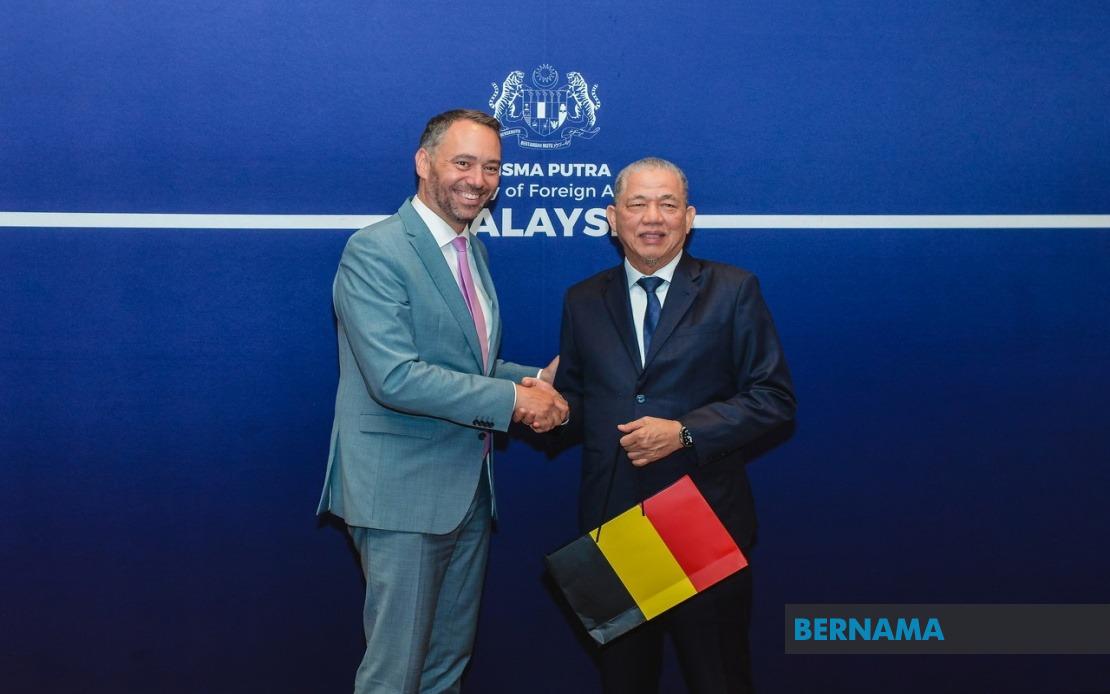
Deputy Prime Minister Datuk Seri Fadillah Yusof has provided Belgium with formal assurances that maritime routes through the South China Sea will continue to remain open for international commerce, reaffirming ASEAN's broader commitment to maintaining regional peace and security. The commitment emerged during a high-level meeting between Fadillah and Belgium's Deputy Prime Minister and Minister of Foreign Affairs, European Affairs, and Development Cooperation, Maxime Prévot, who is on an official two-day visit to Malaysia.
Fadillah's assurance directly addresses growing international apprehension regarding potential shipping disruptions in Southeast Asia's strategic waters, particularly given recent instability in other critical maritime chokepoints like the Strait of Hormuz. Belgium, as a major European trading nation heavily reliant on global commerce and maritime connectivity, has legitimate interests in ensuring unobstructed passage through one of the world's most economically vital waterways. The South China Sea annually handles approximately one-third of global maritime trade, making its security and accessibility essential for nations far beyond the region itself.
The Malaysian official emphasized that ASEAN member states collectively guarantee open access through these waters without any prospect of blockades or restrictions. This statement carries significant weight given Malaysia's strategic position as a coastal state bordering the South China Sea and its role within ASEAN's regional security framework. Fadillah underscored that the foundational principles guiding ASEAN's approach to the region centre on maintaining neutrality, ensuring peace, and upholding international maritime law, principles that have theoretically guided the bloc's diplomatic posture despite ongoing territorial disputes among claimant states.
Prévot's visit itself reflects Belgium's broader strategic interest in Southeast Asia beyond traditional economic ties. During their discussions, the Belgian official specifically requested Malaysia's assessment of current regional security dynamics and raised concerns about the possibility of shipping disruptions similar to those experienced in the Strait of Hormuz. This line of questioning suggests Belgium views Southeast Asia as potentially vulnerable to the type of geopolitical tensions that have periodically affected Middle Eastern shipping lanes, a concern that resonates across Europe's commercial and security establishments.
Beyond maritime security assurances, the two nations discussed substantially expanding bilateral cooperation across multiple sectors. Prévot expressed Belgium's strong interest in increasing bilateral trade volumes and indicated his country's willingness to reassess its travel advisory for Sabah, which currently reflects security concerns that may not fully reflect the state's current stability. A potential upgrade to Sabah's travel advisory would facilitate greater business engagement and tourism flows between the two countries, signalling Belgium's confidence in the region's trajectory.
A particularly notable area of emerging cooperation involves Malaysia's halal certification ecosystem. Belgium has proposed that Malaysia's established halal standards framework could serve as a potential model for broader adoption across the European Union. This initiative reflects both the growing Muslim population within Europe and the commercial advantages of adopting internationally recognized halal protocols. For Malaysia, it represents an opportunity to position the country as a standards-setting authority and technology provider within a significant external market, potentially expanding the influence of the nation's halal industry beyond traditional Asian markets.
Energy transition and technological advancement featured prominently in bilateral discussions, with both countries identifying opportunities for deepened cooperation. Belgium possesses considerable expertise in emerging clean technologies and advanced materials development, areas directly aligned with Malaysia's energy transition agenda. Fadillah, who also holds the portfolio of Minister of Energy Transition and Water Transformation, emphasized the potential for Belgian companies to increase investment in Malaysia while leveraging their technological capabilities to support the nation's broader sustainability objectives.
This high-level engagement reflects a broader diplomatic pattern wherein Southeast Asian nations are actively reassuring external partners about regional stability and commercial accessibility. Malaysia's explicit guarantee of open South China Sea access carries symbolic weight that extends beyond bilateral relations, positioning ASEAN as committed to maintaining the rules-based international order that underpins global commerce. The timing of such assurances during a period of heightened geopolitical uncertainty underscores the region's awareness of international stakeholder concerns and its desire to present itself as a reliable, stable environment for business and investment.
Prévot's visit marks his first trip to Malaysia since assuming office in February 2025, suggesting a deliberate effort by Belgium to strengthen ties with key Southeast Asian economies. The delegation-level visit, which included high-level participation from Malaysia's Foreign Ministry, demonstrates the seriousness with which both governments approach the relationship. The presence of Foreign Ministry Secretary-General Tan Sri Amran Mohamed Zin and Belgium's Ambassador to Malaysia, Peter Van Acker, at the formal luncheon highlighted the diplomatic significance accorded to the engagement.

