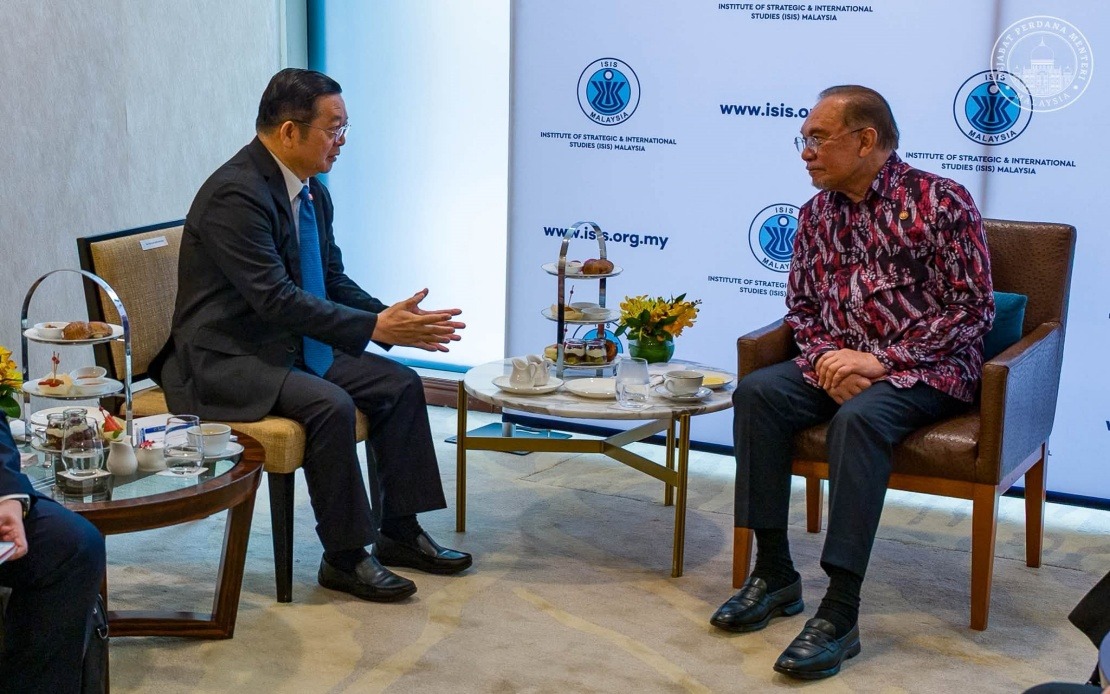
Prime Minister Datuk Seri Anwar Ibrahim has restated Malaysia's unwavering commitment to strengthening ASEAN as a cohesive regional bloc capable of addressing the needs and aspirations of its member states and citizens. Speaking during a high-level engagement at the 39th Asia-Pacific Roundtable in Kuala Lumpur, Anwar emphasised Malaysia's resolve to sustain its constructive contributions to the association at a time when the region faces mounting geopolitical and economic headwinds. The prime minister, who also holds the portfolio of Finance Minister, underscored the importance of maintaining ASEAN's institutional strength and relevance as global pressures intensify.
The discussion between Anwar and ASEAN Secretary-General Dr Kao Kim Hourn took place following the prime minister's keynote address and participation in the roundtable's deliberative sessions. This courtesy call provided a crucial platform for both leaders to assess the regional landscape and chart a coordinated course forward on critical matters affecting the bloc's stability and prosperity. The engagement reflected Malaysia's active engagement with ASEAN's central secretariat and its role in shaping the association's strategic direction during a pivotal period for Southeast Asian geopolitics.
A significant portion of their conversation centred on Myanmar, where the region continues grappling with the aftermath of the 2021 military coup and its profound humanitarian and political ramifications. The Myanmar situation remains one of ASEAN's most intractable challenges, testing the association's collective resolve and its principle of non-interference while simultaneously highlighting the need for pragmatic diplomatic solutions. Malaysia, as a key regional player with significant bilateral ties to Myanmar, has maintained an active interest in finding pathways toward political stabilisation and reconciliation that respect ASEAN's consensus-based approach.
The South China Sea disputes also featured prominently in the bilateral discussion, reflecting the persistent tensions surrounding maritime territorial claims and freedom of navigation in one of the world's most strategically vital waterways. As a Southeast Asian nation with direct stakes in the sea's security architecture, Malaysia views this issue through both a security and economic lens. The ongoing negotiations around a binding Code of Conduct involving ASEAN and China remain a central focus for regional stability, and Malaysia's position as both a claimant state and an ASEAN member places it at the intersection of these complex negotiations.
Artificial intelligence emerged as an unexpected but increasingly important agenda item, reflecting ASEAN's recognition that technological advancement and digital transformation are reshaping economic competition and societal structures across the region. The rapid proliferation of AI applications presents both opportunities for economic growth and innovation, as well as risks related to job displacement, data security, and digital governance. Malaysia's growing tech sector and digital ambitions make this discussion particularly relevant, as the country positions itself as a Southeast Asian hub for technological innovation and digital economy development.
The accession of Timor-Leste as ASEAN's 11th full member state in September 2023 represented a significant milestone for the association's geographic reach and geopolitical influence. However, the transition from formal accession to full operational integration within ASEAN's various mechanisms and initiatives presents ongoing challenges and opportunities. The post-accession phase requires coordinated support and capacity building to ensure Timor-Leste can meaningfully participate in ASEAN's institutional frameworks, from security cooperation to economic integration initiatives.
Implementation of the ASEAN Community Vision 2045 constitutes another fundamental agenda for the bloc's future trajectory. This long-term strategic framework aims to create a rules-based, people-oriented, and socially responsible community characterised by regional peace, stability, and shared prosperity. However, translating this ambitious vision into tangible outcomes across diverse member states with varying levels of development and differing priorities remains a complex undertaking. Malaysia's commitment to this vision reflects its broader stakes in a cohesive, prosperous Southeast Asia.
The geopolitical fallout from the conflict in West Asia has begun reverberating across Southeast Asia, creating new security considerations and economic uncertainties for ASEAN nations. Disruptions to shipping routes, regional security alignments, and the potential for broader great-power competition affecting the Indo-Pacific region are concerns that ASEAN collectively must address. For Malaysia, as a maritime trading nation and a country with significant Muslim populations, the West Asian conflict carries heightened resonance and requires careful diplomatic navigation.
Anwar's remarks stressed that ASEAN must remain anchored to the foundational principles that have guided the association since its 1967 inception. Unity among member states, ASEAN's role as the central pillar of regional architecture, and commitment to close inter-state cooperation form the bedrock upon which regional peace and prosperity must be built. These principles have occasionally been tested by conflicting national interests and sovereignty concerns, yet remain the touchstone for resolving disputes and maintaining consensus.
The broader message conveyed through these discussions reflects Malaysia's sophisticated understanding that ASEAN's strength lies in its institutional cohesion and collective agency in navigating an increasingly multipolar global order. By maintaining constructive engagement with both the ASEAN Secretariat and fellow member states, Malaysia reinforces its role as a responsible, proactive stakeholder in regional affairs. This posture aligns with Malaysia's historical positioning as a founding ASEAN member and a consistent advocate for multilateralism and regional solidarity.
For Malaysian observers and policymakers, these engagements underscore the premium placed on ASEAN cooperation as geopolitical competition intensifies in the Indo-Pacific. Malaysia's dual commitment to strengthening ASEAN while managing its own strategic partnerships reflects the delicate balancing act required of Southeast Asian states in the contemporary security environment. The nation's ability to contribute meaningfully to ASEAN's institutional effectiveness directly influences its capacity to shape outcomes on issues ranging from maritime security to economic integration, making ASEAN centrality an enduring strategic imperative for Kuala Lumpur.

