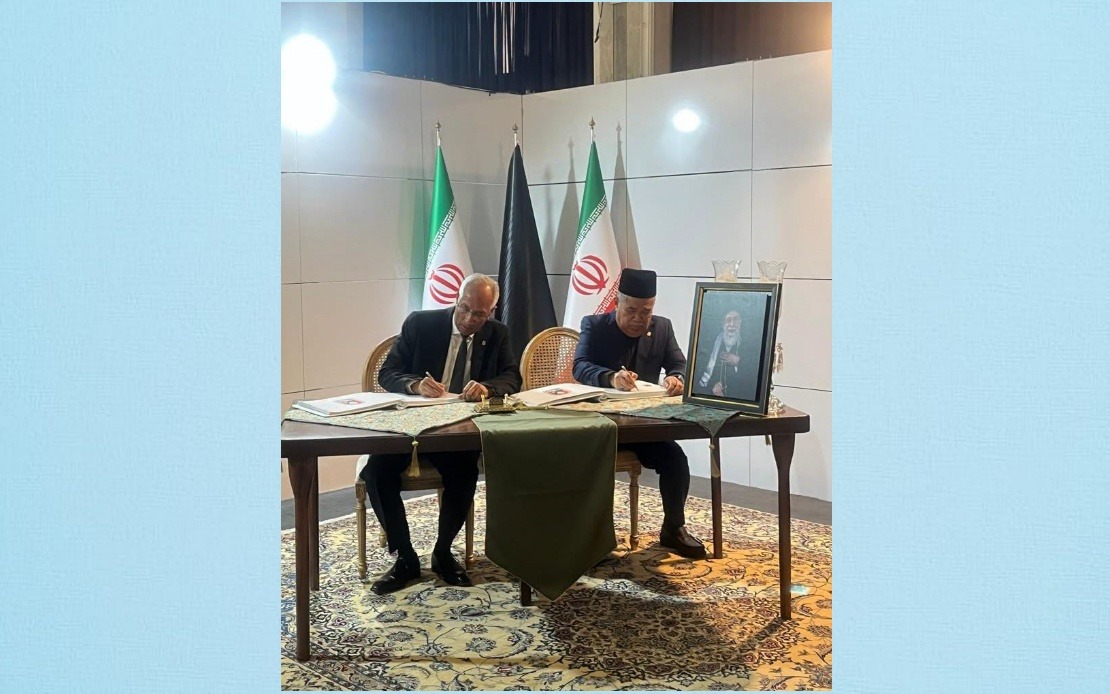
Malaysia's Minister of Agriculture and Food Security Datuk Seri Mohamad Sabu headed the country's official delegation to Iran this week to honour Ali Khamenei, the nation's former Supreme Leader who was killed in a combined United States and Israeli operation on February 28. The visit underscores Malaysia's continued diplomatic engagement with Tehran and reflects the broader regional dynamics of Southeast Asian nations maintaining ties with key Middle Eastern powers despite international tensions.
The ceremonial proceedings at the Grand Mosalla in Tehran marked a significant moment in Malaysia's foreign relations, with Mohamad receiving a formal welcome from prominent Iranian officials including Parliament Speaker Mohammad Bagher Ghalibaf and Foreign Minister Abbas Araghchi. This level of diplomatic protocol demonstrates the importance Iran places on maintaining its relationship with Malaysia, a Muslim-majority nation with considerable regional influence in Southeast Asia.
Khamenei's death came more than four months before the funeral rites, a lengthy interval that reflects the complexity of organising state ceremonies of this magnitude in Iran. The extended mourning period, which Mohamad detailed in his account, encompasses multiple cities with deep religious significance in Shia Islam. The processions began in Tehran and are scheduled to proceed through Qom, Najaf, and Karbala before culminating in Mashhad, where Khamenei will be laid to rest at the Imam Reza Shrine on July 9.
For Malaysian readers, this diplomatic mission carries implications beyond ceremonial formality. Malaysia has long sought to position itself as a bridge between the Western and Islamic worlds, and maintaining respectful relations with Iran—despite its controversial geopolitical position—aligns with this broader foreign policy objective. The presence of a senior cabinet minister at such proceedings signals Malaysia's commitment to preserving engagement with influential Middle Eastern actors, even when those relationships prove diplomatically delicate.
The circumstances surrounding Khamenei's death remain contentious on the international stage. The attribution to joint United States and Israeli action reflects the ongoing tensions between Iran and these two nations, conflicts that have reverberations throughout Asia-Pacific security dynamics. Malaysia, as a trading nation with interests across multiple regions and ideological spheres, must navigate these complexities with diplomatic sensitivity. By participating in the funeral rites without inflammatory rhetoric, Malaysia demonstrates pragmatic statecraft.
Mohamad's religious observances during the visit, including prayers for the deceased's soul, reflected the spiritual dimensions of the delegation's purpose. His invocation of Islamic mercy and forgiveness provides a counterbalance to the geopolitical tensions underlying Khamenei's death, emphasizing the humanitarian and religious aspects of the occasion. This approach resonates with Malaysian audiences, where Islam forms a central part of national identity and governance frameworks.
The delegation's participation in ceremonies spanning multiple holy cities within Iran highlights the religious significance of Khamenei's legacy within Shia Islamic circles. Najaf and Karbala hold particular importance as sites of profound religious meaning, and their inclusion in the mourning itinerary underscores the spiritual weight afforded to Khamenei's position as Supreme Leader. For Malaysian Muslims, these cities carry their own historical and spiritual resonance, making the journey a point of connection across the Islamic world.
Diplomatic missions of this nature typically involve extensive behind-the-scenes coordination and planning. The careful orchestration of Mohamad's arrival, his reception by senior Iranian officials, and his participation in ceremonial functions demonstrates the preparatory work undertaken by Malaysia's foreign service. Such attention to protocol and procedure strengthens bilateral relationships and establishes frameworks for future dialogue and cooperation.
From a regional perspective, Malaysia's engagement with Iran must be understood within the context of Southeast Asian nations' broader Middle Eastern strategies. While ASEAN maintains official neutrality on many international disputes, individual member states like Malaysia often pursue independent diplomatic courses reflecting their particular strategic interests and religious or cultural affinities. This delegation exemplifies such selective engagement, balancing international relations with domestic constituencies and values.
The timing of the funeral, occurring in early July, coincided with various regional developments in Southeast Asia and the Middle East. Malaysia's active participation ensures its voice remains heard within Iranian policy circles and demonstrates to domestic audiences that the government takes seriously its role as a Muslim nation with international standing. The presence of ministerial-level representation signals respect and acknowledges the significance Iran holds within Islamic governance frameworks.
Looking forward, such diplomatic exchanges contribute to networks of understanding that prove valuable during periods of international crisis or negotiation. By maintaining dignified engagement with major Islamic nations, Malaysia preserves its capacity to mediate regional disputes and advocate for Southeast Asian interests in broader geopolitical discussions. The delegation's respectful participation in Khamenei's funeral rites accordingly serves purposes extending well beyond ceremonial obligation, reinforcing Malaysia's position as an engaged and respected actor within Islamic diplomatic circles.

