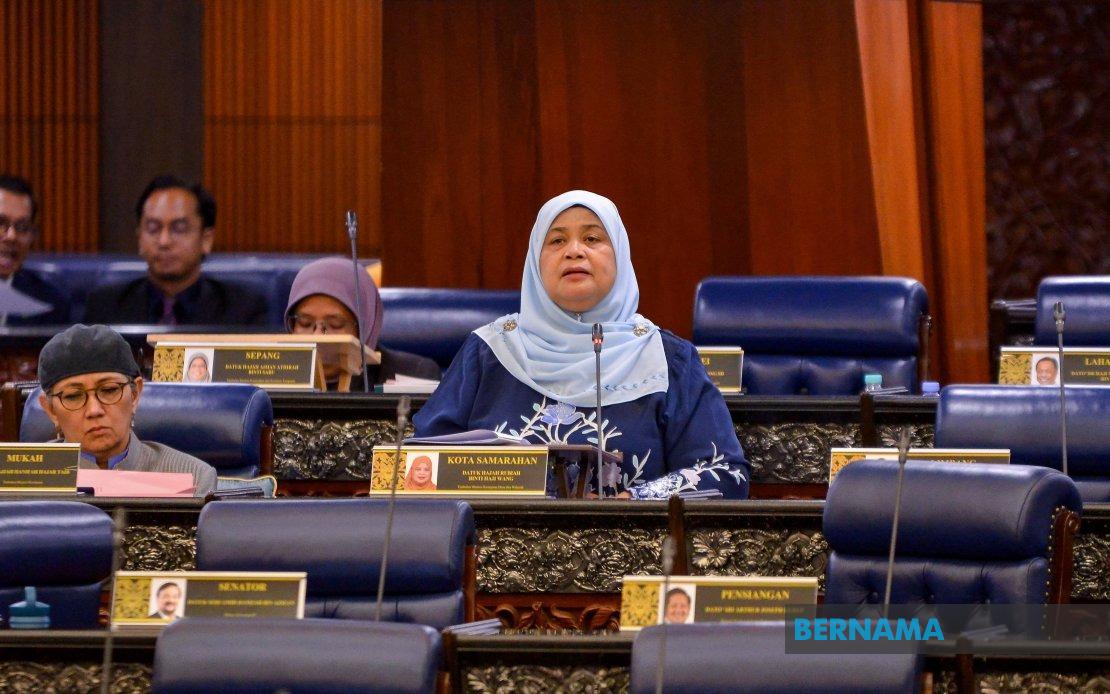
The government is pursuing a comprehensive overhaul of Malaysia's technical and vocational education landscape, centring on a revised accreditation framework that directly incorporates validation from major employers and industry bodies. Announcing the initiative in parliament on July 14, Deputy Minister of Rural and Regional Development Datuk Rubiah Wang explained that this structural transformation forms the backbone of the TVET 2.0 strategy, positioning the sector to address long-standing workforce misalignment and enhance job placement success.
The persistent problem of skills mismatch between graduates and employer expectations has constrained Malaysia's competitiveness in high-skilled sectors. By embedding direct industry recognition into accreditation processes, the government aims to ensure that curriculum content and learning outcomes reflect real-world labour market conditions rather than remaining insulated from practical workplace requirements. This realignment carries particular significance for Southeast Asia's largest economy, where rapid digitalisation and technological adoption have outpaced workforce preparation in many technical disciplines.
Under the TVET 2.0 framework, the Ministry of Rural and Regional Development (KKDW) envisions producing graduates who transcend traditional vocational boundaries. Beyond technical competence, the strategy emphasises developing entrepreneurs and business creators capable of generating employment in rural areas, thereby contributing to broader national development goals and reducing urban migration pressures. This entrepreneurial dimension reflects recognition that vocational graduates increasingly require business acumen alongside technical skills to thrive in knowledge-driven economies.
A distinctive pillar of the reformed approach involves the TVET Tahfiz programme, which targets a specific segment of learners seeking to combine religious education with technical training. Graduates of this pathway are expected to possess both spiritual grounding and digital proficiency, positioning them to function effectively in Malaysia's multicultural economy while maintaining character-based values. The programme underscores how vocational education can accommodate diverse educational philosophies without compromising technical rigour.
Institutions under KKDW's purview are already pioneering specialised technology hubs tailored to emerging sectoral demands. TVETMARA Petaling Jaya concentrates on Internet of Things applications, while TVETMARA Besut develops expertise in cloud computing infrastructure. TVETMARA Pasir Mas operates as a dedicated centre for Building Information Modelling, a critical technology reshaping construction and infrastructure sectors across Asia. These focused specialisations represent a departure from generalist approaches, allowing deeper mastery of technologies essential to competitive industries.
The German-Malaysian Institute exemplifies international collaboration within the TVET ecosystem, facilitating knowledge transfer in advanced manufacturing aligned with Industry 4.0 principles. Germany's globally recognised technical education model provides a template for integrating automation, robotics, and smart systems manufacturing into Malaysian curricula. This partnership signals confidence in adopting best-practice international standards while maintaining local relevance and contextualisation.
At the higher education tier, Universiti Kuala Lumpur's Bachelor of Artificial Intelligence Technology programme represents an expansion of TVET's scope into tertiary-level technical education. This credential bridge acknowledges that artificial intelligence competency now extends beyond specialised research domains into practical implementation across industries, creating fresh opportunities for vocational graduates to progress into advanced technical roles without traversing conventional university pathways.
The strategic emphasis on emerging technologies—artificial intelligence, IoT, cloud computing, cybersecurity, automation, and robotics—reflects Malaysia's positioning within global digital transformation trends. These skill domains command premium salaries and offer sustainable career progression, potentially reversing perceptions that vocational routes lead to lower-wage trajectories. For Malaysian youth, particularly in less urbanised regions, TVET pathways with genuine technology depth offer economically compelling alternatives to conventional university degrees increasingly crowded in oversupplied disciplines.
The accreditation transformation carries implications for regional economic competition within ASEAN. Vietnam, Thailand, and Indonesia are simultaneously investing in technical workforce development, creating a competitive talent market across Southeast Asia. Malaysia's ability to produce employers who recognise and value TVET graduates depends partly on demonstrating that accreditation standards genuinely reflect international best practices rather than administrative formality. Industry-led validation mechanisms build this credibility.
Implementing this reformed framework requires sustained coordination between government training institutions, private sector employers, professional bodies, and educational accreditors. Success hinges on genuine employer engagement beyond consultation into active curriculum co-design and apprenticeship integration. Malaysia's manufacturing, construction, digital services, and energy sectors will determine whether TVET 2.0 delivers substantive improvements in graduate relevance or remains aspirational without operational embedding.
The rural economic dimension warrants particular attention. By developing techno-entrepreneurs equipped to establish or manage technology-enabled enterprises in non-urban areas, TVET 2.0 could catalyse decentralised economic development. Smart farming applications, renewable energy systems, digital commerce platforms, and technical service businesses represent plausible rural deployment scenarios for graduates combining entrepreneurial preparation with advanced technical skills.
Government messaging emphasises that TVET graduates must remain competitive within global labour markets, not merely domestic employment contexts. This outward orientation suggests recognition that Malaysian technical professionals increasingly pursue careers across ASEAN and beyond. Embedding internationally recognised technology standards into accreditation frameworks enhances graduate mobility and earning potential whilst strengthening Malaysia's regional positioning as a source of quality technical talent.
The success of TVET 2.0 ultimately depends on stakeholder behaviour change extending beyond policy documents. Employers must prioritise recruiting graduates from accredited programmes, educators must embrace industry standards without compromising pedagogical integrity, and government must sustain funding and institutional support through implementation cycles that span years rather than fiscal budgets.

