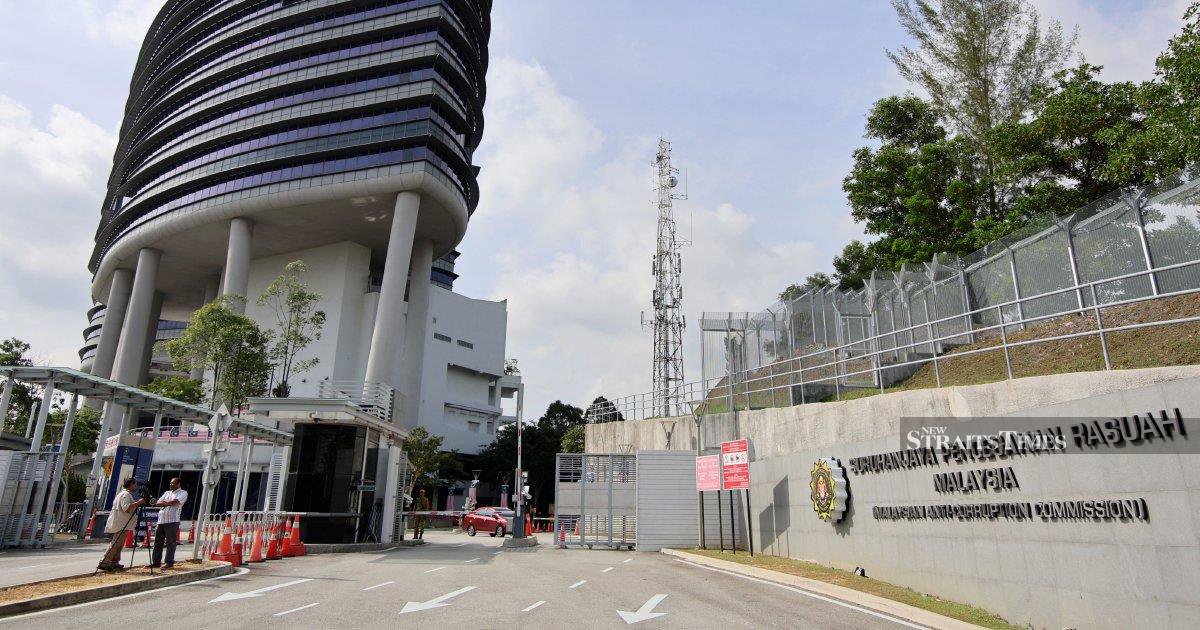
Malaysia's anti-corruption agency has identified whistleblower protection as a critical lever for strengthening institutional integrity across the federal government. The Malaysian Anti-Corruption Commission has directed ministry secretaries-general and department directors-general to elevate this agenda within their respective agencies, framing it as an integral component of governance reform aimed at lifting the nation's position in the Corruption Perceptions Index by the end of this decade.
The push underscores a fundamental shift in how Malaysia approaches the detection and prevention of graft. Rather than relying solely on investigative capacity and enforcement mechanisms, the MACC recognizes that robust channels for internal reporting—coupled with credible protections for those who come forward—create an institutional environment hostile to corruption. When public sector employees feel confident that they can expose wrongdoing without facing retaliation, intimidation, or career sabotage, they become force multipliers in the fight against abuse of power.
Whistleblower protection frameworks operate on a simple but powerful principle: the vast majority of corruption within government agencies is typically known to insiders long before external investigators detect it. A procurement officer observes inflated quotations; an accountant spots irregular fund transfers; a project manager notices phantom contractors. These individuals occupy the frontline positions most likely to witness systematic misconduct. Yet their willingness to report depends entirely on whether they believe the system will protect them from professional and personal consequences.
Malaysia's international standing on corruption perception has long been a point of concern for policymakers. The Corruption Perceptions Index, compiled annually by Transparency International, ranks countries based on their perceived levels of public sector corruption as assessed through expert surveys and opinion polls. A country's CPI score influences foreign investor confidence, capital flows, and international trade relationships. For an economy as trade-dependent as Malaysia's, movement in either direction carries material consequences for competitiveness and growth prospects.
The directive to departmental heads carries significant weight because it signals that whistleblower protection has transitioned from peripheral concern to core governance priority. When senior civil servants receive explicit instructions to implement such measures, implementation capacity typically follows. Budget allocations materialise, training programmes launch, and institutional cultures begin to shift. The emphasis from the MACC suggests that previous voluntary approaches or piecemeal initiatives have proven insufficient to create the systematic coverage needed across the sprawling federal bureaucracy.
Proper whistleblower protection typically encompasses multiple dimensions beyond mere policy existence. Confidentiality guarantees must be genuinely enforceable; reporting channels must be accessible to all staff regardless of rank; and crucially, there must be visible enforcement mechanisms that deter retaliation attempts. When whistleblowers receive transfers, demotions, or non-renewal of contracts following their reports, even sophisticated policy frameworks collapse into mere theatre. Southeast Asian neighbours have learned this lesson painfully; robust protections exist on paper in numerous jurisdictions while whistleblowers face quiet career destruction in practice.
The timeline toward 2030 is both ambitious and realistic. Creating genuine institutional change in large public bureaucracies typically requires sustained effort across at least a five-year cycle. New policies must be communicated through multiple channels, incorporated into staff induction programmes, and reinforced through incident management. Case law develops gradually as actual reports surface and are handled correctly—or mishandled—establishing precedent and institutional learning. By framing the objective around a specific future date, the MACC is creating accountability benchmarks that permit mid-course corrections and reassessment.
Regional context matters significantly here. Countries across Southeast Asia vary widely in their CPI rankings and corruption trajectories. Some have made steady progress through consistent institutional reform; others have experienced stagnation or reversal. Vietnam, Indonesia, Thailand, and the Philippines all occupy different positions within the regional corruption landscape. Malaysia's current standing reflects a complex history of reform efforts, high-profile prosecutions, and systemic vulnerabilities. Leadership changes at the anti-corruption agency itself have influenced public confidence in enforcement. In this environment, demonstrating tangible improvements in governance infrastructure—particularly through mechanisms that enhance detection capacity—serves both practical and symbolic purposes.
For ordinary Malaysians, the implications extend beyond abstract rankings. Functional whistleblower protection affects contract award processes in infrastructure projects, procurement integrity in healthcare and education, and fair administration of public benefits. When corruption goes unchecked within government agencies, costs are borne by taxpayers through inflated project prices, lower service quality, and reduced resources available for productive spending. Conversely, environments where potential wrongdoers know that colleagues can safely report misconduct experience lower corruption prevalence and higher public trust.
The MACC's approach also reflects international best practice in anti-corruption strategy. Multilateral organisations and bilateral development partners consistently emphasise that countries achieving sustained CPI improvements typically combine several elements: strong legal frameworks, independent investigating agencies with adequate resources, credible prosecution of offenders, and importantly, operational systems that enable detection. Whistleblower protection feeds directly into this detection function, creating information flows that investigations would otherwise struggle to generate.
Implementation will require more than exhortation from the anti-corruption agency. Civil service training institutions must incorporate whistleblower rights and responsibilities into their curricula. Human resources departments must establish clear procedures for protecting reporters and investigating retaliation claims. Senior leaders must visibly demonstrate commitment through their own adherence to the systems they establish. The MACC itself requires sufficient capacity to receive, validate, and respond appropriately to reports without excessive delay that might discourage future reporting.
The agenda set by the anti-corruption agency represents recognition that Malaysia's governance infrastructure must evolve beyond its current state to achieve meaningful improvement in international perception and, more importantly, in actual integrity performance. Whether the ministries and departments follow through with genuine implementation rather than nominal compliance will ultimately determine whether this initiative becomes a watershed moment in Malaysian governance or another unfulfilled reform initiative.

