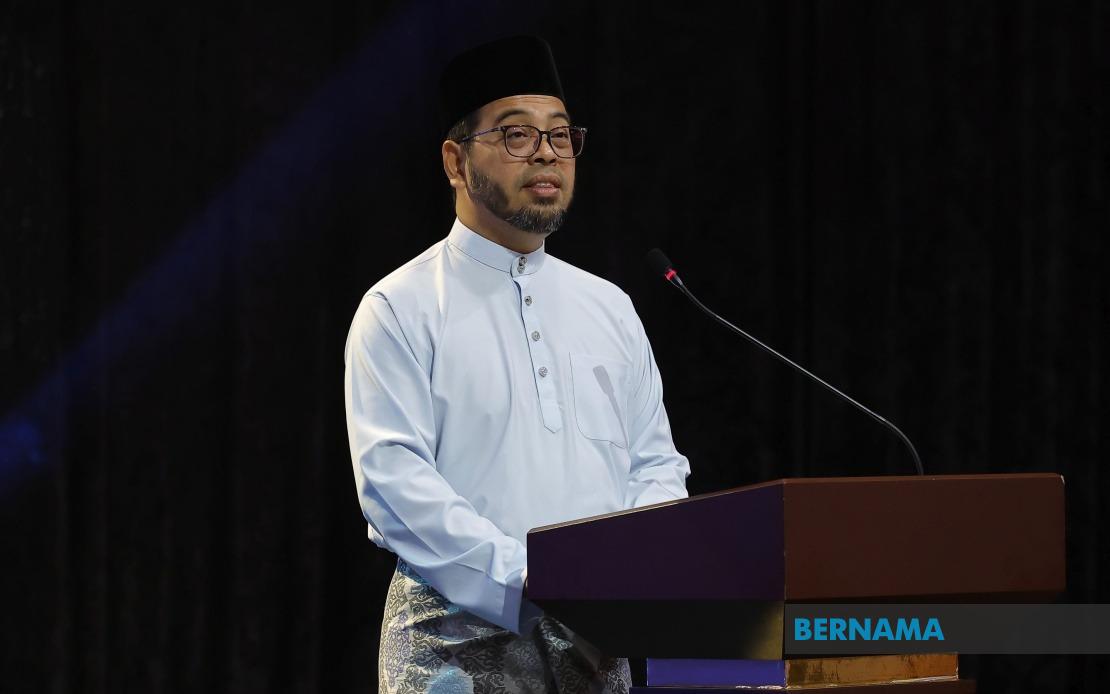
The call for greater solidarity within Malaysia's Muslim community has gained fresh momentum, with Religious Affairs Minister Dr Zulkifli Hasan emphasising that internal disputes must be resolved to build a stronger, more resilient ummah capable of navigating an increasingly turbulent global landscape. Addressing attendees at the national Maal Hijrah 1448H/2026M celebration held at Putra Mosque in Putrajaya, Zulkifli stressed that meaningful social progress demands more than policy interventions—it requires genuine personal transformation spanning the intellectual, spiritual and moral dimensions of individual Muslims.
The ceremony, which drew prominent figures including Sultan Perak Sultan Nazrin Shah and Deputy Prime Minister Datuk Seri Fadillah Yusof, operated under the banner "MADANI Dihayati, Ummah Diberkati," reflecting the government's broader agenda of integrating Islamic values into national development frameworks. This thematic choice underscores how Malaysia's leadership views religious cohesion not merely as a spiritual matter but as integral to the country's socioeconomic resilience and national stability in an era of unprecedented complexity.
Zulkifli's remarks arrive amid a period when Malaysia faces tangible economic headwinds, including global supply chain disruptions and widespread uncertainty affecting international markets. By framing community unity as essential to weathering these challenges, the minister positioned Islamic solidarity as a practical tool for national prosperity rather than an abstract ideal. His argument suggests that when Malaysians—particularly Muslims who comprise roughly 70 percent of the population—operate from a foundation of shared commitment and collective purpose, their nation gains decisive advantages in competing internationally and managing domestic crises.
Central to the minister's message was the assertion that division within Muslim society generates proportional weakness, diminishing the nation's capacity to defend its interests and advance its citizens' wellbeing. Conversely, a united community creates conditions for mutual benefit and collective flourishing. This framing implicitly acknowledges existing fault lines within Malaysian Islam, whether along sectarian lines, interpretive differences, or political divisions that occasionally surface in public discourse. Rather than ignoring these tensions, Zulkifli called for their active resolution through the adoption of shared values and common cause.
The concept of hijrah, traditionally understood as the Prophet Muhammad's migration from Mecca to Medina, was reinterpreted by Zulkifli as an ongoing personal and communal journey. In contemporary terms, he suggested, hijrah represents the continuous abandonment of destructive behaviours and the deliberate cultivation of virtues that strengthen social bonds among Muslims. This reframing transforms a historical religious narrative into a practical framework for modern living, potentially resonating with younger Malaysians seeking relevance between religious tradition and contemporary life challenges.
Zulkifli's appeal extends beyond the Muslim community, however. He acknowledged that Malaysia's constitutional and pluralistic framework requires all citizens—regardless of religious affiliation or cultural background—to maintain shared responsibility for preserving national peace, stability and prosperity. This inclusive articulation reflects the delicate balance that senior Malaysian officials must maintain: affirming Islamic values and community priorities while simultaneously honouring the nation's commitment to religious freedom and multicommunal coexistence. Such messaging carries particular weight given Malaysia's history of communal tensions and ongoing debates about the relationship between Islam and Malaysian citizenship.
The minister explicitly urged Malaysians to sustain support for government initiatives designed to elevate Muslim dignity and ensure Islamic values maintain vitality within the national context. This appeal for institutional loyalty suggests concerns that public support for religious policy initiatives might be weakening, whether due to political fragmentation within the Muslim vote or competing claims by opposition parties to represent Islamic interests more authentically. By anchoring his plea to national welfare rather than partisan advantage, Zulkifli attempted to transcend partisan divisions that occasionally characterise Malaysian religious politics.
The presentation of awards during the ceremony carried symbolic significance beyond ceremonial formality. The National Tokoh Maal Hijrah award to International Islamic University Malaysia Rector Prof Emeritus Datuk Dr Osman Bakar acknowledged contributions to Islamic education and scholarship within Malaysia's institutional framework. Simultaneously, the International Tokoh Maal Hijrah award to Moroccan Islamic scholar Dr Ahmad Al-Raysuni positioned Malaysia as participant in global Islamic intellectual networks, connecting Malaysian Islamic development to broader Muslim world movements and thought leaders.
For Malaysian policymakers and observers, Zulkifli's intervention signals that government leadership views religious unity not as a luxury but as essential infrastructure for national competitiveness. As Malaysia navigates economic slowdowns, technological disruption, and regional geopolitical shifts, appeals to communal solidarity become increasingly prevalent across multiple policy domains. Whether such calls translate into sustained behavioural change or represent aspirational rhetoric common to ceremonial occasions remains an open question, particularly given the persistent diversity of views within Malaysian Islam regarding doctrine, practice and political direction.
The timing of this appeal—delivered during Maal Hijrah observances when Islamic reflection naturally peaks—reflects thoughtful consideration of audience receptivity. Yet the underlying message carries implications extending far beyond the calendar year's Islamic commemoration. By positioning Muslim unity as prerequisite for national advancement during a period of global economic uncertainty, Zulkifli articulated a vision in which religious solidarity becomes synonymous with pragmatic national interest. For Malaysia's Muslim majority and for the broader multicommunal society, this framing carries consequences for how religious identity intersects with citizenship, national development, and the shared project of maintaining stability across one of Southeast Asia's most diverse democracies.