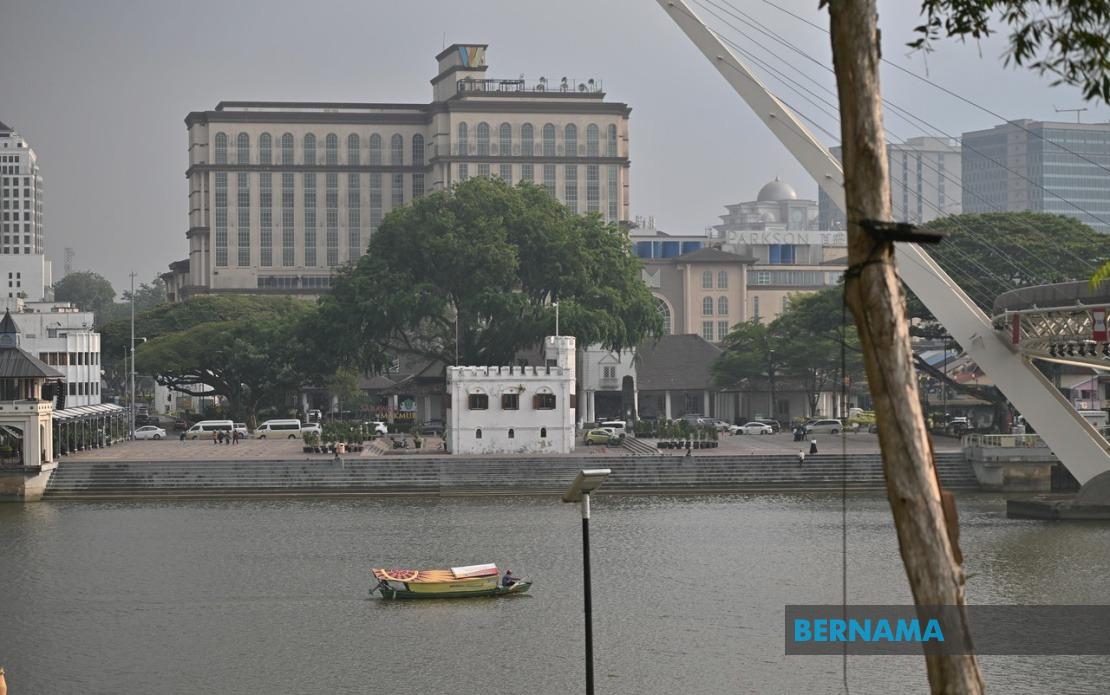
The chairman of the Alliance for a Safe Community has sounded an alarm over Malaysia's vulnerability to transboundary haze, warning that the recent deterioration in air quality signals an urgent need to abandon reactive crisis management in favour of systematic prevention. Tan Sri Lee Lam Thye's call comes as six schools in Tebedu, Sarawak, were forced to close following Air Pollutant Index readings that exceeded 200, reflecting the immediate threat posed by unhealthy air spreading across the country. His intervention underscores a growing frustration with the cyclical nature of haze episodes that have plagued the region for decades, each time catching Malaysian authorities scrambling to respond rather than forestall the problem.
The situation in Sarawak carries particular gravity given the meteorological conditions now taking shape. Extended periods of hot, dry weather create a tinderbox environment where fires ignite easily and propagate with alarming speed, while prevailing wind patterns can transport smoke across borders within hours. Lee's observation that these circumstances have recurred repeatedly suggests Malaysia has accumulated sufficient experience to predict when vulnerability spikes, yet continues to be caught flat-footed. This pattern of preparedness failure reflects not a lack of warning systems but rather inconsistency in how Malaysia mobilizes its institutional capacity when early indicators emerge.
To address this structural weakness, Lee has outlined a comprehensive five-point strategy that places real-time monitoring at its foundation. Enhanced surveillance of fire hotspots, regions with high combustion risk, wind direction shifts, and minute-by-minute air quality data would create the informational backbone necessary for timely intervention. By systematically tracking these variables, decision-makers could activate protective measures before pollution thresholds reach crisis levels, potentially preventing school closures, workplace disruptions, and the respiratory health deterioration that affects millions. The emphasis on monitoring reflects an understanding that transboundary haze operates according to predictable physical laws; it is not a mysterious phenomenon but rather one that can be anticipated through rigorous environmental surveillance.
Lee's advocacy for strengthened implementation of the ASEAN Agreement on Transboundary Haze Pollution highlights a regional cooperation framework that, while technically comprehensive following its 2015 ratification by all member states, remains underutilized in practical execution. The agreement provides mechanisms for information-sharing, coordinated response protocols, and mutual accountability, yet Lee contends that the gap between contractual commitment and ground-level action remains dangerously wide. This discrepancy reflects a common challenge in regional governance: member states may commit to frameworks in principle while allocating insufficient resources or political will to implementation. Malaysia, as a country affected by both imported haze from Indonesia and the need to prevent its own contribution to regional air pollution, stands to benefit substantially from demanding faster, more decisive action within the existing ASEAN structure.
Crucially, Lee's framework does not exempt Malaysia from responsibility for its own air quality degradation. Illegal open burning, peat fires driven by land development, agricultural clearing, and unregulated land conversion contribute significantly to domestic pollution. By insisting that Malaysia must first regulate these internal sources while simultaneously pressing neighbouring countries to do likewise, Lee articulates a principle of mutual obligation rather than one-sided blame. This approach proves more diplomatically sustainable than accusations of culpability, while also addressing the uncomfortable reality that Malaysia cannot claim victimhood from transboundary pollution while tolerating similar practices within its own borders. The domestic dimension deserves far more attention in public discourse than it typically receives.
The economic and social calculus of haze prevention extends well beyond air quality metrics. Lee explicitly identifies transboundary haze as a multi-dimensional crisis affecting public health through respiratory illness, economic productivity through workplace disruptions and increased healthcare expenditure, and social equity through disproportionate impacts on vulnerable populations. School closures disrupt education for hundreds of thousands of students, representing not merely inconvenience but measurable learning loss accumulating over repeated episodes. Healthcare systems face surges in respiratory admissions and associated costs. Businesses operating outdoors or dependent on customer traffic experience lost revenue. Yet these cascading consequences rarely feature prominently in resource allocation discussions, creating a perverse incentive structure where prevention appears expensive relative to post-crisis remediation, even though comprehensive cost-benefit analysis would demonstrate prevention's overwhelming superiority.
A fundamental attitudinal shift underpins Lee's call for treating haze as a recurring regional disaster rather than an annual seasonal nuisance. The language chosen to describe a phenomenon shapes societal response to it; positioning haze as an inconvenience permits treating it with casual indifference, whereas recognizing it as a disaster legitimizes comprehensive preventive investment. This reframing aligns with disaster risk reduction frameworks increasingly adopted across Southeast Asia, which emphasize early warning systems, public preparedness protocols, and coordination across government agencies and private sectors. Schools, hospitals, and workplaces require clear operational procedures for air quality emergencies, staff training, and access to accurate real-time information. Currently, such institutional readiness remains inconsistently distributed across Malaysian society.
The role of public communication in haze preparedness deserves emphasis in Lee's framework. Timely, accurate, and accessible information about air quality conditions enables individuals to make protective health decisions while also creating political pressure for preventive government action. Conversely, delayed or contradictory information breeds public confusion and reduces the effectiveness of protective measures. Malaysia's capacity to deliver consistent, science-based air quality information through multiple channels requires investment in communications infrastructure and coordination protocols. The dissemination of information must reach beyond urban populations and educated elites to encompass rural communities, informal sector workers, and vulnerable groups with limited internet access.
ASEAN's early-warning systems for transboundary haze represent a significant regional asset that remains incompletely leveraged. These mechanisms combine meteorological modelling, fire detection satellites, and air quality monitoring to provide advance notice of emerging haze risks. However, early warning provides value only when complemented by predetermined response protocols and the institutional flexibility to activate them rapidly. Lee's emphasis on acting immediately upon indicators reflects recognition that the window between warning and hazardous conditions often compresses significantly, particularly in intensifying conditions. This requires pre-positioned resources, pre-authorized emergency declarations, and coordination agreements that eliminate bureaucratic delay.
The cost differential between prevention and reaction shapes the economic argument for Malaysia's commitment to transboundary haze prevention. Maintaining enhanced monitoring systems, investing in regional cooperation mechanisms, and sustaining public preparedness infrastructure requires ongoing financial commitment measured in millions of ringgit annually. Yet the costs of major haze episodes—healthcare expenditures, lost productivity, environmental remediation, emergency response operations—frequently reach billions of ringgit. Over a decade-long horizon, prevention's cumulative cost proves substantially lower than accumulated reaction costs. This straightforward arithmetic suggests that budget constraints, rather than economic logic, often determine Malaysia's level of haze preparedness investment. Political prioritization rather than analytical deficiency thus emerges as the binding constraint on improved prevention.
Lee's proposal also reflects emerging recognition that transboundary haze prevention represents a shared responsibility transcending national boundaries. Indonesia's forest management policies, land-use regulations, and enforcement capacity directly determine smoke flows affecting Malaysian air quality, just as Malaysian practices influence regional conditions. This interdependence creates mutual vulnerability but also mutual opportunity for improvement. Strengthening Indonesia's fire prevention and suppression capacity benefits Malaysia directly, creating a rationale for Malaysian financial and technical assistance to Indonesian counterparts beyond humanitarian sentiment. Similarly, Malaysia's commitment to eliminating domestic fire sources provides credibility when pressing Indonesia for similar measures.
The pathway forward requires Malaysia to internalize Lee's central insight: haze prevention represents not primarily an environmental or public health issue, though it certainly encompasses both, but rather a governance challenge demanding institutional coordination, sustained political commitment, and regional diplomatic engagement. The technical knowledge exists. The institutional mechanisms, through ASEAN agreements, are in place. What remains is the political will to allocate resources systematically, coordinate responses efficiently, and treat transboundary haze as a serious recurring threat rather than a periodic inconvenience. Lee's intervention contributes to building that political momentum by clearly articulating what evidence and experience demonstrate: prevention substantially outperforms reaction, and Malaysia possesses sufficient capacity to implement it.

