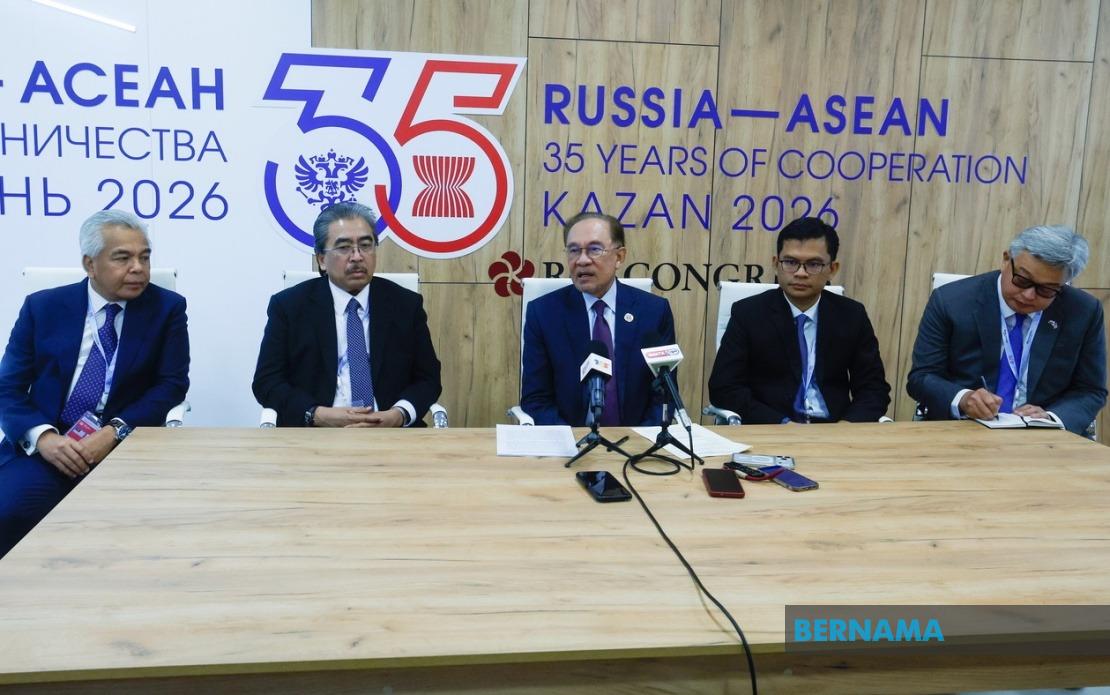
Prime Minister Datuk Seri Anwar Ibrahim has called for Malaysia to accelerate negotiations on visa-free travel arrangements and establish direct flight routes with Russia, describing the current disparity in visitor numbers as both puzzling and economically problematic. Speaking at a press conference in Kazan following his attendance at the ASEAN-Russia Commemorative Summit, Anwar highlighted that Malaysia receives only 100,000 Russian tourists annually, a figure he characterised as disproportionately low when compared with neighbouring countries that maintain comparable diplomatic relationships with Moscow.
The prime minister drew direct comparisons to underscore the opportunity cost of Malaysia's current position. Turkey welcomes approximately five million Russian tourists each year, while Thailand attracts around two million visitors from Russia annually. These numbers demonstrate not merely a minor shortfall but a significant gap in market capture that carries substantial implications for Malaysia's tourism revenue and economic growth. The disparity becomes more striking when one considers that Malaysia possesses comparable geographic advantages, competitive hospitality infrastructure, and cultural attractions that should theoretically appeal to the Russian tourist demographic.
Anwar identified two interconnected obstacles preventing Russia from becoming a major source market for Malaysian tourism. The absence of direct flight connectivity between Malaysian and Russian cities creates logistical friction that deters travel, particularly for leisure tourists who prioritise convenience and journey efficiency. Simultaneously, payment infrastructure remains inadequate, with transaction mechanisms and financial settlement procedures between the two nations creating friction that extends beyond mere inconvenience to becoming a genuine barrier to commerce and leisure travel.
The prime minister's frustration extended beyond the technical aspects of bilateral travel arrangements. He contended that Malaysia remains ensnared by outdated procedural frameworks and institutional practices that no longer serve contemporary economic realities. These "archaic" systems, as he termed them, perpetuate inefficiencies that could be remedied through streamlined policies and modernised regulatory approaches. More pointedly, Anwar suggested that Malaysian policymakers and institutions have become overly cautious about potential negative responses from third countries, allowing external considerations to dictate internal policy decisions that should prioritise national economic interests.
This diplomatic restraint, according to Anwar, represents a self-imposed constraint that Malaysia can ill afford. The concern about how "certain countries may respond or react negatively" to closer Malaysia-Russia ties should not dictate tourism policy decisions that would primarily benefit Malaysian workers, businesses, and communities. The prime minister's comments suggest a willingness to recalibrate Malaysia's approach to balancing international sensitivities against tangible economic benefits, a perspective that reflects broader shifts in Malaysian foreign policy toward greater pragmatism and strategic autonomy.
Interestingly, Anwar extended his analysis beyond Russia to encompass Iran, another country with which Malaysia maintains formal diplomatic relations but from which tourism flows remain substantially constrained. He implied that similar bureaucratic and procedural obstacles affect travel facilitation with multiple nations, and that these barriers reflect systemic issues within Malaysia's tourism and regulatory framework rather than country-specific challenges. This observation points to a wider institutional challenge within Malaysian government apparatus that transcends bilateral relationships and suggests opportunities for comprehensive tourism liberalisation across multiple markets simultaneously.
The timing of these remarks during the ASEAN-Russia Commemorative Summit carries particular significance for regional dynamics. As ASEAN seeks to strengthen partnerships with Russia amid evolving geopolitical tensions, individual member states like Malaysia are exploring concrete measures to deepen engagement beyond diplomatic protocols. Enhanced tourism flows represent a tangible manifestation of closer bilateral relations, generating employment, foreign exchange, and people-to-people connections that reinforce political and economic ties more effectively than ceremonial summits alone.
For Malaysia specifically, unlocking Russian tourism represents a diversification strategy that reduces over-reliance on traditional source markets concentrated in Northeast Asia and Europe. Russian tourists, characterised by longer average stays and higher discretionary spending compared with some regional visitors, could contribute substantially to hospitality, retail, and entertainment sectors throughout Malaysia. Beyond immediate economic benefits, deepening tourism relationships with Russia would strengthen Malaysia's position as a genuinely global tourism destination rather than one dependent on narrow geographic markets.
The infrastructure requirements for realising Anwar's vision are substantial but achievable. Direct flight connectivity would demand commercial viability assessments and potentially government incentives during initial phases, yet successful bilateral air links between Malaysia and other distance markets demonstrate feasibility. Payment system upgrades would require coordination between Malaysia's financial regulators, banking institutions, and their Russian counterparts, yet such technical arrangements have been established with numerous countries and present no insurmountable obstacles.
Anwar's comments reflect a broader strategic recalibration within Malaysian governance toward prioritising concrete economic outcomes over abstract diplomatic considerations. By publicly articulating frustration with bureaucratic inertia and institutional risk-aversion, the prime minister signals his expectation that relevant agencies should accelerate implementation of visa and flight infrastructure reforms. This represents not merely tourism policy adjustment but a statement about how Malaysia intends to compete for global markets and harness international partnerships for national development.
The ASEAN-Russia summit itself provided the diplomatic platform for these assertions, yet the practical implementation challenges remain substantial. Malaysian tourism authorities must now translate these prime ministerial directives into actionable timelines and concrete deliverables. Success requires not only bilateral negotiation with Russian counterparts but also internal coordination across Malaysian civil aviation, immigration, finance, and tourism sectors—an institutional coordination challenge that often proves more difficult than international diplomacy itself.

