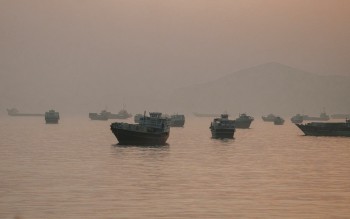
Malaysia faces mounting economic pressures from geopolitical tensions in the Middle East, with Economy Minister Akmal Nasrullah Mohd Nasir cautioning that the country cannot afford complacency in the face of renewed instability around the Strait of Hormuz. The warning comes as Iran has declared closure of the strategically vital waterway following a series of United States military strikes on July 8, prompting Akmal to emphasise that both government and private sector must prepare for widespread disruptions to Malaysia's trade-dependent economy.
While some commercial vessels continue to transit the Strait of Hormuz despite the tensions, Akmal stressed that this modest traffic should not lull policymakers or business leaders into believing the crisis poses minimal risk. The Strait remains one of the world's most critical maritime chokepoints, with roughly 20 percent of global oil supply passing through its waters under normal circumstances. Even partial or sporadic closure creates significant uncertainty for oil markets and shipping schedules, effects that ripple far beyond the Middle East region and directly impact Southeast Asian economies like Malaysia.
The minister outlined a cascade of economic challenges likely to emerge if the situation persists. Oil prices face upward pressure as supply concerns mount, while shipping companies divert vessels around Africa or through longer routes, exponentially increasing transit times and transportation costs. These shipping pressures translate into higher costs for raw material imports essential to Malaysian manufacturing. Food prices also face upward pressure when agricultural inputs and products must travel longer distances or when supply chains become fragmented, a concern particularly acute for a nation that imports significant quantities of agricultural commodities.
Akmal's analysis highlighted the intricate interdependencies within modern supply chains, using the plastics manufacturing sector as a concrete example. A disruption to plastic producers ripples through food packaging, electrical and electronics components, automotive assembly, medical device manufacturing, construction materials, agricultural inputs, and manufactured exports. Malaysia's own electronics and semiconductors sectors, major contributors to national exports, depend critically on stable access to specialty chemicals and materials often sourced globally. When one link in this chain breaks, the consequences multiply across otherwise unrelated industries.
For Malaysian businesses, the warning signals a need for urgent operational review and contingency planning. Many manufacturers have optimised supply chains for just-in-time delivery and minimal inventory holding to reduce costs, a model that becomes dangerously brittle during geopolitical crises. Companies reliant on imports face difficult choices between building strategic reserves, seeking alternative suppliers in potentially costlier regions, or accepting higher financial risk. Smaller enterprises may struggle to absorb the cost increases that larger multinational corporations can weather, potentially widening competitive gaps within Malaysian business sectors.
The broader economic implications extend to consumer prices and household purchasing power. Inflation in transportation and raw material costs inevitably feeds through to retail prices for everyday goods. Malaysian consumers already contending with cost-of-living pressures could face further pressure on their budgets if supply chain disruptions persist. This compounds challenges for lower-income households whose spending is most sensitive to price changes in essential goods like food and fuel.
Akmal's emphasis on reducing external dependency highlights a strategic challenge that Malaysia must address alongside immediate crisis response. The country's prosperity rests substantially on open international trade and access to global supply chains, a reality that cannot be easily changed. However, the government can incentivise diversification of supplier relationships, encourage investment in strategic stockpiles of critical materials, and support research into domestic alternatives for vulnerable inputs. Regional cooperation with other Southeast Asian nations to coordinate supply chain resilience could also yield benefits.
The timing of these warnings reflects genuine policy concern rather than political grandstanding. Hormuz tensions have flared multiple times over recent years, but the scale of recent United States military action and Iran's response represent a material escalation. The government appears committed to preparing the economy rather than waiting passively for crisis to strike. Whether businesses have absorbed these messages and begun contingency planning remains unclear, though preliminary reports suggest limited public awareness of supply chain vulnerabilities.
Looking ahead, the Hormuz situation exemplifies how distant geopolitical conflicts have immediate economic consequences for Malaysia. The country's position as a major trading hub and manufacturing centre makes it particularly exposed to Middle Eastern instability. Even if the current crisis resolves quickly, the episode reinforces that Malaysian policymakers and business leaders must maintain vigilance regarding external shocks. Building economic resilience through supply chain diversification, strategic reserves, and regional cooperation represents the most prudent long-term response to an increasingly volatile global environment.

