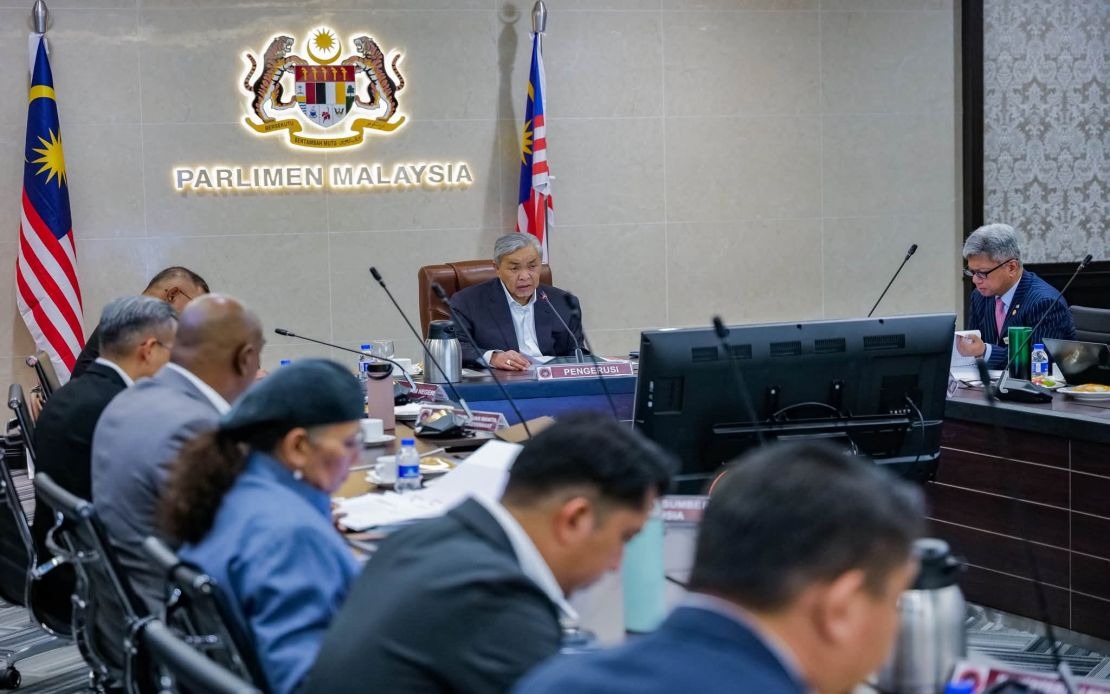
Malaysia faces mounting pressure to refine its approach to refugee management in response to a deteriorating global humanitarian crisis, Deputy Prime Minister Datuk Seri Dr Ahmad Zahid Hamidi indicated at a high-level government review this week. The nation must develop more robust administrative systems that simultaneously honour its humanitarian obligations whilst protecting its citizens and territorial sovereignty, he stressed, underlining the complexity that policymakers must navigate in an era of unprecedented mass displacement.
The global refugee crisis has reached alarming proportions, with more than 122 million people now displaced by armed conflict, persecution, and geopolitical instability. This staggering figure underscores why countries throughout Asia must urgently examine whether their current institutional capacity can accommodate mounting humanitarian demands without compromising border security or public safety. For Malaysia, which already hosts significant refugee populations and faces geographic proximity to several conflict zones, the stakes are particularly high.
Ahmad Zahid, who additionally serves as Rural and Regional Development Minister, articulated his perspective following the 6th Meeting of the High-Level Committee on the Management of Refugees and Asylum Seekers. The committee's deliberations focused on evaluating Malaysia's existing refugee governance architecture and identifying areas requiring enhancement. His comments suggest the government recognises that effective refugee policy transcends mere administrative procedure—it constitutes a matter of national security and public confidence.
The committee's agenda encompassed several substantive areas. Officials reviewed current implementation of policies and mechanisms designed to ensure Malaysia's refugee framework remains systematic and aligned with broader national priorities. This assessment reflects broader recognition that ad-hoc approaches to refugee management create vulnerabilities and undermine public trust. The government appears intent on establishing clearer, more transparent operational standards.
Central to Malaysia's refugee administration is the Refugee Registration Document (DPP), which serves as the primary identification mechanism for recognised refugees. The committee examined how this system functions in practice, evaluating whether documentation procedures adequately serve humanitarian objectives whilst maintaining appropriate security protocols. As refugee populations grow, ensuring efficient registration becomes increasingly critical for both the individuals seeking protection and government agencies responsible for their oversight.
Accessibility to essential services represents another dimension receiving governmental attention. The committee specifically discussed streamlining guidelines governing refugee access to education and healthcare—sectors where ambiguous regulations often create bottlenecks that harm vulnerable populations. By clarifying which agencies hold responsibility for service provision and establishing legally compliant procedures, the government aims to reduce confusion and administrative burden whilst ensuring equitable access to these fundamental services.
Ahmad Zahid's emphasis on balancing humanitarian and security concerns reflects longstanding tensions within Malaysian refugee policy. Humanitarian advocates argue that Malaysia, as a non-signatory to the 1951 Refugee Convention, bears particular responsibility to demonstrate compassionate governance. Meanwhile, security professionals and some public figures contend that rapid refugee influx strains public services, potentially creating opportunities for security threats to exploit administrative gaps. Constructing policy frameworks satisfying both constituencies remains deeply challenging.
For Malaysia specifically, refugee management intersects with multiple policy domains. Providing education to refugee children requires coordination between the Education Ministry and immigration authorities. Healthcare access demands engagement with the Health Ministry and private medical providers. Employment questions involve the Human Resources Ministry and labour regulators. This fragmentation explains why the High-Level Committee mechanism exists—it attempts to impose coordination across disparate agencies pursuing sometimes conflicting objectives. Success depends on sustained political will and adequate resource allocation.
Regional dynamics further complicate Malaysia's position. Myanmar's Rohingya crisis, instability in Afghanistan, and Palestinian displacement create humanitarian pressures that neighbouring countries, including Malaysia, cannot entirely ignore. Yet accepting refugees strains finite resources. The government must therefore develop policies demonstrating Malaysia respects international humanitarian principles whilst maintaining legitimate authority over national borders and public resources. This balancing act requires sophisticated institutional design and careful political communication.
The government's renewed focus on this portfolio suggests recognition that current arrangements may require enhancement. Whether through improved inter-agency coordination, clearer legal frameworks, or enhanced training for officials, incremental improvements could advance both humanitarian and security objectives. However, such reforms succeed only when underpinned by consistent political commitment and adequate funding—areas where Malaysian refugee policy has historically encountered challenges.
Looking forward, Malaysia's approach to refugees will significantly influence regional refugee governance patterns. If the nation successfully develops frameworks demonstrating that humanitarian protection and security can coexist, other Southeast Asian countries may adopt comparable models. Conversely, policy failures could reinforce regional scepticism about refugee protection, potentially worsening conditions for displaced populations throughout Asia. The stakes extend beyond Malaysia's borders, encompassing broader regional stability and humanitarian leadership in the developing world.

