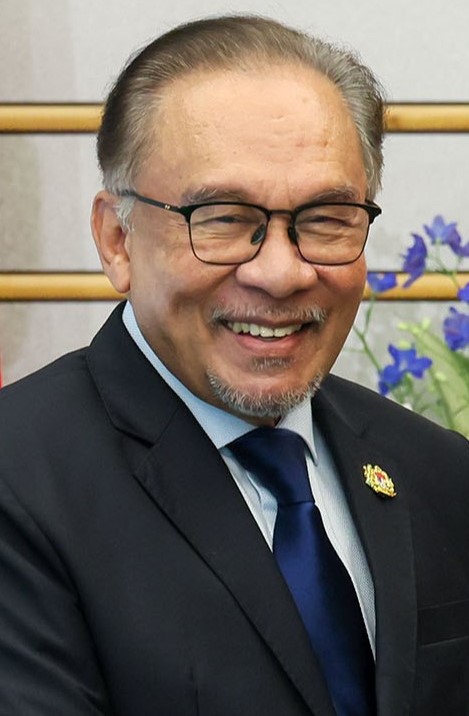
The Malaysian government has publicly called for citizens to exercise compassion and humanity toward the Rohingya population residing in the country, even as intensifying public debate and media scrutiny place the contentious issue firmly at the centre of national discourse. The appeal from government officials represents an attempt to reframe the conversation around one of Southeast Asia's most persistent humanitarian crises, steering discussion away from polarisation toward a position that acknowledges both the rule of law and fundamental human values.
The timing of this intervention reflects growing concern within policymaking circles about the direction of public discourse. Malaysia has long been home to one of the world's largest concentrations of Rohingya refugees outside camps, with estimates suggesting the population exceeds 180,000 people. This presence has created complex domestic pressures as competing interests—concern for vulnerable populations, security considerations, economic anxieties, and nationalist sentiment—vie for prominence in political and public conversation.
The government's emphasis on balancing legal and humanitarian concerns addresses a fundamental tension that has characterised Malaysia's approach to the Rohingya question. As a signatory to the 1951 Refugee Convention, Malaysia has certain international obligations, yet the nation is not a signatory to the 1967 Protocol, creating ambiguity about the precise scope of responsibilities. This legal complexity has allowed successive administrations to maintain a position that is neither fully aligned with the framework of comprehensive refugee protection nor entirely closed to humanitarian considerations.
Rising media attention and public sentiment have intensified scrutiny of existing policies. Recent months have witnessed increased coverage examining everything from integration challenges to security concerns and economic impacts on host communities. This heightened focus reflects broader trends in Southeast Asia where refugee and migrant issues have become increasingly politicised, with competing narratives gaining traction across different demographic and ideological segments of the population.
The government's intervention can be understood partly as a preemptive measure against further polarisation. By explicitly invoking values of compassion and humanity, officials are attempting to establish a moral framework that transcends the security versus charity dichotomy that often dominates public debate. This approach acknowledges that framing the issue purely through a security lens risks dehumanisation, while framing it purely through a humanitarian lens ignores legitimate concerns about resource allocation, integration capacity, and border management.
Malaysia's position as a regional economic hub and substantial player in ASEAN affairs adds another dimension to this issue. The way the country manages its Rohingya population carries implications for regional cooperation, ASEAN unity, and Malaysia's international standing. While Myanmar—the origin point of the Rohingya exodus—remains largely unresponsive to international pressure regarding the conditions that created this displacement crisis, Malaysia must navigate its own internal political dynamics while maintaining credibility within international forums.
The call for balance also reflects practical challenges facing administrative and security agencies. Law enforcement, social services, and local authorities must operate within legal frameworks while simultaneously confronting human realities of vulnerable populations. Border security and immigration enforcement, while necessary, intersect with instances where individuals face genuine danger or humanitarian need. Officials operating at these frontlines often encounter situations where mechanical application of regulations conflicts with immediate human welfare considerations.
Educational and civic efforts will likely form part of any broader strategy to shift public discourse. Understanding the historical context of the Rohingya displacement, recognition of shared humanity across religious and ethnic lines, and appreciation for the institutional capacity challenges that Malaysia faces can all contribute to more nuanced public opinion. However, such efforts must be paired with transparent governance, evidence-based policy discussions, and acknowledgment of legitimate concerns if they are to gain genuine traction rather than appear as propaganda.
The government's statement also carries implicit recognition that the current situation is unlikely to be resolved quickly or completely. Short-term repatriation to Myanmar appears impossible given the political situation there, while wholesale integration of such large numbers remains controversial domestically. This reality means Malaysia must craft a middle path: providing sufficient protection and support to prevent humanitarian catastrophe while implementing policies that address public concerns and maintain institutional capacity.
Regional dynamics further complicate Malaysian approaches. Other ASEAN nations with Rohingya populations, particularly Bangladesh, face vastly different circumstances and capacity constraints. Bangladesh hosts roughly 900,000 Rohingya in camps, facing enormous resource pressures. Malaysia's approach and statements can influence regional responses and set precedents for how affluent nations within the region handle such situations, making consistency between rhetoric and action particularly important.
Looking forward, the government's emphasis on humanitarian values alongside legal obligations suggests a commitment to avoiding the extremes that have characterised debates in some Western countries, where refugee questions become purely securitised or depoliticised. Malaysia appears to be positioning itself as seeking a middle ground that respects both the dignity of vulnerable populations and the legitimate interests of its own citizens in orderly governance and resource management.
However, translating this rhetorical commitment into concrete policy that satisfies both humanitarian imperatives and public concerns remains the central challenge. Consistent messaging, transparent decision-making, and visible investment in managing integration challenges will be necessary to build the public trust required for any sustainable approach to this enduring issue.