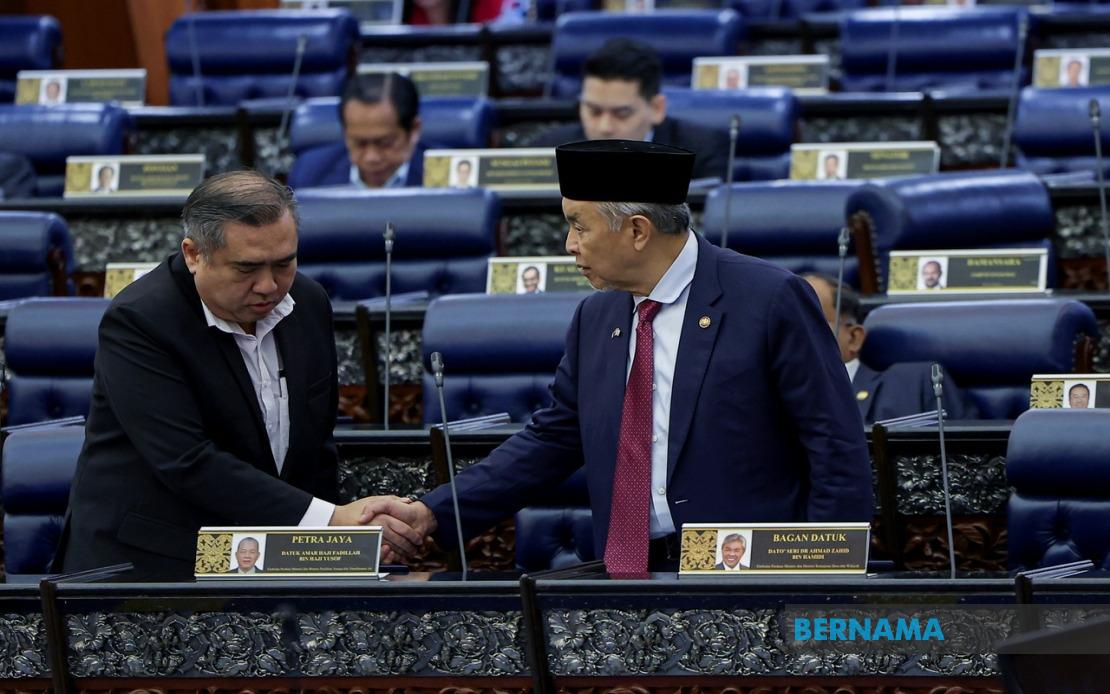
Parliament moved forward yesterday with legislation designed to overhaul Malaysia's approach to road safety enforcement. Transport Minister Anthony Loke tabled the Road Transport (Amendment) Bill 2026 for first reading in the Dewan Rakyat, marking the opening phase of what promises to be a significant strengthening of the regulatory framework governing vehicle use and traffic compliance across the country. The Minister indicated the Bill would advance to second reading during the current parliamentary sitting, setting the stage for accelerated consideration of the proposed amendments.
The legislative package represents a comprehensive recalibration of penalties across the traffic enforcement spectrum. The Bill raises baseline fines for numerous driving infractions from RM300 to RM500, a substantial increase affecting everyday violations that enforcement officers encounter on Malaysian roads. This escalation applies broadly, encompassing offences ranging from failure to display proper vehicle registration to operating an unregistered or illegally modified vehicle, as well as the failure to carry a valid driving licence or driving with documentation that has expired or been revoked.
Among the most notable changes is a dramatic increase in consequences for driving with a suspended licence. Currently, individuals caught operating vehicles while under suspension face a maximum penalty of one year imprisonment or a fine reaching RM5,000. Under the amended provisions, this punishment expands to either three years in prison or a financial penalty between RM3,000 and RM10,000, effectively tripling the potential jail sentence and broadening the fine range. This adjustment signals government determination to prevent habitual offenders from continuing to access the road network following suspension or revocation of their driving rights.
The Bill introduces an entirely new criminal category targeting street racing and speed-testing activities on public roads, reflecting mounting official concern about dangerous driving behaviour that endangers other motorists and civilians. A first conviction under this new provision would attract fines between RM2,000 and RM10,000, imprisonment of up to two years, or both. However, individuals convicted a second time face considerably harsher consequences, including fines ranging from RM5,000 to RM20,000 and mandatory imprisonment of at least five years. This escalating penalty structure demonstrates a legislative intent to deter participation in illegal racing through meaningful legal consequences that intensify upon repeat offending.
False statements or misrepresentation in traffic-related matters would be treated with particular severity under the amendments. Individuals convicted of providing false information face potential fines reaching RM200,000 or imprisonment for a decade, representing among the harshest penalties in the package. Such stringent measures aim to preserve the integrity of vehicle registration, licensing, and compliance documentation by making fraudulent submissions economically ruinous and criminally serious.
The Bill significantly expands the enforcement toolkit available to police and road transport officers. Enhanced authority to control and redirect traffic movement provides law enforcement greater operational flexibility in responding to congestion, accidents, and public safety incidents. These broadened powers represent a recognition of the need for more agile enforcement mechanisms in managing increasingly complex traffic scenarios across Malaysian cities and highways.
New procedural frameworks introduced by the legislation address the growing problem of micromobility devices on public roads. The Bill establishes formal procedures for the detention and subsequent disposal of e-scooters, hoverboards, and similar devices that have proliferated in urban areas, often creating hazards for pedestrians and creating enforcement challenges. Coupled with this, the amendments specifically criminalise obstruction or assault of enforcement officers, designating such conduct as an arrestable offence that no longer requires prior permission for apprehension.
Additionally, the Minister gains enhanced authority to set fees relating to entry permits for foreign-registered vehicles travelling through Malaysia. This provision modernises administrative flexibility around international vehicle movement and potentially generates additional revenue streams for road safety initiatives. The increase in maximum compound amounts for negotiated settlements on compoundable offences, from RM300 to RM500, provides enforcement officers with greater discretion in securing compliance without necessarily proceeding to formal prosecution.
For Malaysian motorists and the broader road safety community, these amendments represent a fundamental shift in the severity of consequences for traffic violations. The escalation of both fines and imprisonment terms reflects official recognition that Malaysia's road fatality statistics demand more potent deterrents. Neighbouring jurisdictions and regional analysts will likely monitor implementation closely, as the amendments position Malaysia among the region's stricter traffic enforcement regimes. The legislative changes also signal that compliance with vehicle registration, driver licensing, and roadworthiness requirements will no longer be treated as mere administrative matters amenable to light penalties, but rather as serious legal obligations backed by proportionate consequences.
The Bill's focus on repeat offenders and particularly dangerous behaviour, such as unlicensed driving and street racing, suggests targeted policy thinking rather than blanket severity. By differentiating between first and subsequent convictions and creating specific criminal categories for the most harmful conduct, the legislation attempts to address documented problem areas in Malaysian road safety rather than simply raising all penalties uniformly. This nuanced approach may increase public acceptance compared to indiscriminate penalty increases across all traffic matters.
With second reading scheduled for the current parliamentary session, the amendments appear positioned for relatively swift progression through the legislative process. Industry observers and traffic safety advocates will closely follow parliamentary debate to assess whether further modifications emerge or whether the Bill advances substantially as tabled. The amendments, once enacted, will require substantial public communication and enforcement training to ensure consistent application across Malaysia's traffic police and road transport authorities.