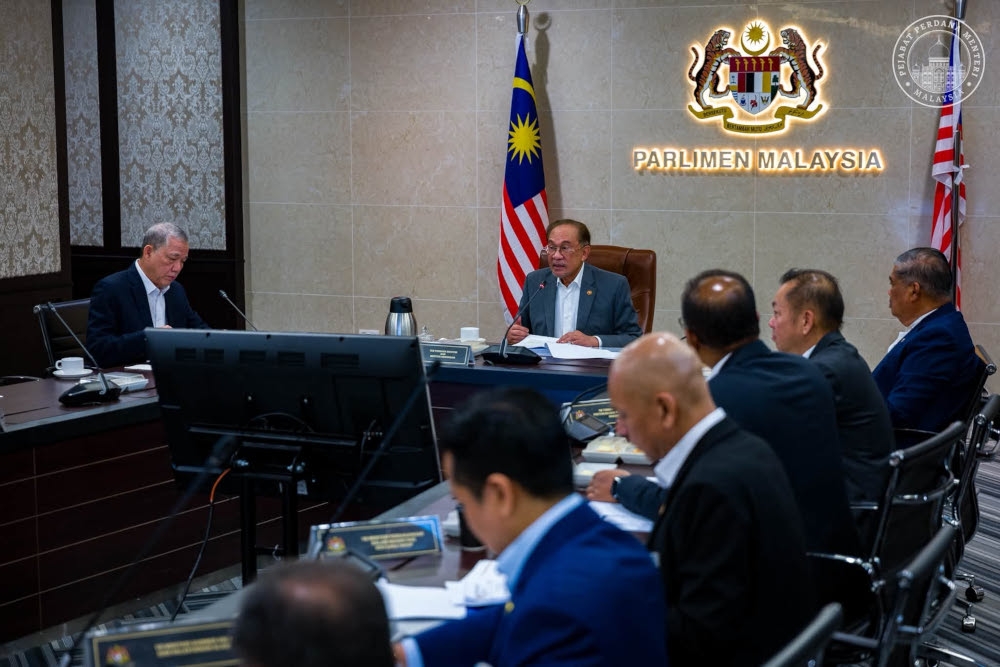
Prime Minister Datuk Seri Anwar Ibrahim has triggered an immediate response across Malaysia's agricultural apparatus, directing the Ministry of Agriculture and Food Security to activate contingency measures designed to shield domestic food production from the impacts of an anticipated super El Niño event. The climate phenomenon, which typically brings extended drought conditions to Southeast Asia, poses a significant risk to the nation's self-sufficiency in critical staple crops and protein sources.
The directive underscores mounting concerns within government circles about Malaysia's vulnerability to climate-driven agricultural shocks. A super El Niño—a particularly intense manifestation of the naturally occurring climate cycle—can suppress monsoon rainfall across the region, creating extended dry spells that stress irrigation systems and reduce yields of rice, vegetables, and other essential commodities. Given that Malaysia imports roughly 40 per cent of its rice requirements and depends on domestic production for fruit, vegetables, and aquaculture products, disruptions to the agricultural calendar carry immediate consequences for food prices and household food security.
The Ministry of Agriculture has been tasked with executing a multi-layered strategy encompassing enhanced water management protocols, accelerated adoption of drought-resistant crop varieties, and coordination with smallholder farmers to implement conservation techniques. Officials are expected to review current irrigation infrastructure capacity and identify vulnerabilities in the water supply chains servicing major food-producing regions such as Muda in Kedah and Perak, historically reliant on predictable seasonal rainfall patterns. Investment in water storage facilities and efficiency improvements is being prioritised to buffer against rainfall variability.
Crop diversification initiatives are also gaining renewed attention, with policymakers examining the feasibility of expanding cultivation of climate-resilient alternatives that require less water while delivering comparable nutritional content and market value. The emphasis reflects a broader recognition that Malaysia's current crop portfolio, while economically established, may require structural adjustments to remain viable under emerging climate norms. Regional cooperation frameworks, including arrangements with neighbouring agricultural producers in Thailand and Vietnam, are being reassessed to secure supply chain flexibility should domestic production face temporary constraints.
The livestock and aquaculture sectors, which contribute substantially to Malaysia's protein supply, similarly face scrutiny. Fish farming operations in brackish and freshwater systems require careful management of water quality during drought episodes, while poultry and cattle operations depend on feed crops that themselves may experience yield pressures. The Ministry is engaging industry stakeholders to develop contingency procurement pathways and explore temporary import arrangements that could activate rapidly should production shortfalls materialise.
Malaysia's experience with previous El Niño episodes provides cautionary precedent. The 1997-98 event triggered widespread haze across Southeast Asia, disrupted harvests, and contributed to price inflation in food markets. More recently, the 2015-16 episode highlighted weaknesses in early warning systems and farmer preparedness at the grassroots level. Current policy responses are designed to incorporate lessons from those episodes, emphasising earlier notification to farming communities and more robust coordination between federal agricultural authorities and state-level implementation bodies.
Resource allocation to smallholder farmers remains critical, as these producers—who constitute the majority of domestic agricultural operators—often lack capital reserves to absorb production losses or invest in adaptive technologies independently. Subsidised access to improved irrigation equipment, high-yield seeds, and climate-forecasting information services are being evaluated as mechanisms to distribute climate risk more equitably across the farming sector. Extension services are being mobilised to disseminate practical guidance on water-conserving cultivation practices and alternative income sources during periods of constrained production.
Regional meteorological agencies have signalled elevated likelihood of El Niño development within the coming months, with some climate models forecasting intensity levels comparable to the 2015-16 event. The timing of Anwar's directive reflects a precautionary approach aimed at minimising reaction time when conditions materialise. Early government mobilisation allows supply chains, storage facilities, and farmer support networks to position themselves defensively rather than responding reactively once drought stress becomes evident.
Malaysia's strategic food security position extends beyond immediate domestic consumption; the nation plays a regional role in maintaining supply chain stability for palm oil, rubber, and processed agricultural products. Disruptions to domestic agriculture could ramify across export-dependent industries and regional trade flows. Agricultural policy coordination with ASEAN partners is accordingly being emphasised, recognising that climate impacts cross borders and that collective regional responses enhance individual nations' resilience.
The broader policy context reflects evolving recognition that climate adaptation cannot be deferred to future planning cycles. With Malaysia's agricultural sector already navigating labour shortages, commodity price volatility, and competition for land resources, layering climate variability onto existing structural challenges compounds systemic pressure. Anwar's intervention signals political prioritisation of food security as a non-negotiable policy objective, positioning agricultural resilience as foundational to broader economic stability and social welfare. Implementation effectiveness will depend on sustained resource commitment and coordination across multiple government agencies and private sector partners.

