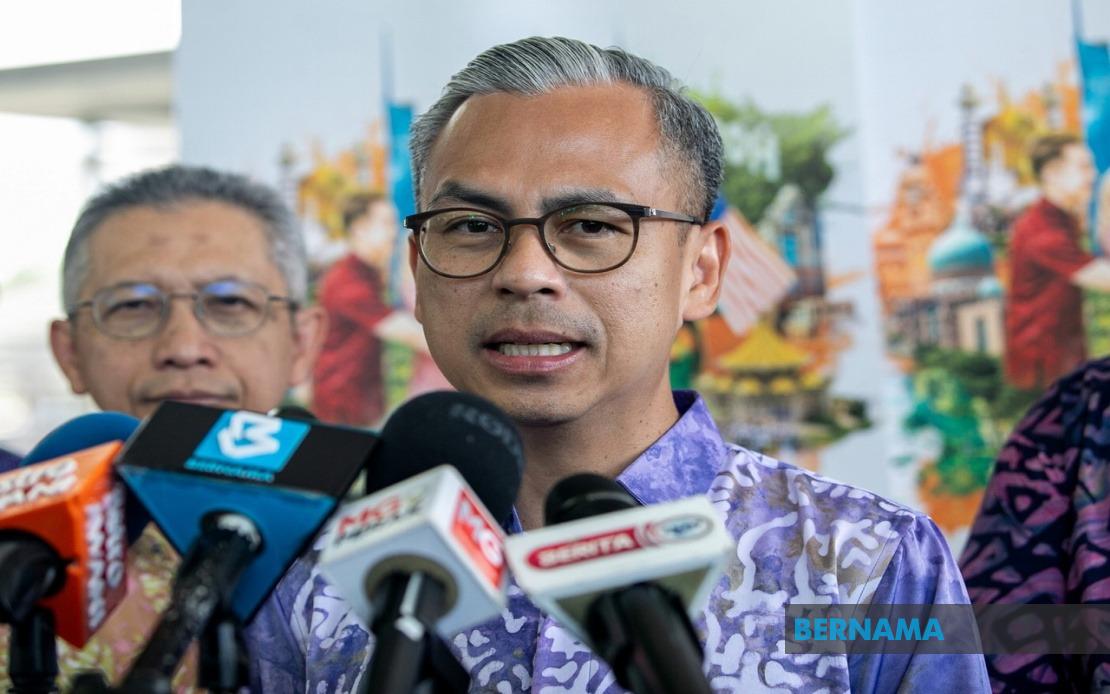
Prime Minister Datuk Seri Anwar Ibrahim and Communications Minister Datuk Seri Fahmi Fadzil unveiled the overarching theme for Malaysia's 2026 National Day and Malaysia Day celebrations in Ipoh on Friday, positioning shared prosperity as the central narrative for the nation's commemorative events. The theme, 'Malaysia MADANI: Kesejahteraan Dinikmati' (Malaysia MADANI: Shared Prosperity), signals the government's strategic pivot towards framing national development through the lens of inclusive growth that transcends traditional economic metrics.
Fahmi articulated a deliberately expansive interpretation of prosperity during the campaign launch at the Sultan Azlan Shah Ministry of Health Training Institute in Tanjung Rambutan, arguing that the concept extends well beyond conventional gross domestic product increases or fiscal indicators. His positioning reflects a subtle repositioning of how the government wishes to measure and communicate its developmental achievements—encompassing qualitative improvements in living standards, expanded economic opportunities, and the distribution mechanisms that determine who benefits from national progress. This framing particularly matters for Malaysia's diverse populace, as it implicitly addresses longstanding concerns about equitable access to development gains across demographic divides.
The explicit commitment to ensuring no Malaysian is left behind represents more than rhetorical positioning; it directly engages with persistent debates about regional inequality, urban-rural disparities, and the economic trajectories of different communities. By anchoring the national narrative around inclusivity regardless of ethnicity, religious affiliation, geography, or socioeconomic background, the government attempts to consolidate a unifying message ahead of important electoral considerations. The emphasis on preventing exclusion from development benefits speaks to practical governance challenges that have periodically strained social cohesion and tested the legitimacy of state institutions.
Fahmi grounded the thematic choice in Malaysia's foundational diversity, characterising the nation's multicultural composition not as a challenge to be managed but as a competitive advantage underpinning contemporary stability. This reframing of diversity from potential fragility to actual strength represents an important discursive shift, particularly as regional tensions and identity-based politics have intensified across Southeast Asia. By linking Malaysia's historical legacy of inter-communal coexistence to the present development agenda, the government positions shared prosperity as a practical expression of constitutional principles and historical continuity rather than an aspirational ideal.
The thematic framework arrives at a moment when Malaysian society confronts genuine questions about development distribution. Income inequality metrics, regional development patterns, and sectoral growth disparities have periodically dominated domestic discourse. By making equitable distribution the centrepiece of national commemoration, the administration signals that addressing these structural imbalances constitutes a core governmental priority rather than a peripheral concern. Whether the thematic commitment translates into measurable policy reorientation will significantly influence public reception of the MADANI agenda's substantive achievements.
The campaign encompasses multiple integrated initiatives designed to operationalise the shared prosperity messaging throughout the national month celebrations. The 'One House, One Jalur Gemilang' campaign—encouraging households to display the national flag—serves as a grassroots participation mechanism that democratises expressions of patriotism across socioeconomic strata. Similarly, the Kembara Merdeka Jalur Gemilang convoy programme creates physical, visible reminders of national unity across geographical spaces, potentially reaching populations in less urbanised areas where government communications often face distribution challenges. These mechanisms attempt to translate abstract prosperity commitments into tangible community engagement experiences.
National Unity Minister Datuk Aaron Ago Dagang and Perak Menteri Besar Datuk Seri Saarani Mohamad's participation underscores the thematic integration across different governmental portfolios and administrative levels. This multi-institutional involvement suggests deliberate coordination to ensure messaging consistency from federal through state channels. The spatial choice of Ipoh and the Perak venue itself carries subtle significance, locating the campaign launch outside the capital and thereby potentially signalling attention to non-metropolitan spaces within the shared prosperity narrative.
The institutional backdrop—the Sultan Azlan Shah Ministry of Health Training Institute—further reinforces the health and human development dimensions of shared prosperity framing. By launching from a medical and health-focused institution, the government implicitly positions healthcare accessibility and quality as integral to meaningful prosperity. This association proves particularly resonant in Malaysia's contemporary context, where healthcare equity, pandemic response challenges, and longterm public health infrastructure have commanded sustained attention across diverse stakeholder communities.
The campaign materials and updates accessible through the Merdeka 360 portal and Information Department social media channels represent the government's effort to leverage digital infrastructure for sustained messaging throughout the national month. This multi-channel dissemination strategy acknowledges Malaysia's diverse media consumption patterns and attempts to reach audiences across different technological adoption levels and preference profiles. The emphasis on accessible information updates reflects contemporary expectations about government transparency and consistent public communication.
Fahmi's articulation of shared responsibility among Malaysians for preserving unity and safeguarding sovereignty introduces a reciprocal framing wherein citizens themselves constitute active agents in sustaining national harmony rather than passive recipients of government initiatives. This rhetorical positioning potentially cultivates expectations of mutual accountability—both governmental delivery on prosperity promises and citizenry engagement with patriotic imperatives. The tension between these reciprocal responsibilities will likely define implementation discourse as the national month progresses.
The thematic choice arrives amid broader Southeast Asian contexts wherein several neighbouring nations navigate comparable tensions between development distribution, societal cohesion, and inclusive governance. Malaysia's explicit positioning of shared prosperity as the national commemorative centrepiece distinguishes its approach and potentially influences regional conversations about development models and equitable growth frameworks. How effectively the MADANI government translates thematic commitments into measurable policy outcomes will significantly impact both domestic political dynamics and Malaysia's developmental narrative within the broader regional context.
Moving forward, the substantive validation of the 'Malaysia MADANI: Kesejahteraan Dinikmati' theme depends upon governmental capacity to demonstrate concrete improvements in prosperity distribution mechanisms, expanded opportunity structures across demographic categories, and enhanced quality-of-life metrics across diverse Malaysian communities. The celebratory messaging of national month commemorations provides important platforms for articulating aspirational visions, yet enduring legitimacy emerges through sustained performance against clearly articulated commitments. The 2026 National Day celebrations therefore represent both commemorative occasion and implicit accountability moment for the government's shared prosperity agenda.

