Prime Minister Datuk Seri Anwar Ibrahim will officiate tomorrow's launch of Malaysia's 2026 National Month Celebration and Jalur Gemilang Flag-Waving Campaign (MPBKKJG 2026) in Ipoh, marking the formal beginning of festivities that will culminate in the dual celebrations of National Day and Malaysia Day. The ceremony signals the government's commitment to delivering an enhanced and more expansive commemoration than in previous years, building on the momentum of patriotic fervour across the nation.
The Communications Ministry has orchestrated a comprehensive calendar of activities designed to deepen Malaysian appreciation for the country's independence and foster national unity. Datuk Aminurrahim Mohamed, who serves as Senior Undersecretary (Management) at the Communications Ministry and working secretary of the HKHM 2026 Main Committee, confirmed that planners are deliberately withholding details about certain programmes to generate anticipation and maintain public interest throughout the celebration period. This measured approach reflects contemporary thinking about event marketing, where strategic revelation of information can sustain engagement far longer than full disclosure at launch.
Among the confirmed initiatives are two flagship countdown programmes: Kembara Bahasa HKHM 2026, which focuses on language and cultural dimensions of national identity, and RIUH Merdeka, a programme likely designed to generate excitement and public participation. The ministry is also continuing the Qur'an Hour programme, demonstrating sensitivity to Malaysia's Muslim-majority population and the integration of religious observance within national celebrations. These diverse offerings reflect the government's understanding that national patriotism must be expressed through multiple channels to resonate across Malaysia's multicultural and multi-faith society.
The star attraction of tomorrow's ceremony will be the launch of the HKHM 2026 theme song, to be performed by a prominent Malaysian male singer before an estimated 3,000 guests gathered at Dewan Sri Perdana, the Sultan Azlan Shah Institute for Health Training (ILKKM SAS) in Tanjung Rambutan. The decision to commission a theme song and secure a recognised performer underscores how official national celebrations have evolved to incorporate popular culture as a vehicle for patriotic messaging. This entertainment-focused approach may prove particularly effective in reaching younger demographics who might otherwise feel disconnected from traditional national day observances.
The morning programme will feature the Patriot Merdeka Run, a participatory sporting event that transforms patriotism from passive observation into active community engagement. Such initiatives extend the celebration beyond ceremonial formalities, encouraging ordinary Malaysians to physically embody national pride. The combination of athletic competition and nationalist symbolism has become increasingly common in Southeast Asian national celebrations, reflecting governments' recognition that citizen participation strengthens emotional bonds to the nation-state.
Broadcast reach represents a critical component of the government's strategy to amplify the impact of tomorrow's launch ceremony. The event will be transmitted live across Radio Televisyen Malaysia (RTM), the Malaysian National News Agency (Bernama), and multiple Facebook Live platforms maintained by Merdeka360, the Communications Ministry, and the Information Department. This multimedia distribution ensures that participation is not confined to those physically present in Ipoh, enabling Malaysians nationwide to experience the occasion simultaneously and feel part of a unified national moment.
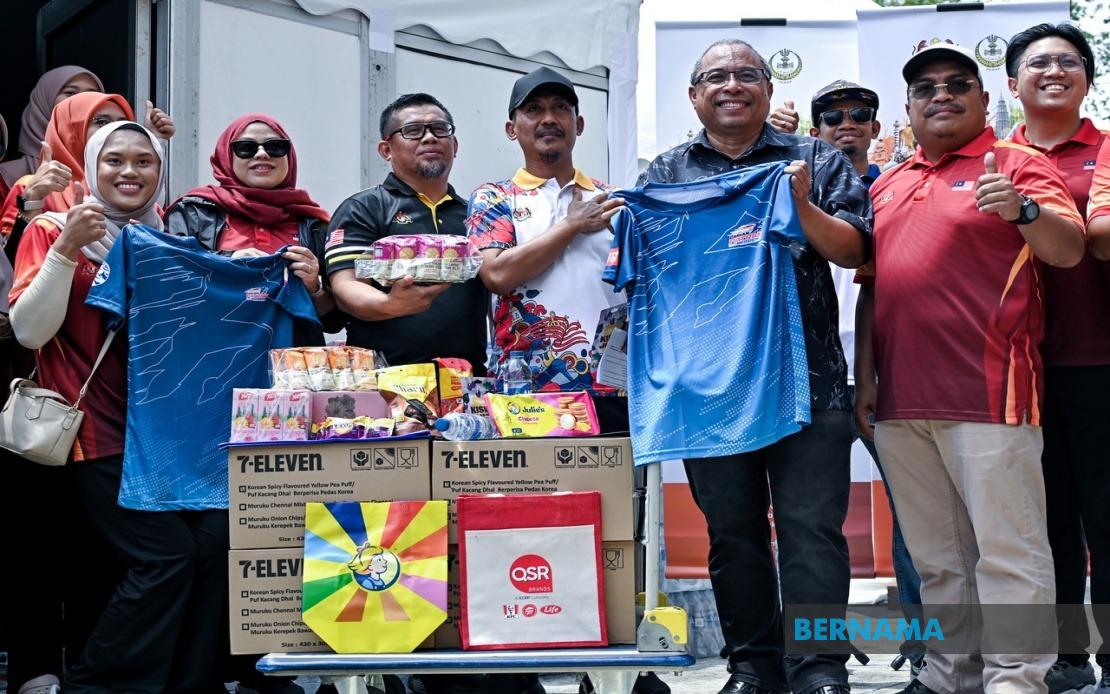
Private sector participation has emerged as a significant dimension of the 2026 celebrations planning, with 15 companies already committed as sponsors for the Ipoh event alone. These corporate backers include J&T, the logistics company; convenience retailer 7-Eleven; ZUS Coffee; and QSR Brands, the parent company of prominent Malaysian food service operations. Aminurrahim expressed satisfaction that sponsorship commitments have already matched or exceeded last year's figures, suggesting sustained corporate confidence in the patriotic-celebration market and willingness to invest in national branding activities. Such sponsorship arrangements represent symbiotic relationships where corporations gain brand association with patriotic values whilst the government secures resources for expanded programming.
The ministry's call for Malaysians to begin displaying the Jalur Gemilang flag and playing patriotic music reflects an integrated approach to national celebration that emphasises both official programming and grassroots participation. By encouraging flag-flying and music consumption, authorities seek to saturate the public environment with patriotic symbolism throughout the national month period. This ambient patriotism—where national symbols become ubiquitous in everyday spaces—creates psychological conditions conducive to heightened national sentiment even during non-ceremonial hours.
Aminurrahim's emphasis on prayer for national peace and prosperity introduces a spiritual dimension to the celebration framework, positioning patriotism not merely as secular civic duty but as a religiously inflected commitment to the nation's wellbeing. This formulation acknowledges Malaysia's constitutional status as an Islamic state whilst respecting the nation's plural religious composition. The framing of patriotism through aspirations for peace and prosperity, rather than through exclusionary nationalism, reflects diplomatic sensitivity to managing national identity construction within a diverse society where certain versions of patriotism might alienate non-Muslim or minority populations.
For Malaysian policymakers, the 2026 celebrations represent an opportunity to reinvigorate national pride at a moment when Malaysia, like many Southeast Asian democracies, grapples with polarisation, economic pressures, and questions about national direction. By investing substantially in celebratory programming, securing corporate partnership, and deploying contemporary media platforms, the government signals that national identity remains a priority even as political and economic challenges accumulate. The success of these initiatives will likely depend on whether official messaging resonates authentically with diverse Malaysian communities or appears as performative patriotism disconnected from pressing daily concerns.

