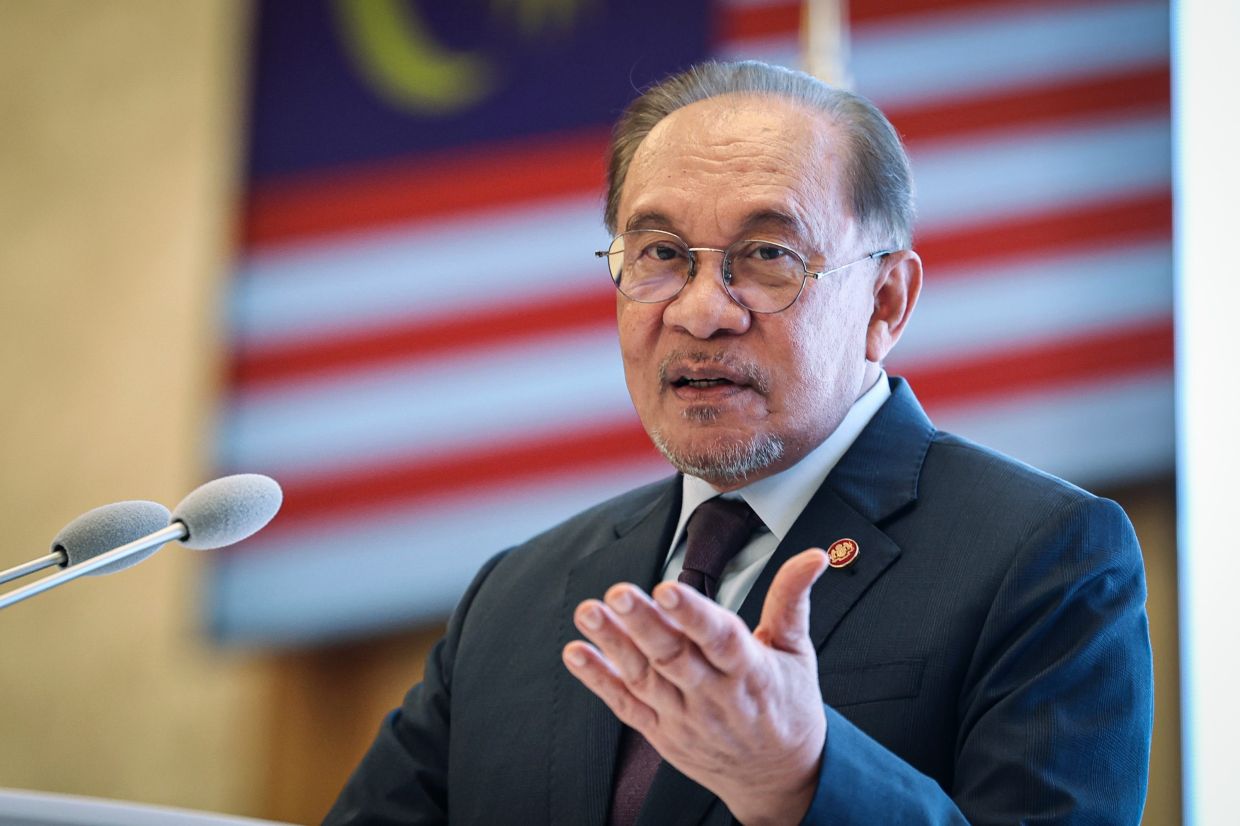
Malaysia's geographical position as a bridge between major global trade corridors and its integration into complex international supply chains form the bedrock of its economic diplomacy strategy, Prime Minister Datuk Seri Anwar Ibrahim stated at a major regional forum this week. The premier's remarks reflect a deliberate national strategy to translate Malaysia's logistical advantages and market connectivity into sustained prosperity and diplomatic influence across multiple economic domains.
Speaking at the 39th Asia-Pacific Roundtable, organised by the Institute of Strategic and International Studies (ISIS) Malaysia, Anwar outlined how successive Malaysian governments have progressively strengthened economic relationships with both established and emerging trading partners. This multifaceted approach recognises that reliance on any single market or trading bloc carries inherent risks in an era of geopolitical volatility and shifting supply chain dynamics.
Central to Malaysia's commercial engagement framework are major regional trade initiatives that have fundamentally reshaped the commercial landscape across Asia and beyond. Malaysia has championed efforts to reduce trade barriers, expand reciprocal market opportunities and create more balanced investment environments through its participation in the ASEAN Free Trade Area, the Regional Comprehensive Economic Partnership (RCEP) and the Comprehensive and Progressive Agreement for Trans-Pacific Partnership (CPTPP). These instruments have positioned Malaysia as a vocal advocate for rules-based trade and institutional cooperation at a time when protectionist pressures are mounting globally.
Anwar emphasised that Malaysia's future trajectory remains inseparable from ASEAN's collective destiny and regional architecture. Despite acknowledging concerns and tensions within the bloc, he underscored that ASEAN centrality must remain non-negotiable as a cornerstone of Malaysia's foreign policy framework. This stance reflects Malaysia's understanding that regional cohesion, however imperfect, provides security and economic benefits that unilateral action cannot replicate. The region's combined GDP, market size and geopolitical weight demand that member states work through collective mechanisms rather than pursue narrowly defined national interests at regional expense.
Beyond Southeast Asia, Malaysia is strategically cultivating economic relationships with less-developed markets in West Asia, Central Asia, Latin America and Africa. This geographic diversification serves dual purposes: it reduces vulnerability to downturns in any single region while positioning Malaysian businesses and capital to capture emerging opportunities in growth markets. The approach reflects pragmatic recognition that developed economies face slower growth trajectories, making emerging markets increasingly attractive for export-oriented nations seeking sustained expansion.
The government's economic diplomacy incorporates sectoral specialisation tailored to individual partner nations' capabilities and needs. Anwar highlighted collaborative frameworks spanning halal industry development, digital economy platforms, agricultural modernisation and green technology solutions. This sectoral approach allows Malaysia to leverage existing competitive advantages while addressing partner countries' development priorities, creating mutually beneficial arrangements that transcend simple commodity exchanges.
Energy cooperation represents a particularly strategic dimension of Malaysia's renewed outreach. During a recent official visit to Turkmenistan, state-owned Petronas signed agreements to explore and develop two significant gas fields, backed by a long-term hydrocarbon development framework encompassing human resource development and technical capacity building. Such arrangements exemplify how Malaysia approaches energy-rich nations as long-term partners rather than transactional suppliers, incorporating workforce development and knowledge transfer into commercial negotiations.
The premium placed on economic diversification extends beyond commercial calculation to constitute an essential national security strategy. In an increasingly unpredictable global environment marked by geopolitical tensions, trade disruptions and sudden market volatility, reliance on narrow partner bases or limited product portfolios leaves economies dangerously exposed. Malaysia's conscious effort to maintain broad-based, resilient economic ties acknowledges this reality while positioning the nation to weather shocks affecting particular regions or sectors.
Anwar's framing of economic diplomacy reveals sophisticated understanding of how commercial relationships interweave with geopolitical positioning. The government explicitly recognises that trade negotiations, investment flows and sectoral partnerships operate within broader strategic contexts. Rather than treating economics and politics as separate domains, Malaysia's approach integrates them, using commercial engagement as a vehicle for advancing foreign policy objectives while leveraging diplomatic relationships to create commercial opportunities.
The three-day forum where these remarks were delivered provided a platform for regional policy makers and strategists to assess evolving economic architectures and their implications for national and regional prosperity. Malaysia's articulated strategy—emphasising traditional partnerships, ASEAN cohesion, geographic diversification and sectoral specificity—suggests the government has moved beyond reactive crisis management toward proactive, long-term positioning in a multipolar economic order.
For Malaysian stakeholders, whether in business, policy or civil society, the government's emphasis on maintaining forward-looking, resilient economic ties carries significant implications. Businesses seeking to expand operations face an enabling environment where government diplomacy actively creates opportunities across diverse geographies and sectors. However, this diversification imperative also signals recognition that relying exclusively on traditional partnerships—whether developed economies or immediate regional neighbours—carries unacceptable risks.
Regionally, Malaysia's approach to ASEAN centrality while simultaneously pursuing partnerships beyond Southeast Asia reflects broader tensions within the bloc itself. Some member states maintain significantly closer ties to major powers than others, and collective decision-making often moves slowly. By reinforcing ASEAN's importance while building alternative partnerships, Malaysia navigates this complexity pragmatically, ensuring the bloc remains relevant without sacrificing flexibility or opportunity.

