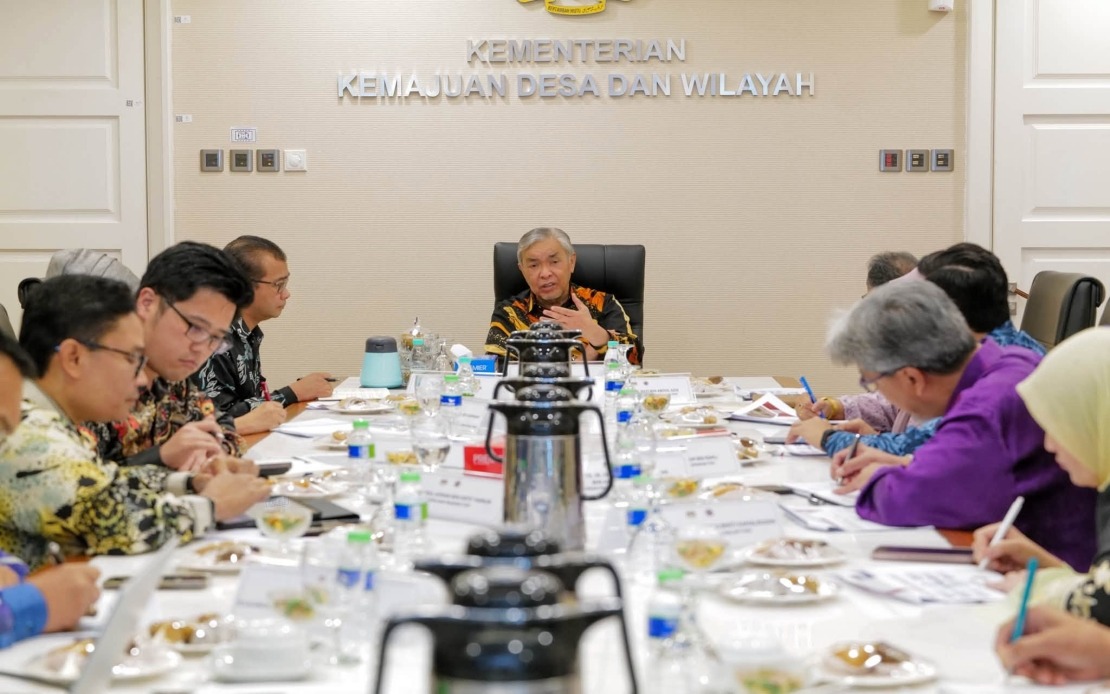
Malaysia's commitment to overhauling its technical and vocational education landscape has taken concrete form with the establishment of a comprehensive Strategic TVET 2.0 Task Force spanning the decade from 2026 to 2035. Deputy Prime Minister Datuk Seri Dr Ahmad Zahid Hamidi, who chairs the National TVET Council, unveiled the initiative in Putrajaya on August 6, positioning it as a critical pillar in the government's broader human capital strategy. The formation of this task force alongside ten specialized TVET Strategic Committees represents a deliberate shift toward more systematic, interconnected, and measurable policy implementation across the technical education sector.
The Strategic TVET 2.0 Task Force will be chaired by Emeritus Professor Datuk Dr Siti Hamisah Tapsir, president and vice-chancellor emeritus of UCSI University, lending academic credibility and institutional expertise to the governance structure. Her appointment signals the government's intention to ground TVET transformation in evidence-based practice and higher education insights. The composition of leadership underscores a multi-stakeholder approach, bringing together university leadership with diverse perspectives essential for modernizing skills training across Malaysia's economy.
Among the ten supporting committees, each addresses a distinct dimension of TVET development, reflecting the complexity of overhauling a national skills ecosystem. The TVET Governance and Institutional Reform Committee, led by Datuk Dr Asyraf Wajdi Dusuki, will tackle structural and regulatory frameworks underpinning the sector. Simultaneously, the TVET Industry and Employers Committee, chaired by Datuk Khairul Azwan Harun, will ensure that curriculum and training pathways remain synchronized with workplace realities and evolving labour market demands. This dual focus on governance reform and industry responsiveness acknowledges that technical education succeeds only when institutional capacity matches employer expectations.
Financial sustainability constitutes another pillar, with the TVET Financing and Sustainability Committee under Ramelle Ashram Ramli tasked with ensuring adequate, stable funding mechanisms for training programmes. For Malaysia, where skills gaps have constrained productivity growth and innovation, securing predictable financial resources is essential for scaling quality provision. The inclusion of a dedicated financing committee signals that the government views sustainable resourcing not as an afterthought but as fundamental infrastructure for sectoral transformation. Without robust funding pathways, even well-designed curricula falter in implementation.
A notable inclusion is the Women Empowerment in TVET Committee, chaired by Datuk Dr Masilla Kamalrudin. This reflects global evidence that technical vocations have historically skewed male, creating unutilized talent pools among women seeking skilled employment. Malaysia's female participation in TVET remains below potential, and explicit institutional attention to gender inclusion may unlock productivity gains while addressing skills shortages in sectors ranging from manufacturing to digital trades. The committee's prominence within the task force structure indicates that equity and inclusion are strategic rather than peripheral objectives.
Ahmad Zahid articulated the broader policy rationale, emphasizing that the task force will implement TVET initiatives through more cohesive, comprehensive, and outcome-oriented methods. This framing addresses long-standing criticisms that Malaysia's skills training landscape has suffered from fragmentation, with multiple agencies, programmes, and funding streams operating with limited coordination. By consolidating initiatives under unified strategic direction, the government aims to reduce duplication, improve resource efficiency, and create clearer career pathways for students navigating technical education.
The 2026-2035 timeframe aligns with Malaysia's longer-term economic transformation ambitions, suggesting that TVET modernization is integral to competitiveness strategies extending beyond the current electoral cycle. This decade-long horizon provides sufficient time for curriculum redesign, instructor training, facility upgrades, and ecosystem building, while remaining tethered to measurable milestones that can inform mid-course adjustments. The specific framing as "Strategic TVET 2.0" implies evolution from existing frameworks, suggesting lessons learned from prior initiatives will inform the new approach.
For Malaysian workers and job seekers, the implications are substantial. A more responsive TVET ecosystem responsive to industry needs should yield credentials with stronger labour market value, reducing the mismatch between training outputs and employer hiring criteria. Sectors experiencing acute skills shortages—from semiconductor manufacturing to renewable energy installation to digital service trades—may benefit from accelerated pipeline development. Regional economies across Southeast Asia face similar challenges, and Malaysia's TVET modernization could position the country as a model for skills system reform in the region.
The emphasis on responsiveness to "future economic challenges" carries implicit recognition that Malaysia's skills requirements are shifting beneath existing training architectures. Automation, digitalization, and economic restructuring demand capabilities distinct from those serving previous industrial phases. By building adaptability into TVET institutions and committees, the government signals readiness to anticipate rather than merely react to labour market transitions. This forward-looking posture may prove decisive in retaining competitive advantage.
Ahmad Zahid's statement framed the initiative within the MADANI government's broader development philosophy, positioning TVET transformation as central to building "a highly skilled, competitive workforce ready to meet future economic demands." This linkage embeds technical education within national development discourse rather than treating it as a secondary concern. For policymakers across Southeast Asia watching Malaysia's approach, the integration of TVET reform into high-level government messaging suggests that sectoral transformation requires not merely technical expertise but sustained political commitment and resource allocation.

