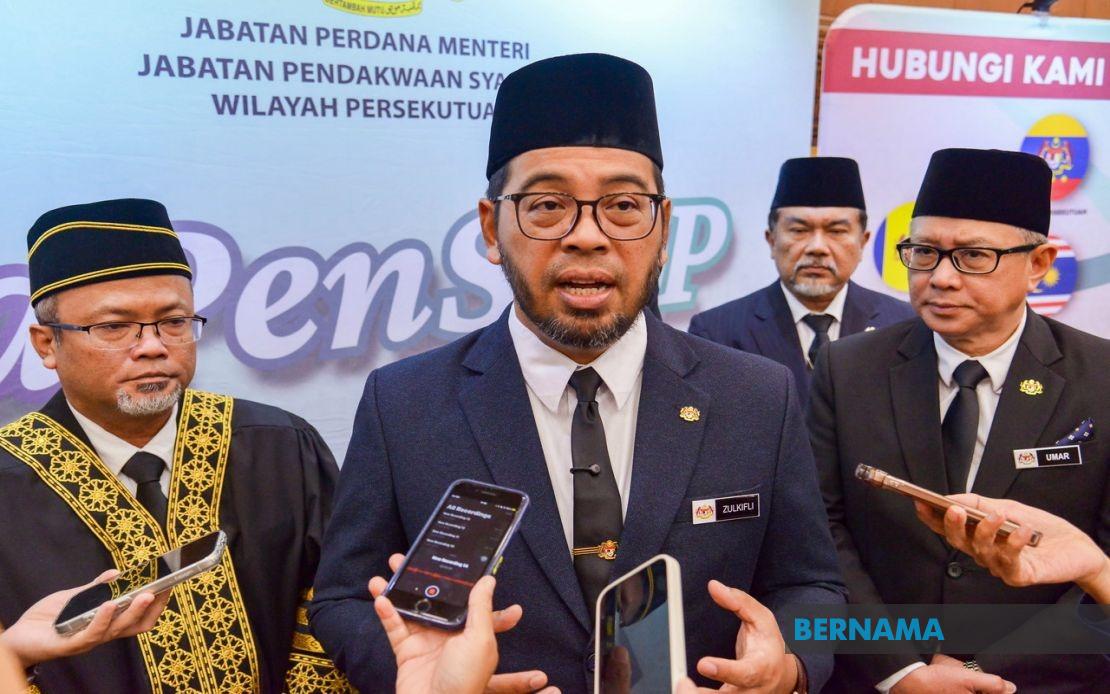
Malaysia's Prime Minister's Department (Religious Affairs) has announced an investigation into viral social media claims that a Department of Islamic Development Malaysia (JAKIM) reference number was misappropriated to authenticate a marriage declaration letter released by the Malaysia Rohingya Ulama Council. Minister Dr Zulkifli Hasan disclosed the inquiry during remarks at the second Malaysian Syariah Prosecutors Conference (PePSSM) 2026 in Putrajaya on July 15, indicating that the government takes seriously any potential misuse of official bureaucratic credentials to legitimise religious documents.
The controversy centres on a marriage declaration letter that appeared on social media platforms bearing the reference number "JAKIM.PERH/LN.800-7(5)", which prompted speculation about whether JAKIM had formally endorsed the document or validated the issuing body. The circulation of this letter without apparent official verification has highlighted vulnerabilities in how religious documents are authenticated and disseminated, particularly among refugee and migrant communities where documentation challenges are already pronounced. The emergence of such materials underscores the risks of document fraud in religious contexts, where marriage recognition carries significant legal and social weight across multiple jurisdictions.
Dr Zulkifli acknowledged to reporters that he had not yet obtained comprehensive briefing materials on the specific details surrounding the alleged misuse of the JAKIM reference number. This measured response reflects the government's commitment to conducting a thorough investigation before making definitive pronouncements, though it also suggests the matter may require coordination across multiple state and federal agencies given the complexity of Rohingya community affairs in Malaysia. The investigation will likely examine whether any person or entity falsified the reference number, whether JAKIM's credentials were compromised, and what safeguards exist to prevent similar incidents in future.
The Perak Islamic Religious Department (JAIPk) has already clarified that it does not recognise the marriage declaration letter as a legitimate document. This denial carries substantial practical implications, as it effectively means couples relying on such letters cannot legally register their marriages within Perak state jurisdiction. JAIPk further communicated that marriages involving members of the Rohingya community cannot currently be registered through standard channels because the matter remains entangled with broader policy questions that state religious authorities are still reviewing. This policy limbo creates genuine hardship for Rohingya individuals seeking to formalise family relationships and access associated legal protections.
The marriage documentation controversy reflects deeper systemic challenges facing Malaysia's Rohingya population, estimated at over 180,000 individuals, who operate in legal grey areas across multiple spheres. Without citizenship or recognised immigration status, Rohingya persons encounter extraordinary obstacles when attempting to access mainstream government services, including religious registries. This has historically created space for informal or parallel structures—such as community councils and ulama associations—to provide services that state institutions are unable or unwilling to deliver. However, such parallel systems can lack rigorous oversight, creating opportunities for document abuse and fraud that ultimately undermine community legitimacy.
Dr Zulkifli also addressed a related concern about unaccredited religious lectures circulating on social media platforms, indicating this represents an evolving challenge for Malaysia's religious governance architecture. The proliferation of religious teaching content on digital platforms has outpaced the development of effective regulatory frameworks, leaving enforcement agencies struggling to identify and penalise unqualified instructors. The minister acknowledged that responsibility for religious accreditation falls primarily under state government jurisdiction, creating a fragmented regulatory landscape where standards and enforcement mechanisms vary significantly across Malaysia's thirteen states.
The government is currently conducting a comprehensive review of how to address unaccredited religious instruction online, taking into account the significant legal complexities involved. Any regulatory response must balance the genuine need to protect public understanding of Islam against concerns about restricting free expression and religious discourse. At the departmental level, the Prime Minister's Department maintains internal protocols requiring that individuals selected for media appearances and public platform engagements possess proper accreditation, establishing a baseline standard for government-sponsored content. However, extending such requirements across the broader ecosystem of private religious educators and content creators presents far more significant jurisdictional and enforcement challenges.
Dr Zulkifli emphasised that Malaysia's Syariah prosecutors face mounting pressure to enhance their technical capabilities in response to increasingly sophisticated cyber-related crimes. Digital platforms have become vectors for religious fraud, unlicensed teaching, document forgery, and exploitation of vulnerable communities—all offences falling within Syariah law jurisdiction. Prosecutors must develop expertise in digital forensics, data analysis, and technology-enabled investigation techniques comparable to those employed by criminal prosecutors handling conventional cybercrime. This institutional capacity-building represents a substantial undertaking requiring investment in training programmes, technological infrastructure, and inter-agency knowledge-sharing protocols.
The government's broader strategy for addressing emerging Syariah enforcement challenges emphasises institutional collaboration across multiple agencies. Strengthened coordination between the Malaysian Communications and Multimedia Commission (MCMC), Royal Malaysian Police (PDRM), and the Attorney General's Chambers will be essential for effective prosecution of cyber-related religious offences. MCMC's regulatory authority over digital communications, combined with PDRM's investigation capabilities and the Attorney General's prosecutorial resources, creates potential for comprehensive responses to online religious fraud and teaching misconduct. However, realising this collaborative potential requires clarifying jurisdictional boundaries, establishing information-sharing protocols, and ensuring Syariah prosecutors receive appropriate training in digital investigation methodologies.
The investigation into the JAKIM reference number misuse signals heightened scrutiny of religious document authentication mechanisms and informal institutional structures serving marginalised communities. As Malaysia grapples with managing its Rohingya population and addressing gaps in religious governance, policymakers must develop approaches that simultaneously protect document integrity, respect community autonomy, and expand legitimate pathways for religious recognition. The current policy review regarding Rohingya marriage registration presents an opportunity to establish clear, transparent procedures that respect both Syariah principles and the practical needs of individuals seeking to formalise family relationships. Parallel investments in digital literacy and regulatory capacity will be required to prevent future document fraud while maintaining proportionate oversight of religious discourse.

