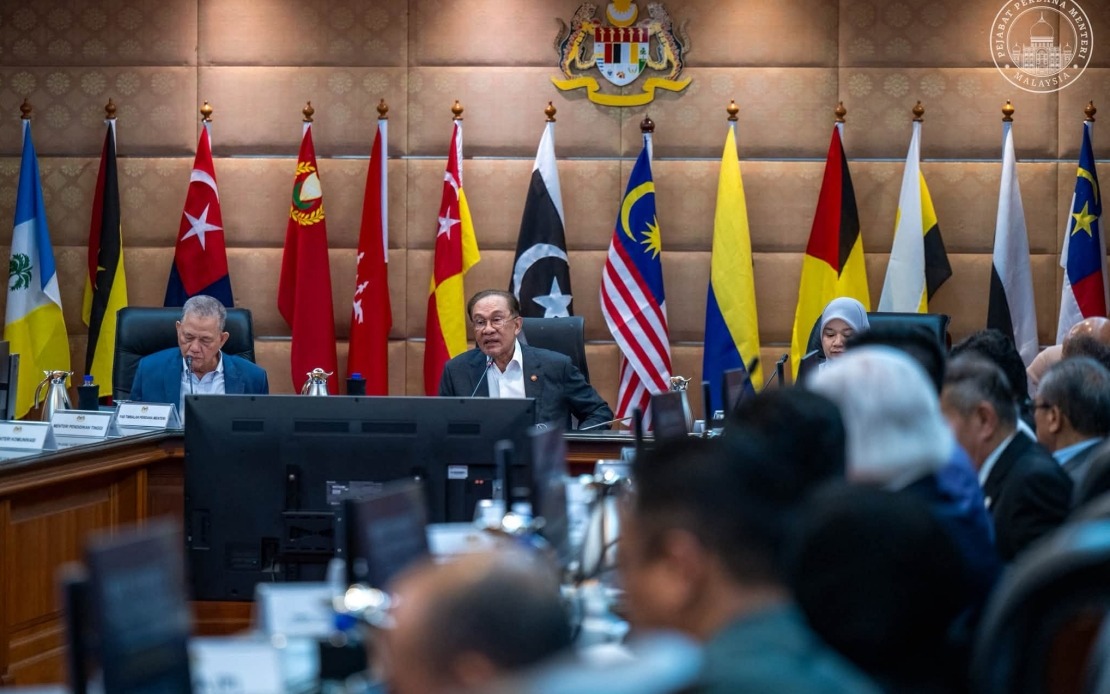
Prime Minister Datuk Seri Anwar Ibrahim has announced the formal establishment of a National Education Council tasked with orchestrating major reforms to modernize Malaysia's education system and ensure it remains aligned with contemporary demands. The move signals a concerted effort to address longstanding gaps in the sector while balancing innovation with traditional values that define the Malaysia MADANI vision.
Chairperson of the inaugural National Education Council Meeting No. 1 of 2026, Anwar outlined an ambitious agenda that spans both primary and secondary schooling through to tertiary institutions. The focal points discussed during the meeting reflect a multi-pronged approach to educational transformation, moving beyond surface-level adjustments to tackle structural and qualitative dimensions of learning across the country.
At the heart of the council's mandate lies a commitment to strengthening English as a second language, a priority that acknowledges Malaysia's competitive positioning in an increasingly globalized economy. However, the Prime Minister was explicit that this linguistic initiative must not come at the expense of Bahasa Melayu, which remains the national language and a cornerstone of Malaysian identity. This balancing act reflects broader tensions within the education sector between international competitiveness and preserving cultural heritage—a tension particularly resonant for Southeast Asian nations grappling with similar modernization pressures.
Curriculum content overhaul emerged as a critical pillar, with the council examining how educational materials can be refreshed to reflect current knowledge while incorporating moral and cultural dimensions that form the philosophical bedrock of Malaysia MADANI. This suggests recognition that educational quality cannot be measured purely through examination results but must encompass the holistic development of students as citizens and moral agents.
A notable focus area is the establishment of a robust pipeline of talent in science, technology, engineering, and mathematics (STEM) fields to meet anticipated workforce demands. This initiative addresses a perennial challenge across Southeast Asia, where demographic changes and rapid technological disruption create urgent skills shortages. By institutionalizing STEM development through the council, Malaysia aims to move beyond ad hoc programmes toward systematic, sustained investment in these disciplines.
The council will also champion what officials term the Bumiputera education agenda, a dimension particularly significant given Malaysia's constitutional framework and commitments to indigenous communities. Elevating educational quality at the district level—rather than concentrating improvements in urban centers—suggests an equity-oriented approach designed to reduce regional disparities that have historically disadvantaged rural and less developed areas.
Anwar's statements underscore an important philosophical shift: the rejection of complacency with existing educational structures. The Prime Minister explicitly cautioned against allowing satisfaction with the status quo to obstruct necessary progress, framing educational reform as a courageous undertaking rather than an incremental tweaking of established systems. This rhetoric invites a cultural shift within the education bureaucracy itself, potentially challenging entrenched practices and encouraging innovation.
Objectivity in evaluating the nation's education system formed another pillar of the Prime Minister's remarks. By emphasizing evidence-based assessment guided by various stakeholders' expertise, the council appears to be positioning itself as a knowledge-driven body rather than one driven by ideology or political considerations alone. This approach could enhance the legitimacy of subsequent reforms, though implementation challenges will ultimately determine whether this principle translates into practice.
For Malaysian stakeholders—educators, parents, students, and businesses—the council's establishment signals a significant moment. The comprehensiveness of the agenda, spanning content, language, values, district-level equity, and forward-looking skills development, suggests recognition that education requires coordinated, multi-dimensional intervention rather than single-issue solutions. How effectively the council translates these ambitious statements into actionable policies and measurable improvements will define its success and, by extension, Malaysia's competitive positioning in an increasingly knowledge-dependent regional economy.

