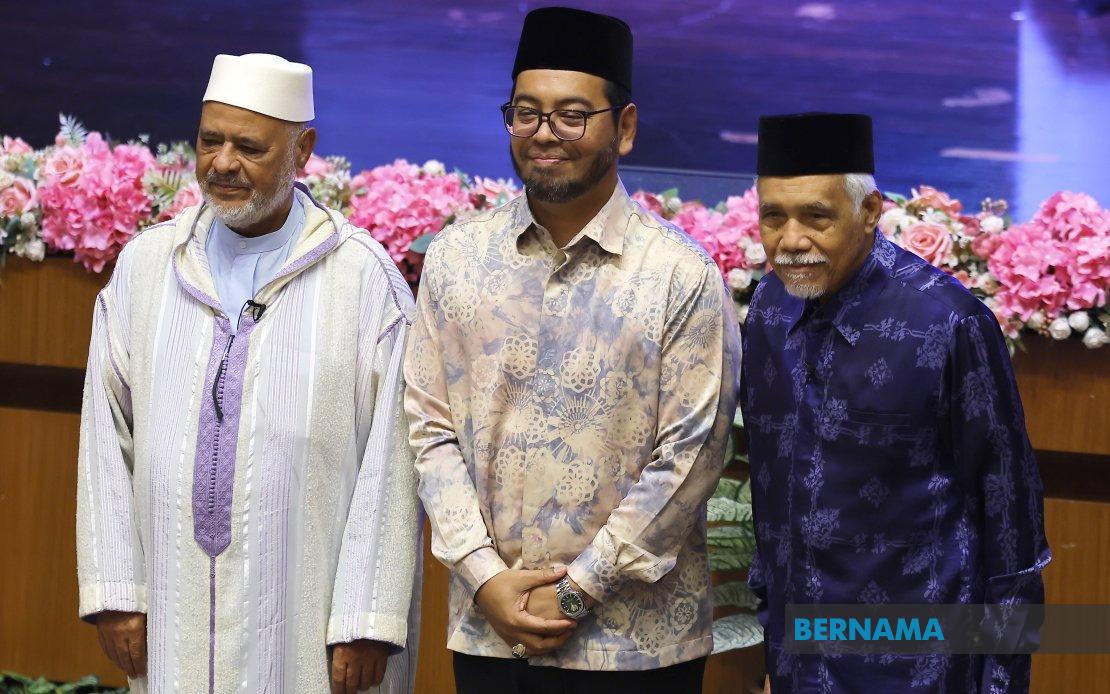
The Malaysian government has introduced an ambitious new platform designed to bring the intellectual contributions of leading Islamic scholars into mainstream public discourse. The Maal Hijrah Lecture Series, officially inaugurated in Putrajaya on June 18, represents the Prime Minister's Department (Religious Affairs) commitment to ensuring that the insights of nationally and internationally recognised Islamic figures reach far beyond the confines of university campuses and specialised academic communities.
According to Dr Zulkifli Hasan, Minister in the Prime Minister's Department (Religious Affairs), the initiative addresses a significant gap in how Islamic intellectual thought is currently disseminated across Malaysian society. He expressed concern that the contributions of prominent Islamic scholars have traditionally remained confined to academic circles or restricted groups, thereby limiting their potential impact on the broader population. The lecture series seeks to correct this imbalance by deliberately extending these scholarly perspectives to reach citizens across all social strata and educational backgrounds.
The government's vision extends beyond merely hosting lectures. By deliberately using the term "mainstream," officials are signalling an intention to integrate Islamic scholarly thought into the everyday intellectual landscape of Malaysia, making it as accessible and familiar as other public discourse. This approach recognises that valuable insights from religious scholars can contribute meaningfully to national conversations on ethics, governance, and social development, provided they are presented in accessible formats to diverse audiences.
The initiative has already garnered substantial institutional support from Malaysia's leading Islamic research and educational bodies. Both Universiti Sains Islam Malaysia (USIM) and International Islamic University Malaysia (IIUM) have provided positive feedback on the proposal, signalling their willingness to participate actively in the lecture series. This institutional backing is significant because it ensures the series will benefit from established networks, academic credibility, and existing platforms for reaching student populations and the public.
Dr Zulkifli articulated plans to expand the collaborative framework substantially, bringing additional universities and research institutions into the fold. This expansion strategy suggests the government views this as a long-term initiative rather than a one-off event. By involving multiple institutions across Malaysia's higher education sector, the lecture series will gain geographic reach across different regions while also benefiting from diverse institutional perspectives on how to present Islamic scholarship effectively to contemporary audiences.
An intriguing dimension of the stated objectives involves reaching beyond Malaysia's Muslim majority. Dr Zulkifli expressed a hope that the intellectual contributions of Maal Hijrah figures would resonate with non-Muslim Malaysians as well. This signals a sophisticated understanding that ethical, philosophical, and jurisprudential insights emerging from Islamic scholarship can hold universal relevance. In a multiethnic, multireligious nation like Malaysia, creating platforms where diverse communities can access each other's intellectual traditions strengthens social cohesion and mutual understanding.
The inaugural lecture series has already conferred recognition on two prominent scholars. Emeritus Professor Osman Bakar, rector of IIUM, received the award for national Maal Hijrah figure, while Professor Sheikh Dr Ahmad Al-Raysuni from Morocco was honoured as the international Maal Hijrah figure. These selections reflect Malaysia's positioning as a centre for Islamic intellectual discourse with both local experts and international scholarly partnerships. Ahmad Al-Raysuni's recognition is particularly notable given his expertise in Islamic jurisprudence; the choice underscores that the government values contemporary reinterpretations of Islamic legal and ethical frameworks as relevant to modern challenges.
The formal recognition of these scholars occurred at the national-level Maal Hijrah 1448H/2026 celebration held at Masjid Putra, where Sultan of Perak Sultan Nazrin Shah presented the awards alongside cash prizes, trophies, and certificates of appreciation. This ceremonial dimension reinforces the government's view that Islamic scholarship deserves public recognition and celebration equivalent to other intellectual contributions to society. The involvement of a reigning sultan adds ceremonial gravitas and demonstrates high-level political commitment to elevating Islamic intellectual discourse.
For Malaysian readers and regional observers, this initiative reflects broader conversations across Southeast Asia about how Islamic scholarship and contemporary governance can be integrated constructively. Countries in the region have grappled with balancing religious authority with modern state functions. Malaysia's approach through the lecture series suggests confidence that Islamic scholarly perspectives enhance rather than complicate nation-building efforts. This contrasts with some regional narratives portraying religion and modernity as inherently incompatible.
The timing of the 1448H/2026 Islamic calendar year holds symbolic significance. Rather than treating Islamic heritage as historical, the government is positioning Islamic intellectual resources as actively relevant to contemporary Malaysian challenges. Whether addressing questions of business ethics, environmental stewardship, social justice, or governance, the lecture series implicitly argues that Islamic scholarship offers valuable contemporary guidance alongside secular expertise.
The success of this initiative will largely depend on execution quality and sustained commitment. Creating genuinely engaging lectures that appeal beyond specialist audiences requires careful attention to presentation, venue selection, and marketing. The involvement of institutions like USIM and IIUM suggests professional academic standards will be maintained. However, whether Malaysian society at large will embrace these opportunities to engage with Islamic intellectual thought remains to be seen, particularly if lectures are presented in academic rather than popular formats.
Looking forward, the Maal Hijrah Lecture Series positions Malaysia as a nation taking seriously the responsibility to develop and share Islamic intellectual contributions regionally and globally. By deliberately expanding beyond traditional academic boundaries, the initiative acknowledges that Islamic scholarship possesses untapped potential to influence national discourse constructively. This move aligns Malaysia's religious affairs ministry with contemporary educational philosophy emphasising accessibility and public engagement with specialist knowledge, while maintaining rigorous intellectual standards.

