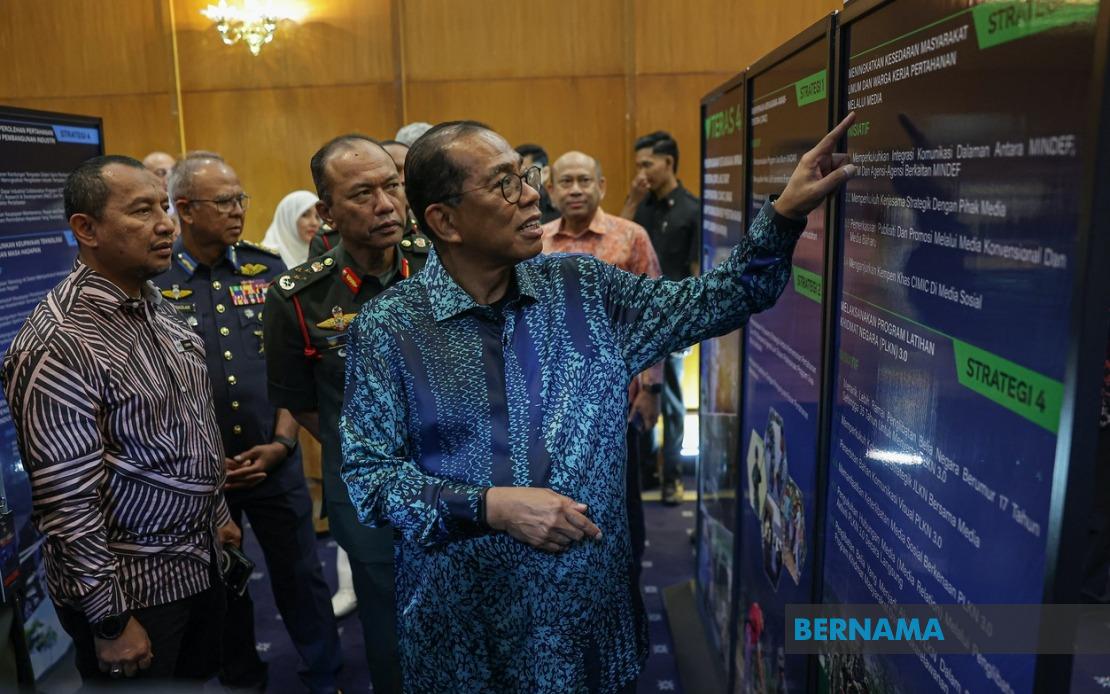
Malaysia's Defence Ministry has introduced two interconnected policy frameworks intended to anchor the nation's military development over the next five years. The National Defence Strategic Plan (PSPN) and Defence Capacity Blueprint (RTKP) 2026-2030, launched by Defence Minister Datuk Seri Mohamed Khaled Nordin, represent a substantial recalibration of how the country approaches security planning in an environment characterised by rapid technological change and mounting regional instability.
These initiatives build directly on Malaysia's existing Defence White Paper, functioning as complementary instruments that translate long-term strategic vision into actionable implementation pathways. The minister emphasised that the two documents emerged from a comprehensive mid-term assessment of the Defence White Paper, during which officials identified critical gaps and reassessed priorities in light of contemporary threats. This iterative approach reflects recognition within the ministry that defence planning must remain dynamic rather than static, capable of adjusting course as circumstances shift.
The global security environment that prompted this reassessment has become increasingly complex. Beyond traditional interstate tensions, Malaysia and regional peers now contend with disruptive technologies including artificial intelligence and automation that are reshaping military capabilities worldwide. Simultaneously, non-traditional security challenges—spanning cyber threats, maritime piracy, terrorism, and transnational crime—demand strategic attention alongside conventional defence concerns. The confluence of these pressures creates a fundamentally different operating environment from the one contemplated in earlier strategic documents.
The PSPN itself rests on seven strategic pillars that collectively aim to forge a more capable and resilient armed forces establishment. Foremost among these is ensuring the operational readiness of the Malaysian Armed Forces, a baseline requirement for any credible defence posture. The plan also prioritises enhancement of defence capabilities, recognising that equipment, platforms, and systems must remain competitive with evolving threats. Personnel welfare and veteran support represent another pillar, reflecting the understanding that military effectiveness depends substantially on human capital and institutional morale. Additionally, the framework emphasises defence technology and innovation, acknowledging that technological edge increasingly determines military advantage.
However, robust strategy remains merely aspirational without corresponding capacity to execute it. This is where the RTKP assumes critical importance. As Minister Mohamed Khaled explained, if the PSPN answers the question of destination, the RTKP addresses the question of means. The capacity blueprint focuses explicitly on resources that transform ambition into achievement: financial allocation, human capital development, technological expertise, and mechanisms for coordinating effort across government agencies. Without adequate investment in these foundational elements, even the most thoughtfully crafted strategic plan risks becoming aspirational rhetoric rather than operational reality.
The breadth of the capacity framework underscores a sophisticated understanding of modern defence requirements. Financial resources remain essential but insufficient on their own. The blueprint recognises that sustained professional competency, cutting-edge research capacity, and robust innovation ecosystems determine whether armed forces can effectively employ advanced systems. Equally important is the coordination infrastructure that allows Defence Ministry initiatives to interface effectively with other government portfolios and the broader defence industrial base. For a middle-income nation like Malaysia with finite resources, achieving maximum return on defence investment requires precisely this kind of strategic orchestration.
Minister Mohamed Khaled also highlighted the whole-of-government and whole-of-society dimensions embedded within these frameworks. This language signals a departure from the notion that national defence remains primarily a military preoccupation. Instead, the ministry acknowledges that resilience across economic, cyber, social, and physical domains all contribute to national security. Such an approach requires buy-in and active participation from ministries spanning finance, technology, education, and infrastructure, as well as coordination with the private sector and civil society. For Malaysian policymakers seeking to build comprehensive resilience, this integrated conceptualisation offers a valuable template.
The ministry's recent equipment acquisitions illustrate how strategy translates into concrete capability gains. The arrival of three ANKA Medium Altitude Long Endurance Unmanned Aircraft Systems in March and their subsequent deployment to Labuan Air Base represent concrete progress toward strengthening Malaysian Armed Forces' reconnaissance and surveillance capacities. These platforms provide extended operational reach and persistence compared to traditional manned aircraft, enhancing the armed forces' ability to monitor Malaysia's vast maritime exclusive economic zone and coastal approaches.
Looking forward, Malaysia's acquisition pipeline reflects priorities outlined within the strategic frameworks. The forthcoming FA-50M light combat aircraft represent a significant modernisation of air defence and strike capabilities, while scheduled maritime patrol aircraft acquisitions address critical gaps in maritime domain awareness. These platforms prove particularly relevant to Southeast Asia, where ensuring freedom of navigation and protecting territorial waters against non-traditional threats remain persistent concerns. The second batch of Littoral Mission Ships, when delivered according to schedule, will further expand the Royal Malaysian Navy's capacity to operate effectively across the littoral environments that dominate the region's geography.
These capability enhancements must be understood within the context of Malaysia's strategic geography and threat matrix. The nation straddles critical maritime chokepoints, confronts transnational security challenges including terrorism and smuggling, and operates within a region experiencing growing great-power competition. The PSPN and RTKP represent Malaysia's attempt to construct a defence posture adequate to these multifaceted challenges while operating within the fiscal constraints facing most regional militaries.
For regional observers and defence analysts, Malaysia's approach offers instructive lessons about balancing ambition with realism. Rather than pursuing grandiose military transformation, the frameworks emphasise sustainable development grounded in realistic assessment of available resources and demonstrated execution capacity. This pragmatic philosophy may offer a useful reference point for other Southeast Asian nations wrestling with similar pressures to modernise defence establishments amid budgetary limitations and diverse security challenges.

