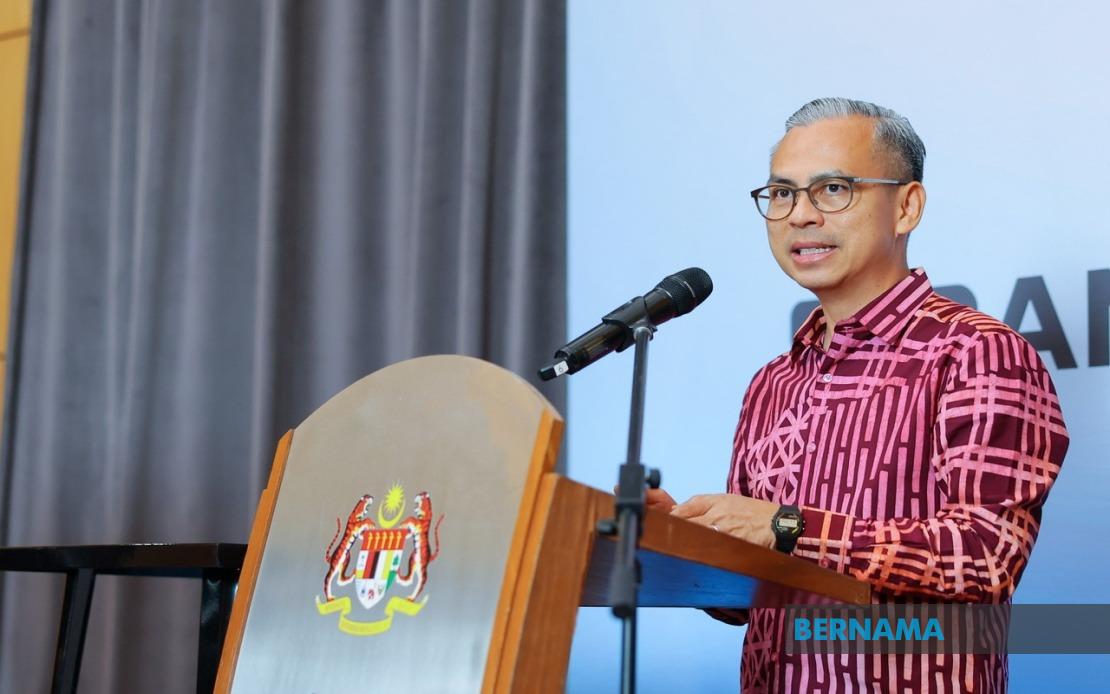
The Malaysian government has taken concrete steps to confront the escalating menace of digital fraud by establishing a specialised cross-agency committee designed to coordinate a comprehensive response to online scams. Communications Minister Datuk Fahmi Fadzil announced the initiative on July 2, revealing that the committee was formally created on June 18 following discussions at a Cabinet retreat that underscored the severity and frequency of cybercrime affecting Malaysian citizens and businesses.
This institutional response represents a significant shift in government strategy, moving beyond traditional siloed approaches where individual agencies tackled aspects of cybercrime independently. The formation of the committee signals recognition that online fraud is a complex, multifaceted problem requiring seamless coordination across law enforcement, regulatory bodies, and the private sector. Fahmi, speaking in his dual capacity as minister and MADANI Government spokesman, emphasised that the inaugural meeting would involve representatives from multiple government departments and agencies, each bringing distinct expertise and enforcement capabilities to bear on the problem.
A particularly noteworthy dimension of this initiative is the unprecedented inclusion of commercial stakeholders. For the first time, the banking sector, telecommunications industry, and major digital platforms including social media companies will sit at the table alongside government officials. This partnership acknowledges that financial institutions and tech companies possess critical data, technical infrastructure, and real-time intelligence about fraudulent activities. Banks can identify suspicious transaction patterns, telecom firms can track SIM card misuse and phishing infrastructure, while social media platforms can monitor scam advertisements and fraudulent accounts propagating across their networks.
The government's stated objectives centre on strengthening three interconnected pillars: enforcement actions against perpetrators, legislative frameworks governing digital safety, and investigative capabilities to identify and prosecute offenders. By integrating these elements through a coordinated committee structure, authorities aim to create a deterrent effect whilst simultaneously improving victim protection and evidence gathering. Fahmi highlighted that this cross-agency model has previously demonstrated effectiveness in combating other serious crimes, particularly child sexual exploitation, where specialised task forces led to successful operations.
The deliberate opacity surrounding specific tactics and strategies reflects awareness that scam networks operate with sophisticated intelligence gathering. Communications about preventive measures, enforcement priorities, or investigation techniques could be exploited by criminal organisations to adjust their methods or evade detection. This calculated discretion, whilst limiting public transparency, acknowledges the cat-and-mouse dynamics inherent in cybercrime where criminals rapidly adapt to countermeasures. The government appears to be prioritising operational effectiveness over immediate public disclosure of its tactical approach.
The timing of this initiative reflects Malaysia's mounting vulnerability to online fraud. The country has experienced substantial growth in reported scam cases, affecting individuals across economic strata and causing significant financial and psychological damage. Victims include unwary consumers, small business operators, and occasionally even government agencies. The sophistication of contemporary scam networks—spanning fake investment schemes, romance frauds, phishing attacks, and impersonation scams—often requires technical expertise and investigative resources that individual agencies may lack in isolation.
The involvement of telecommunications providers carries particular significance given their gatekeeping role in digital communications. Telecom companies can identify patterns of mass phishing SMS campaigns, flag SIM cards used for fraudulent purposes, and cooperate with international carriers to disrupt cross-border scam operations. Similarly, banking sector participation enables real-time identification of suspicious fund movements, rapid freezing of accounts suspected of money laundering, and provision of forensic financial data to investigators. These capabilities prove essential given that scammers frequently launder proceeds through multiple jurisdictions and financial institutions.
Social media platforms represent another critical stakeholder in this framework. These companies operate the digital infrastructure where many scams are advertised, promoted, and executed. Their cooperation can result in rapid removal of fraudulent content, deactivation of scammer accounts, and provision of metadata about suspicious users to authorities. However, the effectiveness of platform cooperation depends on clear incentives, liability protections for good-faith cooperation, and streamlined processes for government requests that respect user privacy whilst enabling legitimate law enforcement.
The committee structure also addresses gaps in investigative expertise. Cybercrime investigations require specialists capable of tracing digital footprints, understanding cryptocurrency transactions, recovering deleted evidence, and testifying in courts about technical matters. By creating a dedicated working group, the government signals commitment to developing institutional capacity in cybercrime investigation. This includes training opportunities, equipment investment, and knowledge sharing among agencies that previously operated independently.
For Malaysian citizens and businesses, this initiative offers modest grounds for optimism. The visibility of government commitment, the involvement of private sector partners, and the promise of stricter and faster enforcement actions suggest a recalibrated approach to a persistent threat. However, success ultimately depends on execution quality—whether agencies genuinely coordinate rather than compete, whether private sector partners allocate sufficient resources, and whether legislative frameworks are updated to reflect evolving crime techniques. The committee's effectiveness will become evident through measurable reductions in reported scams, improved conviction rates, and demonstrated victim restitution.
Regionally, Malaysia's initiative may influence other Southeast Asian governments grappling with similar cybercrime challenges. The model of integrating financial institutions, telecoms, and platforms into formal government committees could serve as a template for countries seeking comprehensive approaches to digital fraud. Singapore, Thailand, and Indonesia each face substantial online scam problems, and observing Malaysia's outcomes may inform their policy responses.
Looking forward, the committee faces substantial challenges. Scammers operate across borders with minimal regard for national jurisdictions, requiring international cooperation and potentially new bilateral or multilateral agreements. Balancing effective investigation with digital privacy rights presents ongoing tensions. And sustaining private sector engagement requires maintaining relationships with companies whose primary incentives centre on profit rather than crime prevention. Nevertheless, the government's decision to formally coordinate responses across agencies and sectors represents necessary recognition that online fraud cannot be conquered through conventional enforcement approaches alone.

