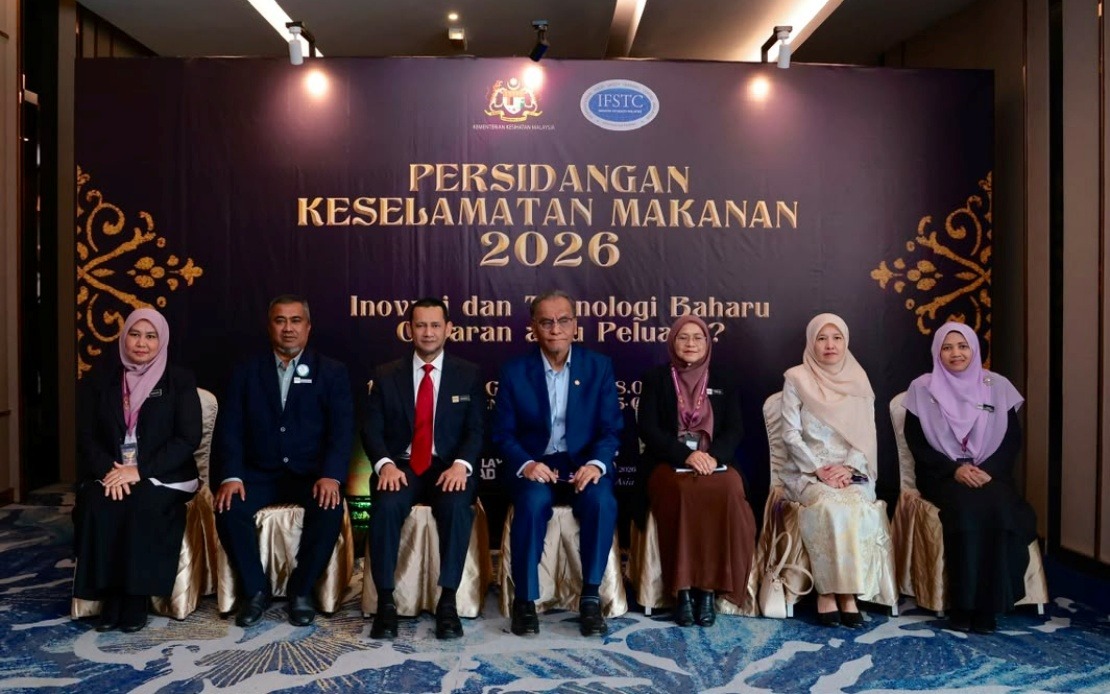
Malaysia has taken a significant step in regional food safety governance by formalising its membership in the Asia-Pacific Food Regulatory Authority Summit, a move aimed at positioning the country as a leader in digital transformation within the sector. Health Minister Datuk Seri Dr Dzulkefly Ahmad announced the development at a membership signing ceremony in Putrajaya, which coincided with the opening of the 2026 Food Safety Conference, signalling the government's commitment to overhauling how the nation manages food safety across its borders and throughout complex supply chains.
The Cabinet's formal approval in June paves the way for Malaysia to assume what officials describe as a "Smart Gatekeeper" role at the regional level. This designation reflects the country's ambition to lead the digital overhaul of food safety governance across Asia-Pacific, while simultaneously taking on responsibility for regulating biodegradable packaging materials and harmonising legislative standards for emerging food innovations. Such positioning carries both prestige and practical implications for Malaysia's standing in trade negotiations and regional standard-setting bodies that shape how food products move across borders.
The urgency behind Malaysia's membership bid becomes apparent when examining the nation's food import profile. Over the past decade, Malaysia's reliance on imported food has grown substantially, with annual imports climbing 85 per cent from RM42.6 billion in 2013 to RM78.9 billion in 2023. This dramatic increase reflects both population growth and rising living standards, but it also exposes the country to supply chain vulnerabilities that extend far beyond national borders. A significant portion of food consumed daily by Malaysians now travels through lengthy and intricate global supply chains that cross multiple countries, each introducing potential points of contamination or regulatory inconsistency.
The complexity of these international food networks presents both operational and security challenges for Malaysian authorities. Foods arriving at Malaysian ports may originate from dozens of different jurisdictions, each with varying food safety standards and enforcement capabilities. This fragmentation makes it difficult for a single country to maintain comprehensive oversight without coordinating with regional partners. APFRAS membership enables Malaysia to participate in developing harmonised standards and sharing real-time safety information with other member nations, creating a more integrated approach to preventing contaminated products from reaching consumers across the region.
To manage the growing complexity of food imports, Malaysia's Health Ministry is actively investigating advanced technological solutions, particularly artificial intelligence and predictive analytics systems. These tools promise to revolutionise how safety monitoring occurs at border entry points, moving beyond traditional manual inspection methods that cannot realistically examine every shipment in detail. By deploying AI-driven risk assessment, the ministry aims to identify potentially problematic shipments before they enter the domestic supply chain, flagging those requiring intensive inspection while expediting the clearance of low-risk consignments. This targeted approach could significantly enhance both safety outcomes and trade efficiency.
The government's strategy aligns with both the National Food Safety Policy and the National Food Security Policy, two interconnected frameworks that recognise food safety and food availability as complementary national objectives. The policies acknowledge that in an era of globalised food systems, domestic food security cannot be achieved through self-sufficiency alone. Instead, Malaysia must develop the regulatory sophistication to ensure that imported foods meet the same safety standards that Malaysians expect from locally produced alternatives. This reframing of food security in digital and international terms represents a substantial shift from traditional approaches focused primarily on domestic production.
The 2026 Food Safety Conference, which brought together more than 300 participants to examine food safety governance, reflected the scope of challenges facing the sector. Attendees engaged with presentations and discussions covering evidence-based control methodologies, innovation adoption, and technological applications in food safety. The conference theme, "New Innovations and Technologies – Challenges or Opportunities?," underscores the sector's uncertainty about how rapid technological change should influence regulatory design. Some innovations promise genuine safety improvements, while others may introduce new vulnerabilities or create uneven competitive advantages for larger enterprises capable of meeting novel technical standards.
Malaysia's elevation within APFRAS reflects a broader regional recognition of the country's regulatory capabilities and geographic importance. Located at a strategic crossroads in Southeast Asia, Malaysia serves as a transhipment point for food products moving throughout the region. By establishing strong governance and digital systems, Malaysia can become a model for other nations while simultaneously protecting its own market from unsafe products. The country's willingness to lead on issues like biodegradable packaging regulation also signals that Malaysian policymakers are thinking beyond immediate food safety concerns toward long-term sustainability objectives.
The implications for Malaysian consumers extend well beyond national borders. As APFRAS membership facilitates information sharing and standard harmonisation, food products will become increasingly similar across the region regardless of origin. This convergence should reduce the incidence of products that pass safety standards in one country but fail in another—a situation that has sometimes allowed substandard goods to enter Malaysia through regulatory arbitrage. Enhanced regional coordination also means that disease outbreaks or contamination incidents can be detected and responded to more quickly, with Malaysian authorities receiving early warning of problems emerging in neighbouring countries.
For Malaysian businesses involved in food trade, APFRAS membership carries mixed implications. Exporters will benefit from clearer regional standards and reduced bureaucratic friction, while importers may face slightly more rigorous scrutiny and higher compliance costs as Malaysia implements APFRAS-recommended standards. Local food producers who currently rely on regulatory gaps to compete against imports may find those advantages narrowing. However, the longer-term competitive advantage flows toward Malaysian companies capable of meeting high safety standards, as regional supply chains increasingly favour reliable partners that minimise the risk of costly recalls or disease outbreaks.
The government's embrace of AI and predictive analytics in food safety represents a significant technological bet. These systems require substantial investment in infrastructure, staff training, and data integration across multiple agencies. Malaysia will need to ensure that agencies like the Health Ministry, the Ministry of Domestic Trade and Consumer Affairs, and local government health offices can share data effectively while maintaining appropriate confidentiality protections. The success of this digital transformation will depend not just on technology adoption but on organisational change that breaks down existing silos between agencies with overlapping food safety responsibilities.

