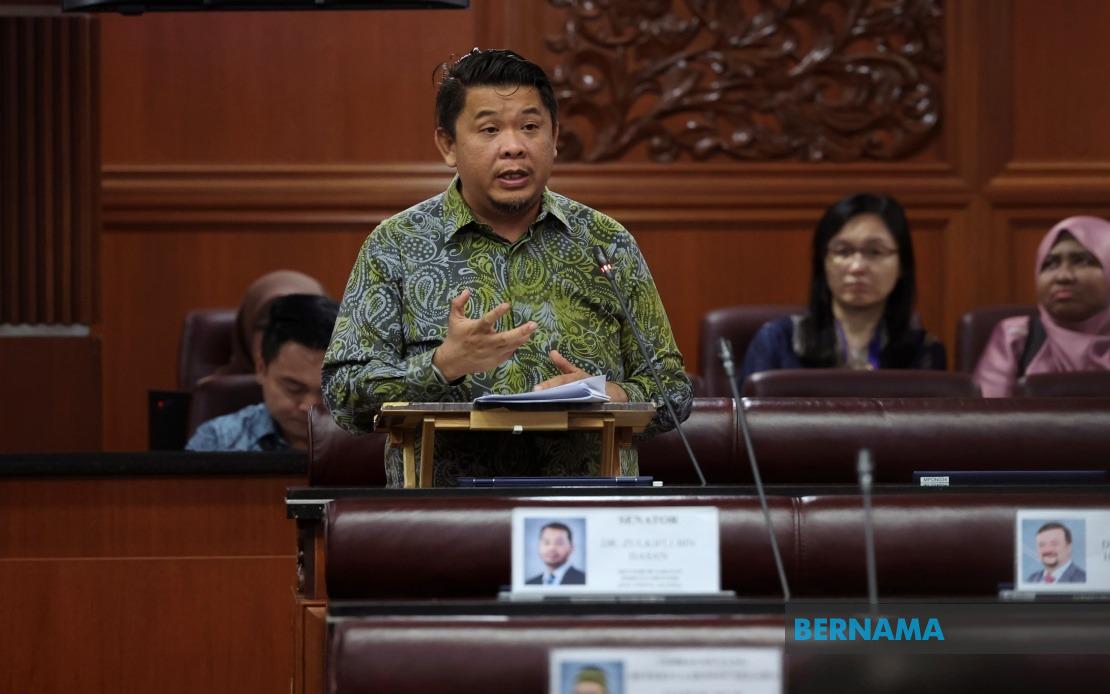
Malaysia has ordered the United Nations High Commissioner for Refugees to suspend all new refugee registrations with immediate effect, signalling a significant shift in how the country manages its displaced population. Deputy Foreign Minister Datuk Lukanisman Awang Sauni disclosed the Cabinet decision during parliamentary proceedings on July 23, explaining that the pause is necessary to accommodate a comprehensive overhaul of the refugee registration infrastructure through the Refugee Registration Document (DPP) programme.
The government's rationale centres on establishing tighter administrative control over refugee data and verification processes. Rather than relying on UNHCR documentation and international frameworks, Malaysia intends to consolidate all refugee information within its own institutional apparatus. This restructuring reflects a broader objective to manage the registration process more systematically, incorporating robust identity verification mechanisms and coordination between domestic enforcement agencies. For a country grappling with security concerns and resource limitations, centralising refugee management addresses longstanding anxieties about gaps in screening procedures and the potential exploitation of registration systems by irregular migrants.
Lukanisman emphasised that the DPP programme will involve rigorous protocols developed in consultation with various law enforcement bodies to safeguard against irregular entries masquerading as genuine asylum seekers. The new system aims to establish clear eligibility criteria and implement standardised verification procedures across all registration activities. This represents a departure from Malaysia's previous reliance on UNHCR's international framework, reflecting growing domestic demands for greater governmental oversight and accountability in refugee affairs.
The backdrop to this policy shift involves the persistent Rohingya crisis. Senator Hussin Ismail raised the specific challenge of Rohingya populations lacking both personal identification documents and any recognition from their country of origin, Myanmar. These stateless individuals represent one of the most vulnerable demographics, yet their documentation deficits complicate both registration and eventual repatriation efforts. Malaysia hosts one of the world's largest Rohingya populations outside camps, with tens of thousands residing in urban areas and detention facilities.
Malaysia's decision reflects mounting pressure to balance humanitarian concerns with national interests. As a non-signatory to the 1951 Refugee Convention, the country operates outside the formal international refugee protection regime and shoulders substantial burdens without corresponding international support mechanisms. The government has repeatedly articulated concerns that refugee populations impose fiscal and social costs on Malaysian communities, particularly in urban areas where housing, healthcare, and education resources become strained.
Simultaneously, Malaysia is pursuing multilateral diplomatic channels with Myanmar and fellow ASEAN member states to develop a more comprehensive regional response to the Rohingya displacement crisis. This approach suggests the government views the refugee issue not merely as a domestic management problem but as a regional challenge requiring coordinated action among Southeast Asian nations. Such initiatives aim to address root causes in Myanmar and potentially create conditions enabling eventual voluntary repatriation.
The repatriation dimension adds urgency to this restructuring. Lukanisman announced that approximately 5,000 Myanmar nationals detained in immigration detention facilities will be returned to Myanmar following coordination with that government. Naval transportation will facilitate this repatriation process, contingent upon completion of requisite diplomatic and administrative procedures. This represents a significant movement of irregular migrants back across regional borders, suggesting improved bilateral cooperation despite Myanmar's political instability.
The timing of this announcement warrants attention. Malaysia has experienced cyclical patterns of tightening immigration enforcement, alternating with periods of relative tolerance toward refugee populations. The current initiative suggests a hardening stance, reflecting both domestic political considerations and practical concerns about managing populations without formal legal status. Opposition to refugee presence has intensified among segments of the local population, particularly in economically vulnerable communities where competition for employment and resources appears acute.
For Southeast Asian observers, Malaysia's approach carries broader implications. The region hosts several large refugee populations including Rohingya, Myanmar nationals fleeing military rule, and smaller groups from other conflicts. Malaysia's decision to suspend UNHCR registrations and implement a state-controlled alternative may encourage similar institutional consolidation among neighbouring countries, potentially fragmenting the already fragile international refugee protection architecture in Southeast Asia. This creates complications for refugees navigating multiple jurisdictions and for humanitarian organisations coordinating cross-border assistance.
The DPP programme also reflects technological and administrative capacity-building within Malaysia's immigration apparatus. Implementing a sophisticated registration system involving data coordination, identity verification, and real-time monitoring requires substantial investment in systems infrastructure, training, and institutional coordination. Success will depend on whether Malaysian agencies can effectively collaborate and whether the databases prove reliable and secure.
Critically, the registration suspension creates an interim period of uncertainty for asylum seekers and refugees currently in Malaysia. Those unable to register through UNHCR face legal ambiguity regarding their status and rights, potentially increasing vulnerability to exploitation, trafficking, and arbitrary detention. Humanitarian organisations have previously flagged concerns about refugees facing barriers to accessing essential services when lacking formal documentation.
Lookingforward, Malaysia's restructured refugee management system will require careful calibration between enforcement efficiency and humanitarian protection principles. The government's emphasis on preventing illegal entry through stricter verification aligns with legitimate sovereignty concerns, yet must be balanced against international norms protecting vulnerable populations. The success of the DPP programme will ultimately be measured not only by administrative efficiency but by whether it creates pathways for legitimate asylum seekers while preventing irregular migration exploitation.

