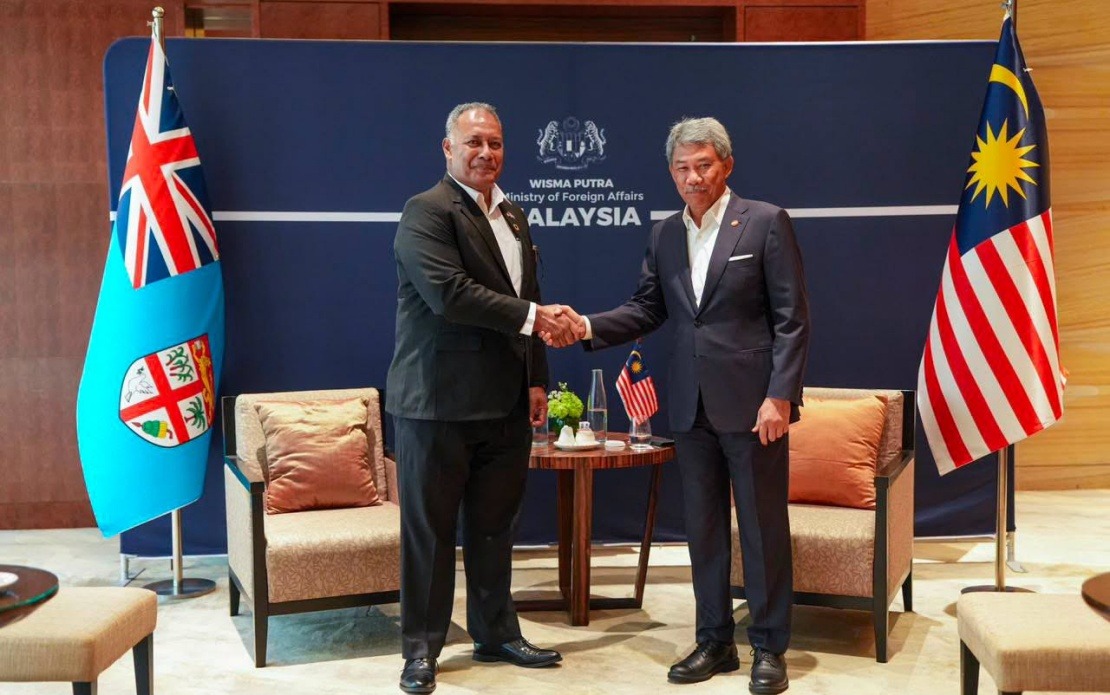
Malaysia is intensifying its engagement with the Pacific Island nation of Fiji through a comprehensive framework spanning economic cooperation, sustainable development, and cultural ties. Foreign Minister Datuk Seri Mohamad Hasan held substantive discussions with Fijian Foreign and External Trade Minister Sakiasi Raisevu Ditoka on Tuesday during an official working visit, signalling renewed momentum in a relationship that has historically remained under-developed despite geographic and diplomatic proximity within the Commonwealth.
The agenda for deepening bilateral cooperation encompasses trade and investment, human capital development, forestry management, renewable energy development, and cultural exchange. These interconnected sectors reflect both nations' strategic priorities as they navigate economic diversification and climate adaptation challenges. The emphasis on renewable energy proves particularly significant given Fiji's vulnerability to climate impacts and Malaysia's position as a regional clean energy technology hub, suggesting potential for technology transfer and joint ventures in solar and hydroelectric projects.
A symbolic turning point in Malaysia-Fiji relations occurred on Monday when Ditoka officially reopened the High Commission of Fiji in Kuala Lumpur following a period of closure. This physical restoration of diplomatic presence demonstrates concrete commitment to strengthening institutional capacity and facilitating deeper people-to-people engagement. The reopening positions both nations to conduct more intensive bilateral affairs and provides a dedicated platform for addressing trade grievances, investment promotion, and consular services.
Bilateral trade data underscores the current asymmetry in economic relations. In 2025, total two-way trade between Malaysia and Fiji reached RM880.01 million, equivalent to approximately US$206.2 million. Malaysian exports dominated the relationship, valued at RM867.92 million or US$203.41 million, while Malaysian imports from Fiji totalled just RM12.09 million or US$2.80 million. This significant trade imbalance suggests substantial untapped potential for Fiji to expand its export capacity in agricultural products, seafood, and natural resources to the Malaysian market.
During the working visit, the two ministers expanded discussions beyond bilateral matters to encompass regional and global issues affecting the Pacific and Southeast Asia. This broader engagement indicates Malaysia's strategic interest in strengthening ties with Pacific nations at a time when geopolitical competition in the Indo-Pacific region intensifies. By positioning itself as a dependable partner to island developing states, Malaysia can enhance its regional influence and advocate effectively on climate change, sustainable development, and maritime security within multilateral forums.
The scope of proposed cooperation reflects pragmatic recognition of complementary strengths. Malaysia brings development expertise, industrial capacity, and access to regional markets, while Fiji offers resource wealth, strategic maritime position, and growing importance in Pacific geopolitics. Human capital development initiatives could facilitate skills transfer through scholarship programmes and technical training, benefiting Fijian professionals seeking advancement while building Malaysia's soft power in the Pacific.
Forestry cooperation carries particular significance given both nations' commitment to environmental sustainability. Malaysia's experience in managing tropical forest resources and implementing certification systems could inform Fiji's forest management practices, though this must be balanced against concerns about sustainable extraction and indigenous land rights. Renewable energy collaboration represents perhaps the most promising avenue, with potential Malaysian investment in wind, solar, and geothermal projects across the Fijian archipelago addressing energy security while creating employment.
Cultural exchange initiatives serve to humanise the bilateral relationship and build societal connections beyond official channels. These programmes can facilitate tourism, educational partnerships, and artistic collaborations that strengthen mutual understanding. As Malaysia seeks to project itself as a bridge nation between developed and developing economies, deeper cultural ties with Pacific partners reinforce this positioning.
The timing of Fiji's high-level visit and the reopening of its diplomatic mission reflect strategic calculations by both governments. Malaysia gains opportunity to expand influence in the Pacific at a moment when major powers compete for partnerships with island nations. Fiji, meanwhile, benefits from diversifying its diplomatic and economic relationships beyond traditional partners, reducing dependency and creating new revenue streams. The working visit demonstrates both nations' willingness to invest political capital in what has historically been an underdeveloped relationship.
Moving forward, the success of strengthened Malaysia-Fiji cooperation depends on translating ambitions into concrete projects with measurable outcomes. Establishing joint commissions, sector-specific working groups, and regular ministerial consultations would institutionalise engagement and ensure momentum persists beyond individual visits. Trade facilitation mechanisms, investment guarantee agreements, and simplified visa procedures for business travellers could accelerate economic cooperation.
The broader context suggests this bilateral warming reflects shifting regional dynamics where Southeast Asian nations recognise the strategic importance of Pacific partnerships. As climate change, maritime security, and development challenges increasingly dominate international agendas, nations like Malaysia find value in building coalitions and demonstrating solidarity with vulnerable island states. The Malaysia-Fiji relationship, though modest in current scale, carries potential for meaningful contribution to both nations' development objectives and regional stability.

