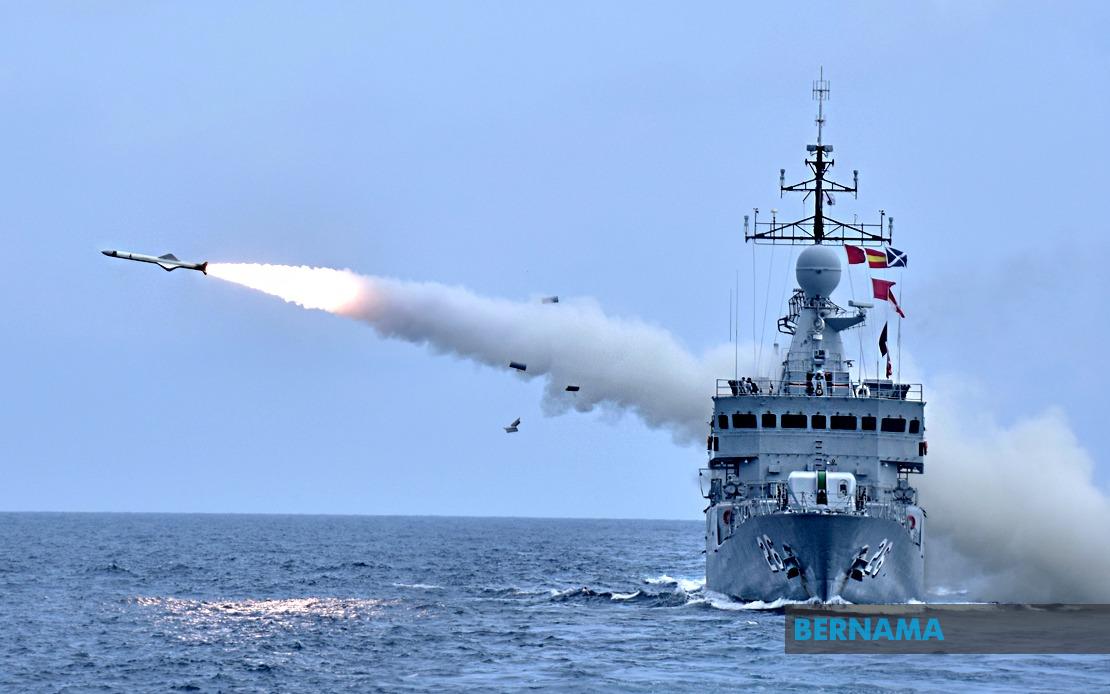
Defence Minister Datuk Seri Mohamed Khaled Nordin has laid out a comprehensive case for Malaysia's escalating defence budget, arguing that the rationale extends well beyond traditional regional rivalries to encompass a constellation of modern security challenges that have fundamentally reshaped how the government thinks about military preparedness and resource allocation. Speaking on the heels of Prime Minister Datuk Seri Anwar Ibrahim's announcement that Malaysia may need to invest hundreds of millions to billions of ringgit in additional defence capabilities, Mohamed Khaled articulated a vision of security that acknowledges both conventional military threats and the newer, more insidious dangers posed by cyber attacks and coordinated misinformation campaigns.
The Defence Minister identified several critical shifts in Malaysia's security environment that justify elevated spending levels. Cyber threats and electromagnetic warfare have emerged as pressing concerns that did not feature prominently in defence calculations a decade ago, while mass misinformation campaigns designed to destabilise social cohesion and undermine public confidence in institutions represent another dimension of vulnerability that demands attention and investment. These developments require a recalibration of how Malaysia allocates resources, moving beyond hardware and personnel to include robust defensive infrastructure and institutional resilience against information warfare tactics increasingly deployed across Southeast Asia.
Within the broader Asian security architecture, Mohamed Khaled framed Malaysia's position as one caught between larger geopolitical currents without having chosen any particular alignment. He emphasised that the intensification of military activities and expanded capabilities across the region stem from escalating strategic competition between major powers, particularly as the United States and China assert competing visions for regional order. When one superpower increases its military footprint or upgrades its technological capabilities, neighbouring countries naturally feel compelled to respond, creating a security dilemma where defensive measures by one side are perceived as threatening by others, thereby justifying further rounds of military investment.
The crowding of military assets within the relatively confined waters and airspace of Southeast Asia presents a distinct risk profile that concerns Malaysian strategic planners. Mohamed Khaled articulated the concern that greater concentrations of military hardware in close proximity naturally elevate the probability of accidental escalation, where a miscalculation, a communications failure, or a minor incident spirals unexpectedly into a serious confrontation. This dynamic became particularly salient given recent developments in the southern Philippines near Sabah, where Manila's enhanced security operations and evolving strategic partnerships have potential repercussions for Malaysia's own security calculus and broader stability in the South China Sea.
On the Philippines dimension, Mohamed Khaled adopted a notably calibrated tone that balanced respect for Manila's sovereign prerogatives with acknowledgment of how developments there can ripple across Malaysian interests. He made clear that Malaysia respects the Philippines' right to structure its own defence arrangements and security partnerships according to its own threat assessment, avoiding any suggestion that Malaysia opposes or seeks to constrain Filipino decision-making. Simultaneously, he recognised that even incidents not directly involving Malaysia could have cascading security implications, suggesting that Malaysian strategists monitor regional developments with careful attention to how local tensions might escalate and create broader destabilisation.
A central theme in Mohamed Khaled's articulation was the imperative to avoid characterising Malaysia's defence posture as taking sides in the larger geopolitical contest. He rejected the framing that Malaysia's planned defence investments represent alignment with or opposition to any particular power, whether the United States, China, the Philippines, or others. This reflects a delicate balancing act essential to Malaysian statecraft, where the country must strengthen its military capabilities and assert its sovereignty without appearing to abandon its traditional non-aligned positioning or its commitment to ASEAN centrality as the organising principle for regional diplomacy.
The government's modernisation programme for the Malaysian Armed Forces has long been embedded in strategic planning, Mohamed Khaled explained, and should not be interpreted as a novel or reactive response to recent regional developments. The intention to gradually increase defence spending to 1.5 per cent of Gross Domestic Product by 2030 represents a measured, planned trajectory rather than an emergency mobilisation driven by acute crisis. This distinction matters for regional signalling, as it allows Malaysia to characterise its defence build-up as routine modernisation consistent with its developmental ambitions rather than as a panic-driven response to external threats, which might prompt counter-responses from neighbours or major powers.
Among the specific areas receiving attention is Pulau Layang-Layang, where Malaysia is reinforcing capabilities as part of broader sovereignty protection efforts. The Defence Minister was at pains to explain that such developments stem from Malaysia's national defence interests and should not be misread as provocative acts directed at any particular country. This sensitivity underscores the delicate geopolitical terrain Malaysia inhabits, where physical presence, infrastructure development, and military positioning carry symbolic weight beyond their immediate strategic value, and where misinterpretation can easily occur in an environment of heightened suspicion.
Mohamed Khaled outlined a two-track strategy that exemplifies Malaysia's approach to regional security challenges. One track involves building sufficient defensive capabilities to safeguard sovereignty and protect Malaysian national interests against potential threats, while the parallel track emphasises dialogue, diplomacy, and confidence-building measures designed to reduce tensions and create space for peaceful resolution of disputes. This dual approach reflects the understanding that military strength alone cannot ensure stability; instead, it must be paired with active engagement in regional institutions and multilateral mechanisms that reduce the incentive for conflict.
The South China Sea remains central to Malaysia's security thinking, and Mohamed Khaled reiterated the government's commitment to seeing all parties exercise restraint and avoid actions that could trigger unintended escalation. He emphasised the vital importance of progress on the Code of Conduct between ASEAN and China, viewing a negotiated framework as essential for creating a more predictable and rules-based environment that reduces the scope for miscalculation or opportunistic military adventurism. Malaysia's continued advocacy for this instrument reflects recognition that while military strength matters, the foundations of stable coexistence rest on shared understanding of acceptable behaviours and mechanisms for dispute resolution.
Malaysia's unwavering support for ASEAN centrality represents another key pillar of its regional strategy, and Mohamed Khaled reaffirmed this commitment even as he acknowledged the reality of overlapping territorial claims and fundamental differences among members. By championing the ASEAN approach that creates space for dialogue despite these divisions, Malaysia positions itself as a voice for stability and pragmatism, advocating that the grouping remain a platform for peaceful engagement rather than a venue for proxy competition among larger powers. This stance requires diplomatic skill and credibility, assets Malaysia has cultivated through decades of careful regional engagement.
Ultimately, Mohamed Khaled's exposition of Malaysia's defence spending reflects the country's complex positioning as a mid-sized power seeking to maintain strategic autonomy in an era of great power competition. The decision to invest in modernised military capabilities stems not from hostility toward any specific nation but from a sober assessment of how regional dynamics have shifted in ways that demand higher defence spending. Simultaneously, Malaysia remains committed to using diplomacy and multilateral institutions to shape the terms of regional coexistence, recognising that military power must be paired with the kind of soft power and institutional leadership that ASEAN can provide. For Malaysian policymakers, the challenge lies in demonstrating that increased defence spending coexists with and supports rather than contradicts the country's commitment to dialogue, restraint, and peaceful resolution of disputes.

