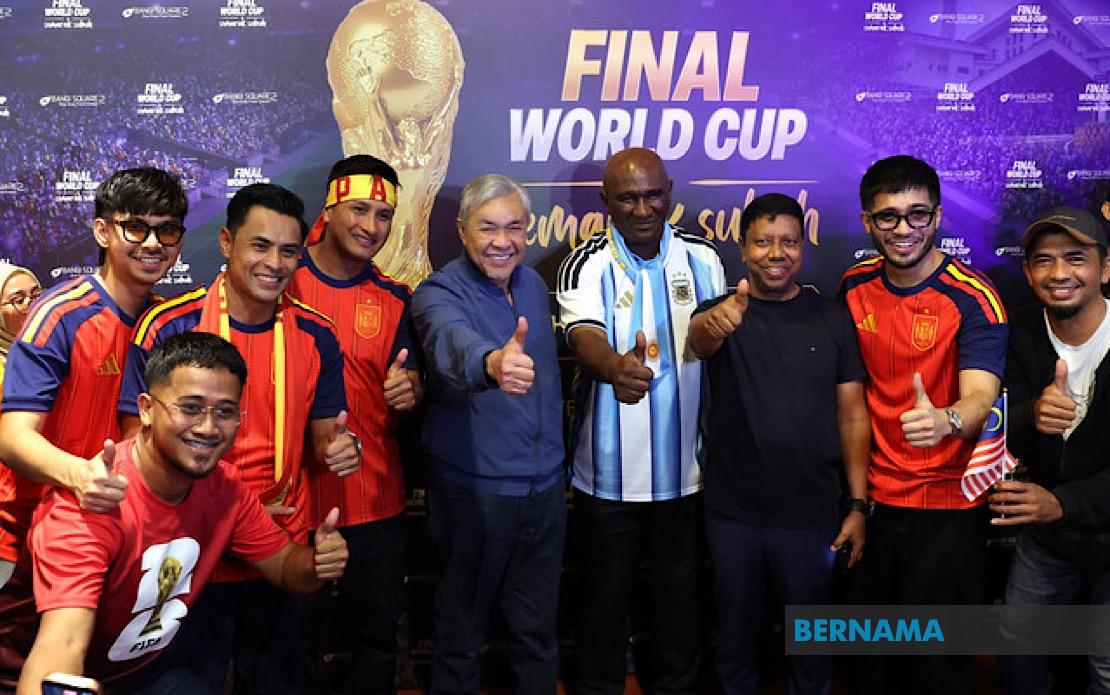
Malaysia's leadership has articulated a long-term aspiration to host football's grandest stage, the FIFA World Cup, with Deputy Prime Minister Datuk Seri Dr Ahmad Zahid Hamidi expressing optimism about the nation's footballing future during an event in Bangi on July 20. Speaking at a gathering organised around a large-screen broadcast of the World Cup final between Argentina and Spain, Ahmad Zahid, who also holds the Rural and Regional Development portfolio, outlined the country's dual objective: to secure hosting rights for the tournament and ensure the Malaysian national squad qualifies as participants on the world's largest football platform.
The Deputy PM's remarks reflect a broader vision of positioning Malaysia as a regional sporting hub with continental representation. Ahmad Zahid emphasised that bringing the World Cup to Malaysian shores would constitute a momentous achievement for the nation, extending beyond sporting accomplishment to represent Southeast Asia's developmental trajectory and organisational capabilities. His articulation of this goal appears calibrated to inspire grassroots enthusiasm while acknowledging the substantial infrastructural and competitive demands the tournament entails.
The timing of Ahmad Zahid's statements proved symbolically apt, occurring during festivities celebrating the Argentina-Spain final, one of football's most anticipated matches. Hundreds of supporters converged at Bangi Square 2, transforming the venue into a hub of footballing passion and national pride. The gathering transcended mere spectatorship, incorporating elements designed to elevate local football culture and reconnect Malaysians with the sport's heritage through participation of celebrated figures from the nation's footballing past.
Amongst the programme's highlights was a "Borak Bola" session bringing together legendary players including Datuk Zainal Abidin Hassan, Mohd Farizal Marlias, and Mohamad Zaquan Adha Abdul Radzak, moderated by host Hafizal Hamad. These stalwarts of Malaysian football provided audiences invaluable perspective on the sport's development trajectory within the country, serving as embodied reminders of Malaysia's footballing pedigree whilst subtly underlining the gap between past glories and contemporary competitive standing.
Currently, the Harimau Malaya occupy 136th position within FIFA's official world rankings, a position representing incremental progress within the global footballing hierarchy. Malaysia's latest accumulation of 1,086.22 ranking points reflects upward movement of two positions from the previous ranking of 138th, suggesting modest momentum within competitive circles. While such advancement appears marginal on the global stage, the trajectory indicates coaching infrastructure and player development initiatives are yielding measurable returns.
The significance of Malaysia's current ranking extends beyond numerical positioning, serving as baseline measurement against which aspirational hosting and qualification objectives must be contextualised. Advancing from 136th to genuine World Cup qualification would necessitate substantial enhancements to player development systems, coaching expertise, and competitive infrastructure. The journey undertaken by nations transitioning from comparable rankings to World Cup participation typically spans multiple competitive cycles and requires integrated investment across grassroots football development.
Hosting the FIFA World Cup represents an undertaking of unparalleled logistical complexity and financial commitment, demanding state-of-the-art stadiums, transportation infrastructure, and accommodation facilities capable of accommodating hundreds of thousands of international visitors. Successful hosting requires not merely physical infrastructure but sophisticated security apparatus, telecommunications systems, and administrative coordination spanning multiple governmental departments and international bodies. Malaysia's aspiration must therefore be contextualised within realistic assessment of developmental requirements and international competition for hosting privileges.
The Deputy PM's remarks appear situated within a broader Malaysian sports diplomacy framework, positioning football as vehicle for regional influence and soft power projection. Hosting major sporting events enhances national profile whilst simultaneously necessitating infrastructure upgrades benefiting broader population. Qatar's recent World Cup hosting demonstrated how tournament organisation catalyses urban development and positions nations within international sporting hierarchy, creating templates studied by prospective hosts across Asia and beyond.
For Malaysian football specifically, reaching World Cup participation would constitute watershed moment in national sporting consciousness. The country's consistent exclusion from tournament participation despite significant regional success has generated persistent questions regarding competitive competitiveness at global level. Qualification would validate decades of investment in football development whilst simultaneously attracting enhanced player recruitment from diaspora communities and heightened sponsorship interest from commercial entities.
The event's incorporation of religious and social elements, including scheduled participation in Semarak Subuh programming at Surau Al-Hamidiah, underscores football's integration within broader Malaysian national consciousness transcending purely sporting dimensions. Such multifaceted engagement reflects recognition that football development operates within cultural and social contexts requiring holistic governmental approach.
Southeast Asian football remains characterised by substantial competitive variance, with nations like Vietnam and Thailand demonstrating accelerated development trajectories. Malaysia's aspiration to lead regional hosting and qualification efforts positioning the nation competitively within ASEAN footballing landscape. The Deputy PM's articulation of these objectives establishes clear governmental positioning supporting football development investment, potentially catalysing enhanced resource allocation toward infrastructure and player development programmes.
Achieving either hosting privileges or competitive World Cup qualification demands sustained commitment spanning multiple governmental administrations and competing budgetary priorities. Historical precedent demonstrates that such ambitious sporting objectives require institutional persistence, coaching excellence, and youth development continuity. Ahmad Zahid's public statements constitute initial articulation of national intent, yet translation into tangible progress necessitates comprehensive strategic planning and resource commitment.

