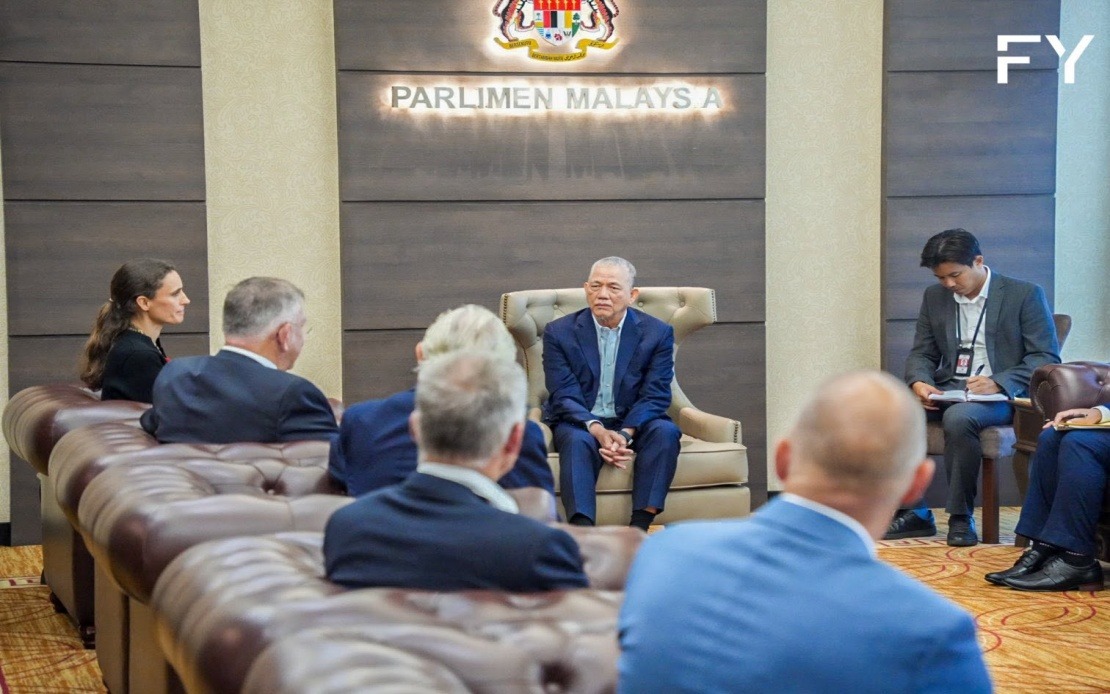
Malaysia is positioning itself as an attractive destination for German small and medium-sized enterprises seeking to expand operations in Southeast Asia, particularly in the emerging green technology sector. During a parliamentary meeting with Germany's Ambassador to Malaysia, Silke Riecken-Daerr, and representatives from the German SME Business Association, Deputy Prime Minister Datuk Seri Fadillah Yusof underscored the government's commitment to deepening economic ties with one of its longstanding European partners. The discussion highlighted three priority investment areas—renewable energy, green technology development, and water management and treatment—all of which align with Malaysia's broader national sustainability agenda.
The bilateral economic relationship between Malaysia and Germany has already matured into a substantial partnership spanning multiple industrial sectors. More than 800 German companies currently maintain operations throughout Malaysia, representing significant commitments in mechanical engineering, precision manufacturing, and advanced technology fields. This established presence provides a strong foundation upon which smaller enterprises can build, leveraging existing supply chains, regulatory familiarity, and skilled labour pools that have developed over decades of cooperation. The economic depth of this partnership reflects Malaysia's reputation within the German business community as a stable, rule-governed market with strategic positioning in global trade routes.
Fadillah's emphasis on renewable energy and green technology represents Malaysia's evolving economic strategy. As global demand for sustainable solutions intensifies and international environmental standards tighten, Malaysian policymakers are keen to position the country as a hub for clean technology innovation and production. German SMEs, operating within Europe's stringent environmental frameworks and carbon reduction commitments, possess substantial expertise in developing and scaling technologies that meet these demanding specifications. Their investment would not only bring capital and intellectual property but also help establish Malaysia as a credible green technology centre capable of serving regional markets across Southeast Asia.
Water management and treatment constitute another critical investment avenue. Malaysia, like many tropical nations, faces both water scarcity challenges in certain regions and water quality management issues arising from rapid industrialisation and urbanisation. German engineering firms have developed world-leading solutions for water purification, recycling systems, and integrated management infrastructure. Introducing these technologies through SME partnerships could address domestic infrastructure needs while creating export opportunities if Malaysian firms licence or adapt such systems for other developing markets in the region.
Beyond direct investment in physical technologies, the discussion encompassed human capital development through vocational and technical education cooperation. Germany's renowned TVET system has consistently produced highly skilled workforces capable of managing complex manufacturing and engineering tasks, contributing significantly to that country's industrial competitiveness. Fadillah recognised that transferring such expertise could strengthen Malaysia's own technical education ecosystem, enabling the nation to develop workers equipped for advanced manufacturing, renewable energy installation and maintenance, and precision engineering roles that both multinational corporations and local enterprises require. This dimension of cooperation addresses a persistent challenge for Malaysian employers: sourcing adequately trained personnel for technical roles.
The timing of this diplomatic engagement reflects broader European economic reorientation toward Asia-Pacific markets. As European firms reassess supply chain vulnerabilities and seek to diversify operations beyond traditional Western markets, Southeast Asia has emerged as an increasingly attractive region. Malaysia, with its established infrastructure, relatively low political risk, and integration into regional trade frameworks, represents a logical base for German companies contemplating expansion. SMEs, in particular, often lack the resources to conduct extensive market research or manage complex overseas expansion independently; they therefore benefit from government-facilitated introductions and policy environments that reduce uncertainty.
Fadillah's public commitment to supporting German SME investment carries practical implications. It signals to potential investors that the Malaysian government will maintain a receptive regulatory environment and facilitate approvals for projects aligned with national sustainability priorities. Such high-level political endorsement can accelerate decision-making by enterprise owners assessing risk factors, potentially directing investment that might otherwise have been directed toward competing markets such as Thailand, Vietnam, or Indonesia. It also demonstrates Malaysia's seriousness about transitioning its economy toward higher-value manufacturing and services rather than remaining dependent on commodities or lower-wage assembly operations.
The partnership opportunity extends beyond individual company transactions to systemic economic upgrading. When German manufacturing expertise and quality standards establish themselves within Malaysia, they create demonstration effects that elevate entire industrial clusters. Supplier networks develop, service industries mature, and local Malaysian firms gain exposure to international best practices. Over time, this dynamic generates genuine competitive advantages that persist beyond any single investment project or government initiative. Moreover, the presence of German firms adhering to rigorous environmental and labour standards can influence broader Malaysian business culture, creating pressure for continuous improvement across sectors.
From a regional perspective, Malaysia's strategic cultivation of German SME investment reflects its positioning as Southeast Asia's gateway for advanced European technology transfer. The country's geographic location, developed port and logistics infrastructure, and English-language workforce make it a logical choice for European firms establishing Asian operations. Success in attracting German green technology enterprises could establish momentum for attracting similar cohorts from other European nations, creating a virtuous cycle of technology-intensive investment that distinguishes Malaysia from neighbouring economies.
The bilateral discussion also implicitly acknowledges that economic partnership in the twenty-first century extends beyond trade in finished goods to encompass knowledge transfer, skills development, and collaborative innovation. By inviting German expertise in vocational training, Malaysia positions itself as a learner and partner rather than merely a cost-competitive manufacturing location. This posture aligns with long-term economic resilience, as labour-intensive manufacturing will inevitably shift to lower-cost jurisdictions. Only through continuous upgrading of skills, technologies, and industrial sophistication can Malaysia maintain its attractiveness to high-value investors and defend its competitive position against regional rivals.
The practical outcomes of this diplomatic engagement will emerge gradually through business development activities, feasibility studies, and investment decisions made by individual German enterprises. However, the consistent policy signal—that Malaysia actively welcomes German SME participation in green technology, renewable energy, and technical skills development—establishes a foundation upon which such partnerships can develop. For Malaysia's economic diversification agenda, such European partnerships represent crucial opportunities to access advanced technologies, establish new industrial capabilities, and strengthen the knowledge intensity of the national economy.

