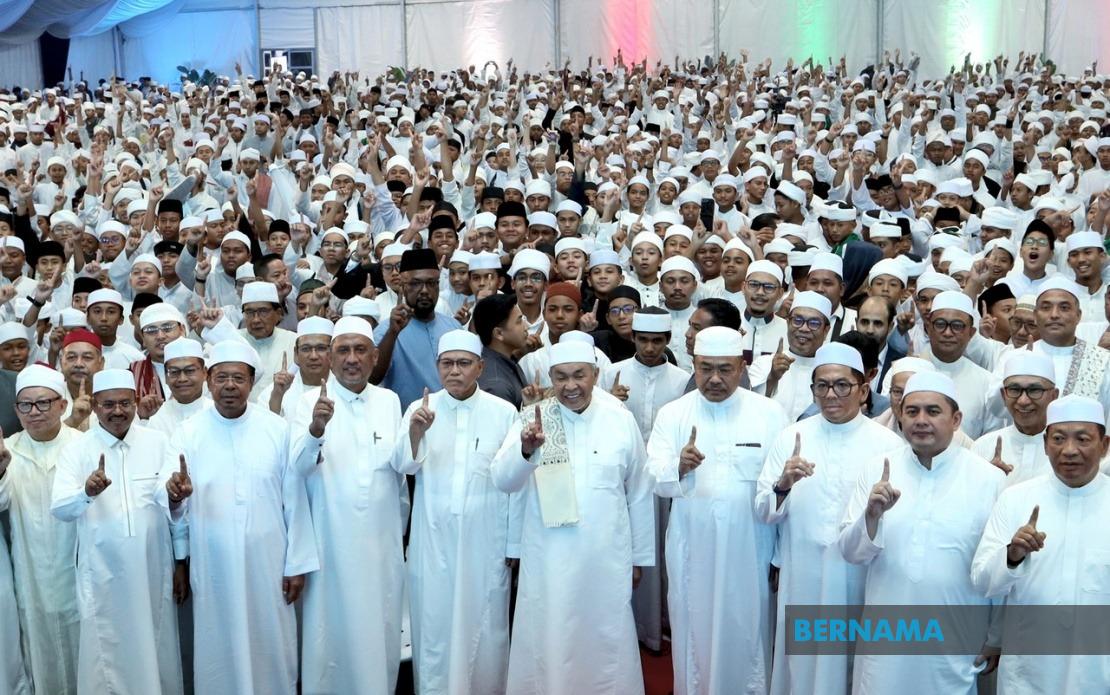
The Malaysian government has taken a significant institutional step to modernize and standardize Quranic education by approving the establishment of the National Tahfiz Council, with Deputy Prime Minister Datuk Seri Dr Ahmad Zahid Hamidi confirming the decision during the Pahang State Huffaz Gathering 2026 in Kuantan. The council, which will be chaired by Ahmad Zahid himself following Prime Minister Datuk Seri Anwar Ibrahim's recommendation, represents a coordinated effort to bring coherence and structure to tahfiz education across Malaysia's diverse network of institutions and regional programs.
The core mission of the National Tahfiz Council centres on establishing unified direction, standardized educational models, consistent recognition criteria, and clear academic progression routes for students pursuing Quranic memorization studies throughout the country. This institutional framework addresses a longstanding gap in Malaysia's education system, where tahfiz institutions and programmes have historically operated with varying standards, curricula, and recognition structures that often prevented students from seamlessly transitioning between different educational levels and institutions.
Ahmad Zahid articulated an ambitious vision for tahfiz education within Malaysia's broader educational ecosystem, emphasizing that the council's establishment would position tahfiz learning as a legitimate and recognized educational pathway comparable to conventional academic routes. His stated objective reflects growing recognition among policymakers that tahfiz education should not exist in isolation but rather integrate into Malaysia's formal educational system, enabling students to progress from primary religious instruction through to university-level study and eventually into professional careers.
The deputy prime minister outlined a comprehensive developmental trajectory he envisions for tahfiz students, beginning with foundational Quranic studies in early childhood, advancing through structured schooling programmes, and culminating in higher education and skilled employment opportunities. This progression model acknowledges that contemporary tahfiz students require qualifications and skills that extend beyond traditional memorization, ensuring they possess marketable competencies valued in Malaysia's knowledge-based economy.
Pahang state has emerged as a pioneering model for integrated tahfiz education development, demonstrating how comprehensive knowledge pathways can be constructed from early childhood through to international levels. The state's initiatives, notably the establishment of Tadika Tahfiz Negeri Pahang under the patronage of the Sultan of Pahang Al-Sultan Abdullah Ri'ayatuddin Al-Mustafa Billah Shah, exemplify how early exposure to Quranic learning can be systematically developed into progressive educational structures that prepare huffaz for advanced study and professional advancement.
The government has already introduced several complementary policy instruments designed to support and strengthen tahfiz education within this new institutional framework. The National Tahfiz Policy 2.0, currently undergoing implementation improvements, encompasses multiple specialized initiatives including TVET Tahfiz programmes that integrate vocational and technical education with Quranic studies, the Malaysian Tahfiz Certificate 2.0, the Graded Hafazan Certification system, and a dedicated Huffaz Financing Scheme to improve financial accessibility for students pursuing tahfiz education.
Additional support mechanisms being developed include the Malaysian Tahfiz Recognition Standard, which establishes consistent benchmarks for evaluating student achievement and institutional quality across different tahfiz centres. Strategic partnerships with higher learning institutions and skills development institutes have also been formalized, creating tangible bridges between tahfiz education and conventional university pathways, addressing a critical barrier that previously limited post-secondary educational opportunities for tahfiz graduates.
The organizational architecture supporting this expansion was further solidified during the Pahang gathering, where Yayasan Pahang, the Community Development Department (KEMAS), and Majlis Amanah Rakyat (MARA) formalized a memorandum of understanding. This trilateral collaboration consolidates institutional commitment to expanding tahfiz education development and broadening skills development opportunities specifically designed for huffaz, creating synergies between religious education, community development, and economic advancement initiatives.
The broader significance of establishing the National Tahfiz Council extends beyond Malaysia's borders, as the nation positions itself as a model for integrating traditional Islamic education with modern educational standards and economic development priorities. For Southeast Asia's Muslim-majority countries and communities, Malaysia's approach offers a practical framework for elevating tahfiz education from grassroots Islamic instruction to a systematized educational pathway that produces graduates equipped for professional and academic success whilst maintaining Islamic scholarly traditions.
For Malaysian families considering tahfiz education for their children, the council's establishment provides enhanced institutional assurance regarding educational quality, progression opportunities, and employment prospects. Students completing tahfiz programmes will benefit from nationally recognized credentials that facilitate university admission and professional certification, fundamentally transforming the perceived utility and social status of Quranic education within Malaysian society.
The initiative also addresses workforce development challenges by channelling religiously-motivated students into vocational and technical fields through TVET Tahfiz programmes, potentially creating a specialized skilled workforce with both Islamic learning credentials and practical competencies. This approach recognizes that Malaysia's economic future depends on developing diverse human capital, including individuals whose primary educational foundation rests upon religious studies but who possess market-relevant technical skills.
Implementation challenges remain significant, including establishing consistent quality standards across geographically dispersed tahfiz institutions, ensuring equitable access to financing for students from lower-income backgrounds, and developing faculty capacity to deliver integrated curricula combining Islamic scholarship with contemporary skills training. The council must also navigate potential tensions between preserving traditional Quranic learning methodologies and incorporating modern pedagogical approaches that enhance learning outcomes and student engagement.
The National Tahfiz Council represents Malaysia's commitment to recognizing Islamic education as a valuable component of its national development strategy rather than a parallel or supplementary educational stream. By institutionalizing tahfiz education within formal governmental structures and connecting it to economic opportunity, the council signals that Quranic learning can align with national development priorities, positioning religiously-educated students as contributors to Malaysia's knowledge economy and social development objectives.

