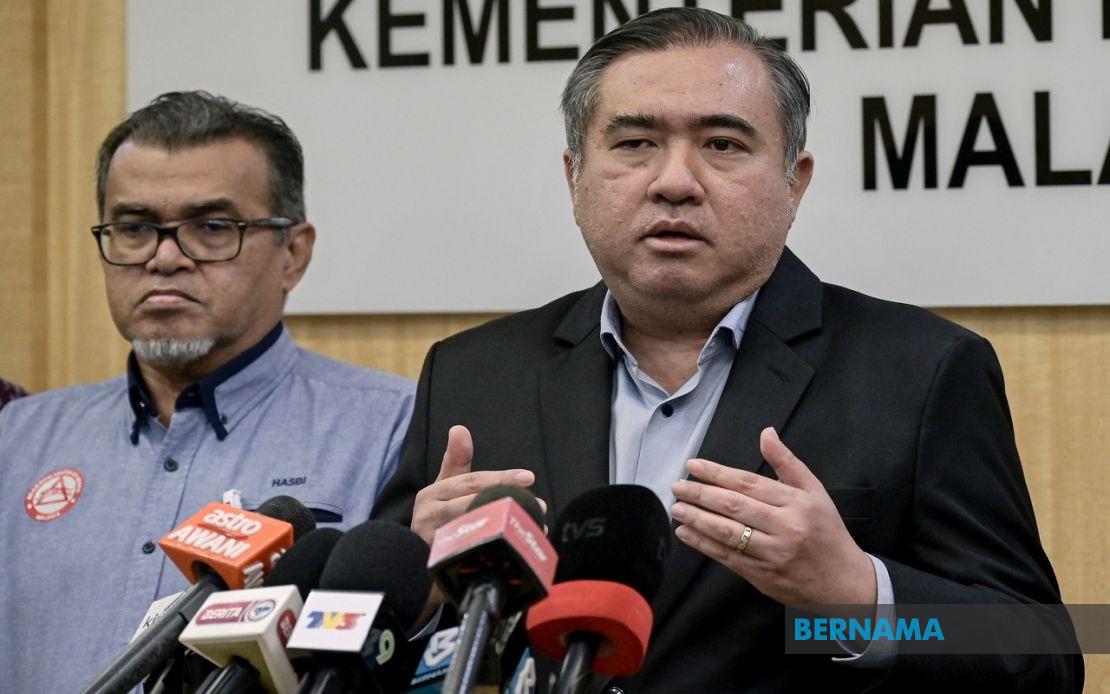
Transport Minister Anthony Loke has clarified that Malaysia's government maintains a hands-off approach towards selecting senior management for port operating companies, provided that Malaysian interests retain controlling stakes in these strategically important assets. Speaking in Putrajaya on July 17, Loke emphasised that ownership thresholds, not personnel decisions, form the basis of government oversight in the port sector and other concession-based industries vital to national infrastructure.
The minister's comments emerged in response to international media attention surrounding the recent appointment of Sultan Ahmed Sulayem, the former chairman and chief executive of global container port operator DP World, to lead MMC Ports Holdings Bhd. His assumption of the executive chairman position followed the sudden departure of the company's group chief executive officer, Azman Shah Mohd Yusof. The leadership transition at Malaysia's largest port operator group had drawn scrutiny from observers monitoring changes in governance at strategically sensitive enterprises.
Loke articulated the government's regulatory framework with precision, stating that ministerial oversight extends only to ensuring that companies holding port concessions and other strategic national assets maintain at least 51 per cent Malaysian ownership. This threshold represents the cornerstone of national policy designed to preserve Malaysian control over critical infrastructure while permitting operational flexibility and international expertise. The minister stressed that once this ownership requirement is satisfied, the government considers internal management decisions to be corporate matters requiring no governmental sign-off.
To illustrate this principle in practice, Loke referenced the Port of Tanjung Pelepas in Johor, highlighting that this major facility operates under foreign-national leadership at the chief executive level without controversy or government restriction. The example underscores how Malaysia balances its commitment to national ownership with the recognition that professional talent and operational experience may originate beyond its borders. This pragmatic stance reflects a broader Southeast Asian trend of attracting international expertise to run flagship infrastructure while maintaining domestic financial control.
The minister made clear that while the government does not scrutinise management appointments, any modifications to share ownership structures do require formal notification through established channels. Companies must inform the Transport Ministry and coordinate with the Public-Private Partnership Unit, known by its Malaysian abbreviation UKAS, whenever shareholding changes occur. This distinction between governance oversight and ownership monitoring reveals how the government seeks to preserve transparency on capital matters while remaining neutral on operational leadership decisions.
When asked whether the ministry had received formal notice of any shift in MMC Ports Holdings' shareholding structure, Loke indicated that no such notification had been submitted. The absence of an official communication from either the company or its concessionaire suggested that, from the government's perspective, the reported management transition did not necessarily entail the kind of ownership restructuring that would trigger mandatory reporting obligations. This response implied that Sultan Ahmed's appointment, however significant in terms of international business attention, fell squarely within the category of internal corporate arrangements not requiring government involvement.
The clarification carries particular relevance for Malaysia's port sector, where foreign investment and international expertise have become increasingly important as regional competition intensifies. Ports across Southeast Asia compete vigorously to attract container traffic and establish themselves as regional hubs, making operational efficiency and strategic vision critical success factors. By signalling that international executives can lead Malaysian ports without regulatory barriers, Loke's statement aims to reassure investors and operators that the country welcomes global talent while respecting its ownership boundaries.
The policy reflects a calculated approach to national sovereignty and economic pragmatism. Rather than imposing restrictions on who may run port operations—a measure that could deter experienced international professionals from accepting leadership roles—Malaysia opts for a simpler, more transparent rule focused on preventing foreign control of ownership. This approach allows port companies to recruit the best available executives regardless of nationality, while ensuring that profits and strategic decision-making authority ultimately rest with Malaysian shareholders.
For the broader Malaysian business environment, Loke's remarks provide reassurance about the stability and predictability of government policy towards strategic sectors. Foreign investors and multinational corporations considering involvement in Malaysian infrastructure projects can point to this clear distinction between ownership requirements and management autonomy as evidence that regulatory frameworks emphasise certainty over arbitrary interference. Such clarity becomes increasingly valuable as companies evaluate expansion into emerging markets where political risk concerns frequently influence investment decisions.
The situation also reflects how Malaysia navigates the complex positioning required of a Southeast Asian economy balancing national interests against competitive pressures in regional and global markets. Neighbouring countries pursue varying strategies: some impose stricter restrictions on foreign participation in strategic sectors, while others adopt more open approaches. Malaysia's middle path—firm ownership requirements combined with operational freedom—represents an attempt to secure national control while remaining attractive to the international businesses and talent essential for modern port management.
Looking forward, this policy framework will likely face continued scrutiny as the port sector undergoes transformation driven by technological change, shifting global trade patterns, and evolving supply chain strategies. Whether the existing 51 per cent Malaysian ownership threshold remains appropriate as port operations become increasingly complex and capital-intensive remains a question for future policy deliberation. For now, Loke's articulation suggests the government believes current arrangements strike the right balance between safeguarding national interests and enabling the professional excellence necessary for Malaysia's ports to compete effectively in an increasingly challenging regional environment.

