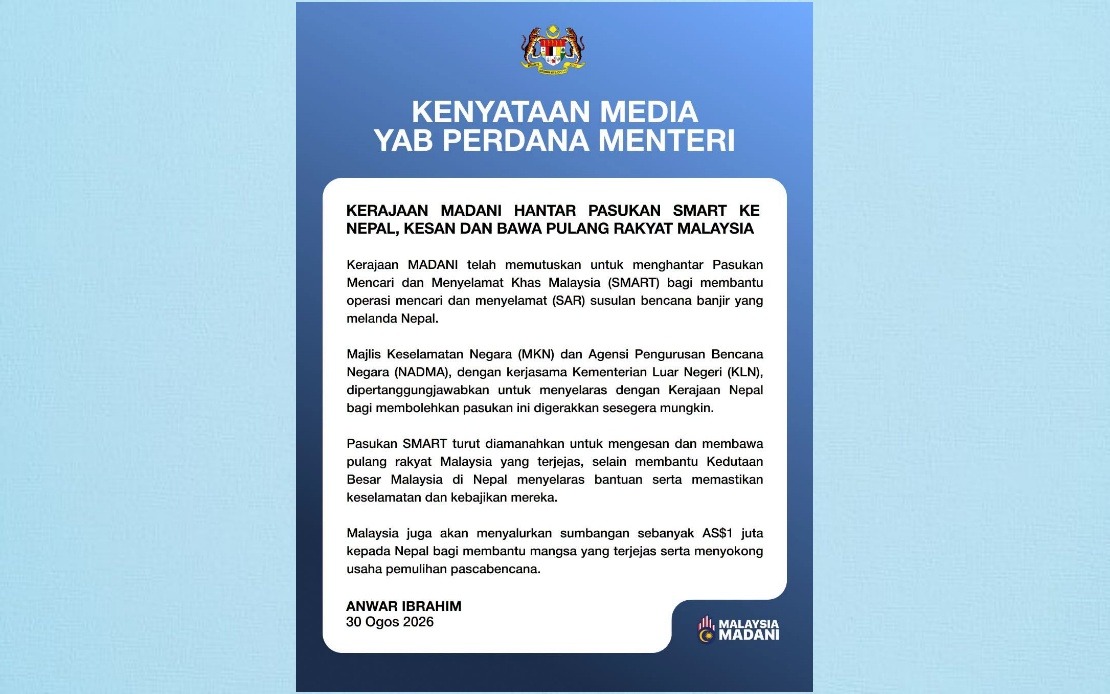
Malaysia has mobilised its disaster response capabilities to assist Nepal in the aftermath of devastating floods and landslides that have claimed lives and displaced thousands across the Himalayan nation. Prime Minister Datuk Seri Anwar Ibrahim announced that the MADANI Government has authorised the immediate deployment of the Special Malaysian Disaster Assistance and Rescue Team (SMART) to join ongoing search and rescue operations, marking a significant humanitarian commitment to a fellow regional nation in crisis.
The decision to dispatch SMART reflects Malaysia's established role as a reliable responder to natural disasters across Asia. The government has tasked the National Security Council and the National Disaster Management Agency to coordinate closely with Nepal's authorities to ensure the team can mobilise rapidly and operate effectively in the challenging terrain of the affected regions. This multi-agency approach underscores the complexity of international disaster response, where diplomatic channels, emergency management protocols, and rescue logistics must align seamlessly.
Beyond immediate rescue operations, the SMART deployment carries a specific mandate to locate and bring home Malaysian nationals who remain unaccounted for following the catastrophe. The Foreign Ministry has confirmed that 55 Malaysians have not yet made contact with authorities since the initial disaster struck Rasuwa district on August 26, sparking considerable concern among families waiting for news of their loved ones. The presence of a dedicated Malaysian team on the ground will facilitate direct coordination with the Malaysian Embassy in Nepal and provide crucial assistance in verifying the status and whereabouts of affected citizens.
The government's pledge of US$1 million in financial assistance represents a tangible commitment to Nepal's recovery beyond the immediate crisis phase. This contribution is earmarked not solely for emergency relief operations, but for supporting longer-term post-disaster rehabilitation efforts that will help affected communities rebuild their homes, infrastructure, and livelihoods. For Malaysia, such contributions reinforce diplomatic ties and regional solidarity during moments of vulnerability, establishing goodwill that extends across borders.
The floods and landslides that devastated Rasuwa district represent the type of extreme weather event that climate scientists increasingly associate with changing precipitation patterns in the Himalayan region. Nepal's position along major monsoon pathways, combined with deforestation and steep terrain, creates conditions where heavy rainfall rapidly transforms into destructive flash flooding. The disaster demonstrates vulnerabilities that extend beyond Nepal, as Malaysian nationals working or travelling in the region have suddenly found themselves caught in unforeseen danger.
Malaysia's capacity to deploy SMART reflects investments made over years in developing specialised rescue capabilities. The team comprises trained personnel experienced in operating in difficult conditions, equipped with technical expertise in locating survivors beneath debris and providing emergency medical care. Such capabilities take time and resources to establish, and their availability for regional deployment enhances Southeast Asian resilience to natural disasters that recognise no borders.
The coordination between NADMA and the Foreign Ministry signals how Malaysia approaches international disaster response as both a humanitarian obligation and a strategic interest. By positioning the embassy as a central hub for identifying affected Malaysians and facilitating their return, the government ensures that rescue operations remain connected to consular services and family notification systems. This integration prevents the common situation where rescue teams operate independently of diplomatic structures, potentially missing crucial communication channels.
For Malaysian readers, the disaster underscores both the reach of Malaysian communities across Asia and the unpredictability of natural hazards in the region. Rasuwa district, situated in Nepal's mountainous terrain, has likely hosted Malaysians engaged in tourism, business, or adventure activities. The sudden eruption of disaster has reminded families at home of the environmental risks that accompany travel and relocation to geographically vulnerable areas.
The timing of Malaysia's response also reflects institutional capabilities developed through previous regional crises. The 2004 Indian Ocean tsunami, numerous cyclone emergencies, and earthquake disasters across Southeast Asia have tested and refined Malaysian disaster management systems. SMART's readiness to deploy reflects lessons learned and capabilities maintained specifically to respond to such unforeseen events.
Nepal's relationship with Malaysia has traditionally been strong, grounded in shared Commonwealth heritage and growing economic connections. This humanitarian response reinforces those bonds and demonstrates that Malaysia views assistance during crises as integral to its regional standing. The deployment and financial contribution together signal that Malaysian leadership takes seriously its capacity and responsibility to support neighbouring nations during emergencies.
As rescue operations continue in the challenging environment of Rasuwa district, the presence of Malaysian personnel on the ground will provide not only practical assistance to local authorities but also direct support to stranded nationals seeking to return home. The situation exemplifies how regional interdependence requires mechanisms and resources for rapid mutual assistance when natural disasters strike.

