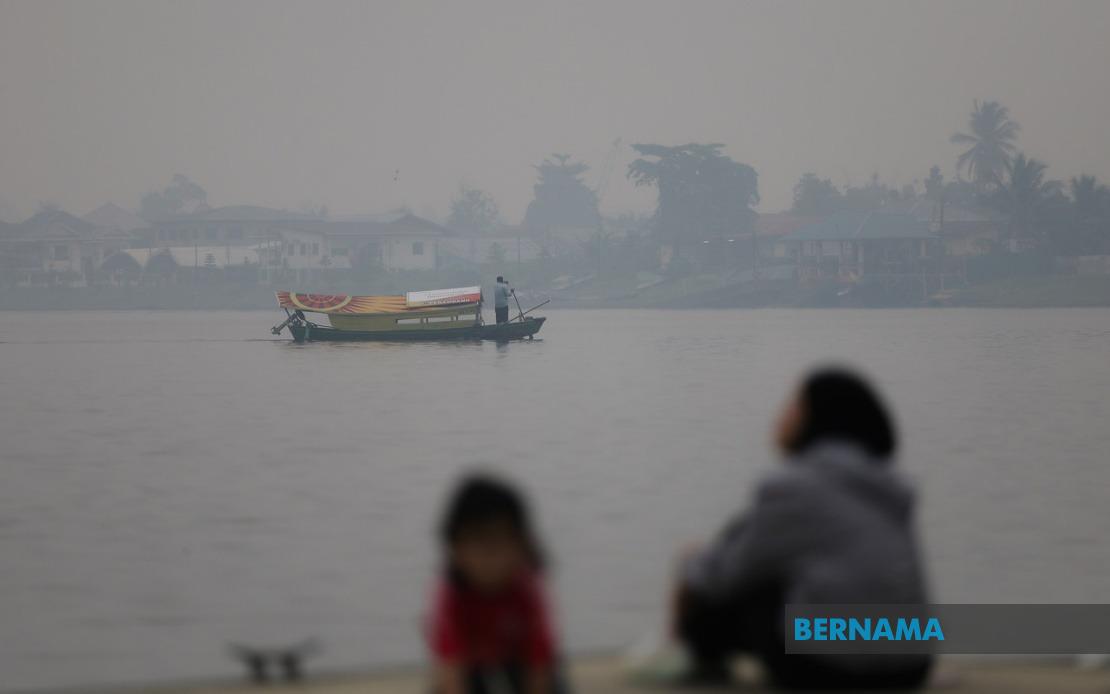
The Malaysian government has activated cloud seeding operations across multiple haze-affected regions, with particular focus on areas experiencing hazardous air quality and declining water reserves. Deputy Prime Minister Datuk Seri Dr Ahmad Zahid Hamidi announced the targeted intervention during an event at the 2026 Malaysia Agriculture, Horticulture and Agrotourism Show in Serdang, emphasising the dual purpose of the operation: combating air pollution while simultaneously addressing water scarcity challenges exacerbated by hot weather conditions.
The strategic deployment of cloud seeding reflects growing concerns about water availability across the nation's dam systems. As temperatures remain elevated, reservoir levels have begun to recede notably, creating a scenario where rainfall becomes critical not only for air quality improvement but also for maintaining stable water supplies to residential and commercial consumers. The Deputy Prime Minister's remarks underscore the interconnected nature of environmental challenges facing Malaysia, where drought conditions and air pollution can simultaneously threaten public health and essential services.
Cloud seeding operations are being coordinated through a collaborative framework involving the Malaysian Meteorological Department and the Royal Malaysian Air Force, ensuring both scientific expertise and operational capability are deployed effectively. This institutional approach allows meteorologists to identify optimal conditions for artificial precipitation while military aircraft provide the logistical infrastructure necessary for widespread coverage. The partnership demonstrates how specialised agencies can pool resources to address environmental crises that transcend traditional departmental boundaries.
The threshold of Air Pollutant Index readings above 150 has been established as a key trigger for these interventions. An API exceeding 150 classifies air conditions as unhealthy and requires immediate action to reduce pollutant concentrations. By targeting these severely affected areas, authorities aim to accelerate pollutant dispersal and improve air quality for vulnerable populations, particularly children, elderly citizens, and those with respiratory conditions who face heightened health risks during hazardous air episodes.
Scheduled cloud seeding activities will extend beyond the initial operations already underway in Putrajaya. Between September 3 and 5, coordinated efforts are planned for Sarawak, Kedah, and Perlis, reflecting the geographical spread of both air quality concerns and water stress across the peninsula and East Malaysia. This phased approach allows authorities to concentrate resources on regions where conditions are most critical while maintaining flexibility to redirect efforts as meteorological patterns evolve.
Sarawak was experiencing particularly severe air quality degradation at the time of the Deputy Prime Minister's announcement. The Serian Police headquarters monitoring station recorded a hazardous API reading of 412, representing extremely unhealthy air conditions that warrant immediate respiratory health precautions. Samarahan followed with an API of 332, while Kuching measured 304. Sri Aman, though marginally better at 228, still exceeded the threshold for very unhealthy air quality. These readings illustrate the intensity of the haze phenomenon affecting East Malaysia and underscore the urgency of intervention measures.
The effectiveness of cloud seeding depends critically on weather conditions and cloud positioning, variables that meteorologists must continuously monitor. Ahmad Zahid Hamidi highlighted that merely having clouds present does not guarantee successful precipitation. Instead, technicians must track cloud movement patterns to ensure that seeding operations occur when cloud formations are drifting toward targeted areas. This requirement for real-time meteorological assessment adds a layer of operational complexity, as predetermined schedules must be adjusted based on atmospheric dynamics that may shift unexpectedly.
For Malaysian and Southeast Asian readers, this initiative carries implications extending beyond immediate haze mitigation. Rising temperatures and prolonged dry spells increasingly characterise regional weather patterns, suggesting that cloud seeding may transition from an emergency measure to a routine component of water resource management. Countries throughout Southeast Asia facing similar climate pressures may examine Malaysia's institutional framework and technological approaches as templates for their own environmental response strategies.
The water supply dimension of these operations addresses an often-overlooked consequence of haze episodes. While public discourse typically focuses on air quality and health impacts, the atmospheric conditions that produce haze—stable air masses and high-pressure systems—also suppress rainfall and accelerate evaporation from reservoirs. By combining haze mitigation with water security objectives, Malaysia's approach acknowledges the interconnected nature of these environmental stressors and positions cloud seeding as a multifunctional tool addressing overlapping crises.
Looking forward, the success of these operations may influence policy discussions regarding long-term climate adaptation and water management strategies. If cloud seeding demonstrates measurable effectiveness in improving both air quality and water availability, government agencies may advocate for expanded programmes and increased funding allocations. Conversely, limited results could prompt investigation into supplementary measures or alternative approaches to environmental management during periods of atmospheric instability.

