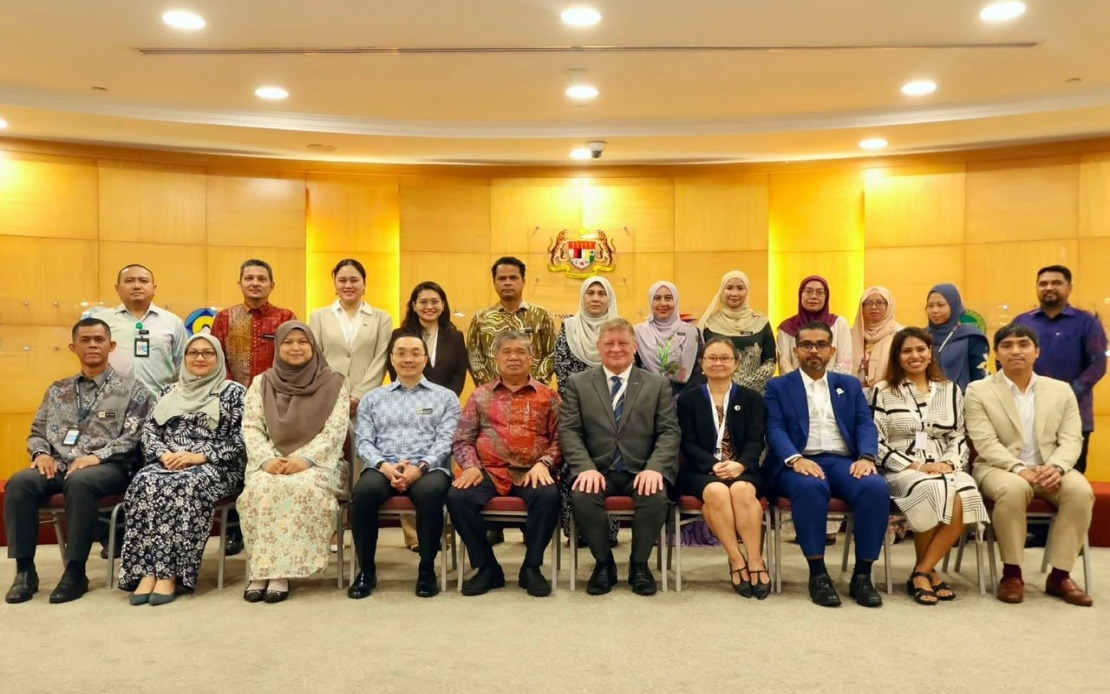
Malaysia is positioning itself as a strategic partner for European agricultural investment and expertise, with Agriculture and Food Security Minister Datuk Seri Mohamad Sabu using a high-level meeting with the EU-ASEAN Business Council to explore collaboration across technology, trade, and food security. The engagement at Wisma Tani in Putrajaya underscores the government's commitment to transforming the local agri-food system during a period of global uncertainty around food supplies and climate volatility.
The gathering brought together Mohamad and EU-ABC executive director Chris Humphrey alongside his delegation to discuss strategic pathways for modernising Malaysia's agricultural sector. Rather than serving merely as ceremonial protocol, the meeting centred on substantive issues that reflect the mounting pressures facing Southeast Asian food systems: the rollout of the National Agro-Food Policy 2.0, the integration of artificial intelligence into farming practices, and the upgrading of dairy and livestock production networks. These represent not peripheral concerns but core vulnerabilities for a nation that relies heavily on imports for critical food commodities.
The emphasis on artificial intelligence and agricultural technology reveals Malaysia's recognition that traditional farming methods alone cannot meet the productivity demands of a growing population while simultaneously adapting to climate disruption. The European Union possesses considerable expertise in precision agriculture, automated irrigation systems, and data-driven crop management—areas where Malaysian farmers and agribusinesses currently lag behind developed economies. By courting EU companies and technological partners, Malaysia seeks to leapfrog intermediate development stages and adopt cutting-edge practices that maximise yields while reducing environmental footprints.
Dairy supply chains emerged as a particular focal point in the discussions, reflecting acute vulnerabilities in Malaysia's livestock sector. The nation imports substantial quantities of dairy products and relies on fragmented domestic production networks that lack scale and efficiency. A more robust local dairy infrastructure would reduce import dependence, enhance food security, and create rural employment opportunities. European dairy companies and their cooperative models offer blueprints for consolidating smallholder producers, implementing quality control measures, and accessing premium markets—models that Malaysian counterparts have largely not adopted at scale.
Animal health and biosecurity standards discussions carry heightened significance for a region increasingly threatened by zoonotic diseases and transboundary animal ailments. The European Union has developed rigorous frameworks for disease surveillance, vaccination protocols, and trade certification that exceed those currently operative in many Southeast Asian countries. Aligning Malaysian standards with European benchmarks serves dual purposes: it safeguards domestic herds while simultaneously positioning Malaysian agricultural exports as reliable commodities in international markets that demand strict biosecurity guarantees. This technical harmonisation is often a prerequisite for market access in developed nations.
Minister Mohamad's characterisation of the European Union as one of Malaysia's most critical commercial and technological partners reflects a broader strategic pivot. Historically, Malaysia's agricultural engagement has tilted toward regional partners and commodity exporters, but the acceleration of climate change and supply chain fragmentation has prompted a recalibration toward developed economies with advanced institutions and technologies. The EU possesses not only technological capacity but also regulatory influence, as standards set in Brussels increasingly shape global agricultural trade requirements and sustainability benchmarks.
The bilateral free trade agreement negotiations between Malaysia and the European Union represent another crucial dimension of this engagement. Trade agreements increasingly incorporate agricultural chapters that address not merely tariff reductions but also labelling standards, pesticide residue limits, and environmental compliance measures. A successful MEUFTA would provide Malaysian agricultural producers preferential access to a wealthy, populous market whilst potentially requiring domestic reforms to meet EU consumer expectations around sustainability and food safety. Both parties' expressed commitment to these negotiations signals recognition that deeper economic integration serves mutual interests during a period of global trade fragmentation and competing blocs.
Capacity building for local farmers and breeders emerged as a key request during the discussions, acknowledging that technology transfer alone proves insufficient without human capital development. Malaysian smallholder farmers, who constitute a significant portion of the agricultural workforce, often lack training in advanced practices, quality assurance procedures, and market navigation. European firms and development agencies possess experience in extension services, farmer education programmes, and cooperative development that could be adapted to the Malaysian context, bridging the knowledge gap between international best practices and on-farm implementation.
Compliance with international Sanitary and Phytosanitary measures represents another critical discussion point with direct implications for Malaysian exports. SPS standards set by bodies like the Codex Alimentarius Commission function as de facto global trade barriers, and nations unable to meet them face severe market constraints. Malaysian exporters of agricultural products frequently encounter SPS-related rejections, particularly in demanding markets like the EU and Japan. Strengthening domestic SPS implementation through technical cooperation with EU partners would enhance the competitiveness of Malaysian agricultural exports whilst reducing costly trade disruptions.
The invitation extended to EU-ABC delegates to attend the Malaysia Agriculture, Horticulture and Agro-Tourism Exhibition 2026 signals intent to deepen this relationship beyond bilateral discussions into sustained business networking. MAHA represents one of Asia's largest agricultural showcases, attracting manufacturers, technology providers, retailers, and policymakers. European participation would expose EU companies to Malaysian market opportunities whilst demonstrating to local stakeholders the range of advanced solutions available for agricultural modernisation, potentially catalysing adoption waves.
These discussions arrive at a critical juncture for Malaysia's food security trajectory. Population growth, urbanisation, and dietary shifts are driving increased food demand precisely as climate change threatens agricultural productivity across Southeast Asia. Malaysia's net food import dependency—particularly for grains, dairy, and certain vegetables—creates vulnerability to global price volatility and supply shocks, as experienced during pandemic disruptions and geopolitical crises. Strategic partnerships with technologically advanced nations offer pathways toward domestic production intensification and resilience building, though success requires sustained investment, farmer adoption, and regulatory harmonisation.
The engagement also reflects Malaysia's positioning within broader geopolitical and economic reorientations. As regional tensions and trade disputes influence investment flows, Malaysia's emphasis on partnerships with developed, stable economies like those in the EU offers diversification from traditional dependencies. For Southeast Asian readers, this Malaysian initiative represents a model for how regional nations might leverage technological and institutional resources from developed partners whilst maintaining strategic autonomy, particularly in sectors as fundamental as food security and agricultural viability.

