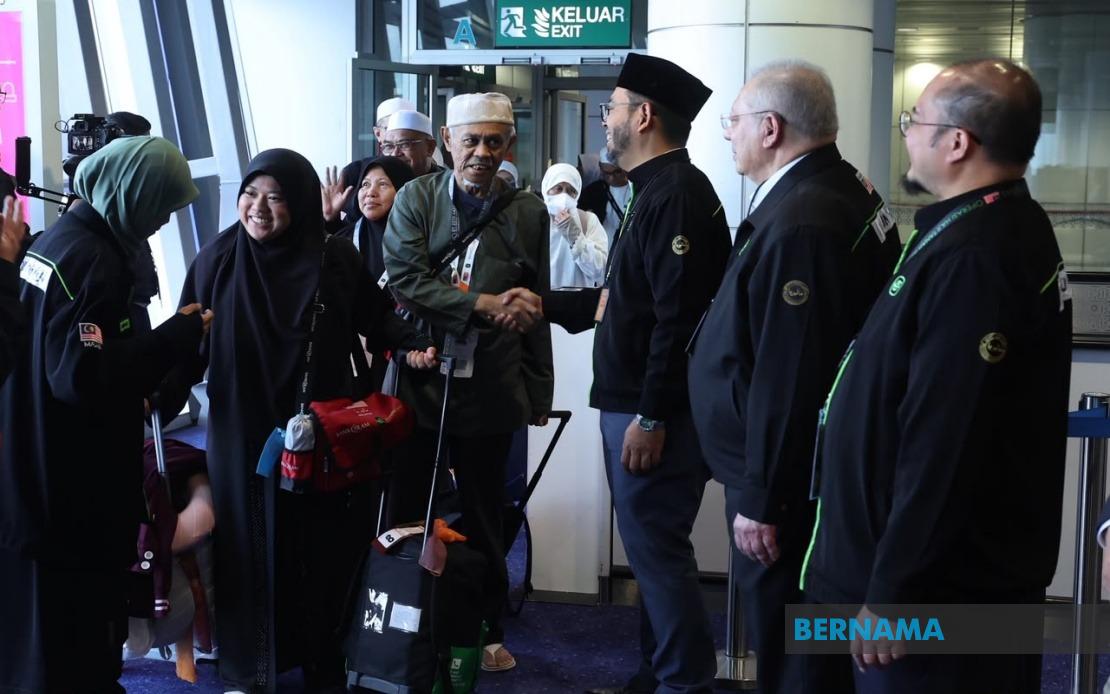
The completion of Malaysia's haj pilgrimage programme for the 1447 Hijrah season was marked on Tuesday with the touchdown of 258 returning pilgrims at Kuala Lumpur International Airport, bringing to a close what officials have characterised as a remarkably smooth year of operations despite the shadow cast by ongoing conflicts in the West Asian region. The group touched down at 12.10 pm after an overnight journey from Madinah aboard Malaysia Airlines flight MH 8385, formally concluding months of carefully coordinated logistics involving thousands of personnel across multiple government agencies and private sector partners.
Dr Zulkifli Hasan, the Minister in the Prime Minister's Department overseeing religious affairs, underscored the significance of the achievement by emphasising that every Malaysian pilgrim had departed the Holy Land safely and returned in good health. His remarks, delivered at the airport terminal, highlighted the culmination of an undertaking that extended far beyond the physical movement of people, encompassing visa processing, accommodation arrangements, health services, and spiritual preparation activities. The presence of Deputy Minister Marhamah Rosli and Tabung Haji chairman Tan Sri Abdul Rashid Hussain at the welcome ceremony reflected the institutional importance placed on acknowledging the successful completion of an annual religious obligation that carries deep cultural significance for Malaysia's Muslim population.
What transforms Malaysia's 2026 haj programme from a logistical success into a matter of national distinction is the international recognition it garnered within the Islamic pilgrimage community. Saudi Arabia's Ministry of Haj and Umrah presented Malaysia with the Labbaikum Diamond Award, representing the pinnacle of recognition for haj management excellence globally. This accolade operates as an implicit validation of Malaysia's systemic approach to pilgrimage administration, demonstrating that despite geopolitical complexities and safety concerns affecting the broader region, the country has developed institutional mechanisms capable of delivering world-class services. The award positions Malaysia among the most capable nations at orchestrating one of Islam's most significant annual gatherings.
The success narrative propounded by officials rests substantially on the preparatory groundwork undertaken before pilgrims departed Malaysian shores. Tabung Haji implemented intensified pre-departure courses designed to instil discipline and religious awareness among pilgrims, with the ministry attributing much of the smooth operations to the commitment and conduct demonstrated by Malaysian participants throughout their journey. This emphasis on preparation reflects an understanding that haj management extends beyond facility provision to encompass the cultivation of appropriate attitudes and behaviours among pilgrims themselves, reducing friction points that might otherwise complicate the administration of such vast human assemblies.
Technological and infrastructural improvements implemented during this season provided concrete mechanisms through which Malaysia enhanced its service delivery. The MyNIISe system streamlined visa management procedures, reducing bureaucratic friction at crucial junctures. Within the Holy Land, Malaysia upgraded accommodation standards through the provision of sofa beds and improved tent facilities, while establishing round-the-clock shuttle bus services linking mosques to residential areas. These enhancements address not merely comfort but also the practical necessities of movement and accessibility that become paramount when managing large pilgrim populations navigating unfamiliar terrain in demanding climatic conditions.
The accomplishment takes on additional weight when contextualised against the geopolitical backdrop that coloured the 2026 haj season. The ongoing West Asian conflicts created atmospheric concerns about security and stability, potentially deterring some intending pilgrims or complicating the logistics of movement across a region experiencing instability. That Malaysia executed its full pilgrimage programme without incident, while simultaneously delivering international award-winning service standards, demonstrates institutional resilience and competence in managing complex variables extending beyond normal operational parameters. The achievement reassures both Malaysian Muslims considering future pilgrimage and the government agencies managing the programme that robust systems exist to protect participant welfare even amid regional turbulence.
Looking ahead, the institutional framework supporting Malaysian haj administration is entering a reflective phase designed to identify refinement opportunities. Tabung Haji has commenced post-mortem evaluations and analysis intended to diagnose areas requiring enhancement, with this self-assessment process embedded within a broader culture of continuous improvement rather than complacency following success. The National Haj Muzakarah, a formal conference mechanism scheduled for August, will provide an institutional forum through which stakeholders including government representatives, religious scholars, and haj management professionals can deliberate on operational issues and propose enhancements for subsequent years. This structured approach to learning ensures that recognition and awards do not calcify into stagnation but instead catalyse further refinement.
For Malaysian Muslims planning future pilgrimages, the successful 2026 season offers reassurance that their haj experience will be managed with both spiritual sensitivity and professional competence. The demonstrated capacity to deliver world-class services while navigating regional security challenges suggests that Malaysia's haj administration possesses sufficient institutional maturity and resource allocation to accommodate expected volumes and contingencies. The international recognition through the Labbaikum Diamond Award carries implications beyond ceremonial significance, functioning as a visible marker of Malaysia's standing within the global Islamic community and its capacity to fulfil religious obligations with distinction.
The conclusion of the 2026 haj season thus represents more than the administrative closure of an annual programme cycle. It constitutes a demonstration of Malaysia's institutional capability, religious commitment, and administrative sophistication converging to deliver an outcome that satisfies both the spiritual aspirations of individual pilgrims and the broader national objective of exemplifying Islamic values through excellence in stewardship. As the country prepares for subsequent pilgrimage seasons, the foundation established through this year's achievements provides a baseline from which Malaysian haj administration will endeavour to build further improvements, ensuring that participation in Islam's most significant annual gathering remains a transformative and professionally managed experience for Malaysian Muslims.

