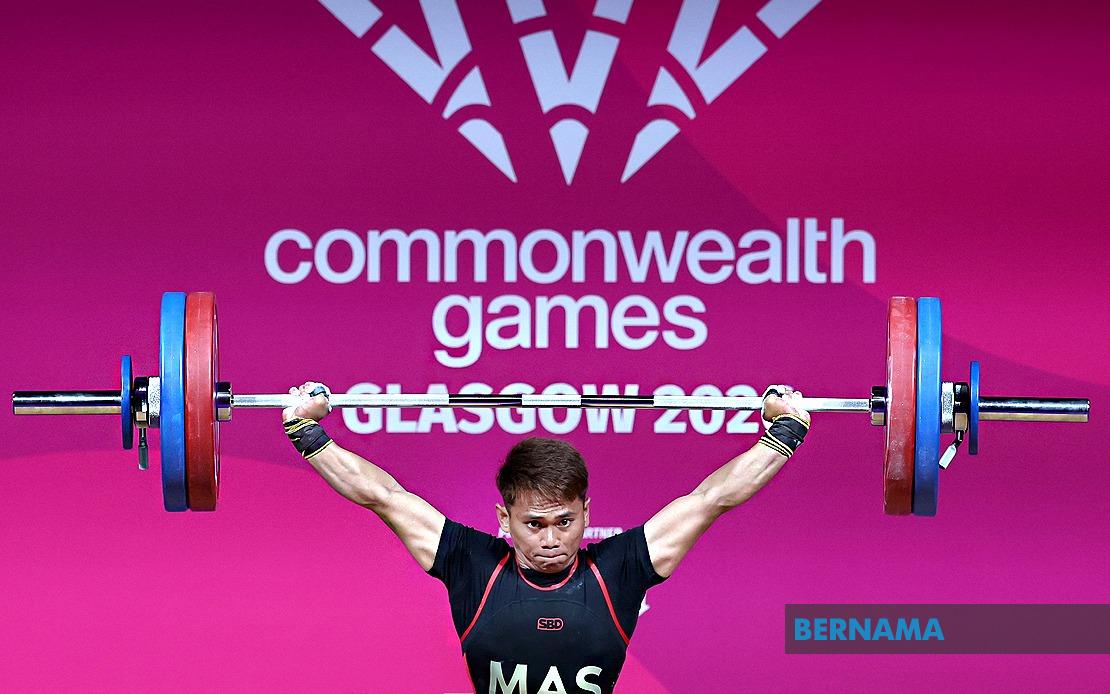
Malaysia has captured its opening gold medal at the 2026 Commonwealth Games through weightlifter Mohamad Aniq Kasdan, a breakthrough performance that has drawn congratulations from the highest levels of government. Prime Minister Datuk Seri Anwar Ibrahim released a statement expressing the nation's pride in the 24-year-old athlete's accomplishment at the Scottish Event Campus Armadillo in Glasgow, underscoring the significance of the achievement as Malaysia's first medal haul of the Games.
Aniq's performance in the men's 60 kilogramme category proved dominant, with a combined lift of 273 kilograms across both disciplines. His snatch lift reached 121 kilograms, while his clean and jerk extended to 152 kilograms, a combination that established a new Commonwealth Games record in the process. The margin of victory was substantial, demonstrating clear superiority in a field that included accomplished international competitors.
The competition saw India's Rishikanta Singh Chanambam capture the silver medal with a combined lift of 264 kilograms, placing him well behind the Malaysian champion. Kenya's Joshua Amunga Mboya secured the bronze medal finish with a total of 260 kilograms, rounding out a competitive podium in a sport where marginal improvements in technique and strength often determine medal placements. The podium composition reflected the depth of weightlifting talent across the Commonwealth nations, though Aniq's performance rose clearly above his competitors.
Prime Minister Anwar's statement conveyed enthusiasm beyond simple acknowledgment of a sporting achievement, framing Aniq's success as a catalyst for broader motivation across Malaysia's athletic contingent. The premier used the occasion to encourage other team members competing in Glasgow to pursue similar excellence, suggesting that early success often generates momentum and confidence within larger delegations. His emphasis on collective national pride rather than individual accolades reflects a deliberate political messaging approach that ties athletic performance to broader national identity and cohesion.
The timing of Malaysia's first gold medal carries particular resonance given that Commonwealth Games competitions typically span several weeks. Securing the opening medal sets a positive trajectory for subsequent events and creates public optimism around the extended competition period. For Malaysian sports administrators and coaches, an early gold also validates preparation strategies and technical development programs that have supported Aniq's competitive progression.
Weightlifting has emerged as a notable discipline for Malaysian sporting achievements in recent international competitions, and Aniq's performance reinforces this trajectory. The sport demands years of disciplined training, precise biomechanical execution, and psychological resilience, making medal achievements reflect substantial institutional investment in athlete development. Commonwealth Games medals in weightlifting carry particular prestige within the sport, as the competition draws elite-level performers from across the Commonwealth's diverse nations.
Aniq's record-setting performance holds significance beyond the immediate competition results, as Commonwealth Games records create a lasting legacy and benchmark against which future competitors will measure themselves. Establishing new records in international competitions reflects not merely superior individual talent but often improved training methodologies, nutritional science, and technical coaching that push the sport's competitive frontier forward. Malaysian weightlifting programs can leverage this achievement to attract young talent and secure continued institutional support for program development.
The Prime Minister's invocation of the "entire country's prayers" accompanying the team reflects the Malaysian political culture of integrating national values, often spiritual in character, with sporting endeavor. This rhetorical framing positions athletic competition within a broader framework of national collective endeavor, suggesting that individual athletes carry expectations and hopes extending beyond personal achievement or professional recognition. Such messaging resonates within Malaysian political discourse, where sporting success frequently becomes symbolically intertwined with national standing and regional reputation.
For Southeast Asia more broadly, Malaysia's early medal success at the Commonwealth Games demonstrates continuing competitiveness in specific sporting disciplines despite regional challengers from larger neighboring nations. Weightlifting remains a discipline where technical expertise and strategic investment can yield disproportionate returns in international competition, allowing smaller nations to achieve medal success through focused program development. Aniq's achievement illustrates this principle in practice, suggesting that Malaysian sporting bodies have successfully identified and developed talent in discipline-specific niches.
The achievement arrives during a period when Malaysia continues establishing itself as a credible sporting nation capable of hosting major international events and producing medalists across multiple disciplines. As Malaysia remains involved in broader Southeast Asian sporting conversations and potential future major Games hosting opportunities, early success in Glasgow demonstrates the human infrastructure and athletic development capacity that underlies serious international sporting participation. Such credentials matter significantly in regional sporting diplomacy and future competition hosting deliberations.

