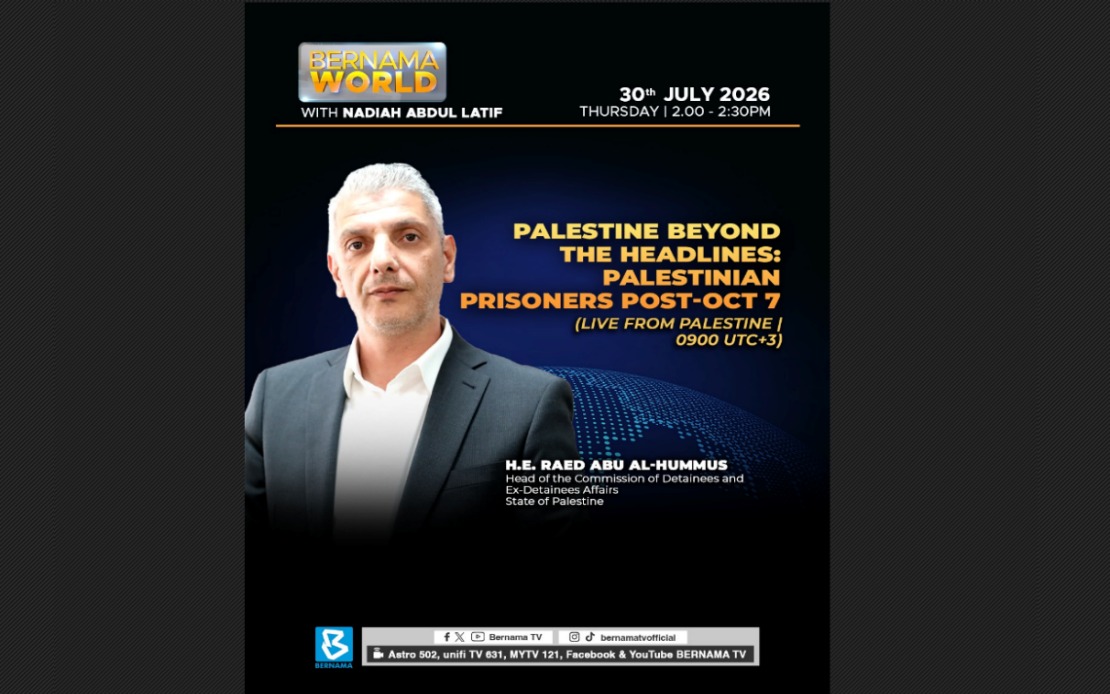
Malaysia possesses significant diplomatic influence that could be leveraged to improve conditions for Palestinian prisoners in Israeli custody, according to Raed Abu Al-Hummus, the head of the Palestinian Commission of Detainees and Ex-Detainees Affairs. Speaking during an interview on Bernama TV's Palestine Beyond The Headlines programme on Thursday in Kuala Lumpur, Abu Al-Hummus outlined specific ways the country and other nations supportive of Palestinian causes could amplify international scrutiny of detention practices and bring allegations of abuse before international bodies.
The scope of the detention issue is substantial. Abu Al-Hummus indicated that approximately 9,400 Palestinians are currently incarcerated in Israeli facilities, encompassing 99 women, more than 350 children, and 3,244 individuals held under administrative detention—a legal mechanism that permits authorities to confine people indefinitely without formal charges or trial. These figures exclude what he described as more than 1,300 Palestinians from Gaza, whom he claimed are held in secret detention locations outside the formal prison system, complicating efforts to verify their welfare or legal status.
The detention environment has deteriorated markedly since October 7, 2023, according to Abu Al-Hummus's account. He characterised the situation as a "silent genocide inside the Israeli prisons" and alleged that new restrictive measures have been systematically implemented, including starvation rations, sexual harassment, severe overcrowding, and deliberate denial of medical treatment. Disease outbreaks have become endemic within the prison population, he claimed, with most detainees suffering from health conditions either acquired or exacerbated during their confinement.
Fatality figures compound these allegations. Abu Al-Hummus contended that more than 90 Palestinian prisoners have died in Israeli custody since October 7, with some subjected to what he described as torture, beatings, and sexual assault. The absence of independent monitoring mechanisms means verification remains difficult, yet the sheer number of deaths reported raises profound questions about detention conditions and safeguarding protocols within the prison system.
The Palestinian Commission's efforts to document abuses and mount legal defences face substantial structural obstacles. An emergency legal team comprising more than 65 lawyers has been assembled to pursue cases across Israeli military courts, detention centres, and prisons, yet restrictive access policies and bureaucratic delays fundamentally undermine their capacity to mount effective advocacy. As Abu Al-Hummus observed, the leisurely pace of military court proceedings effectively translates into additional mortality, as cases languish while detainees face deteriorating health and dangerous conditions.
From a Malaysian perspective, the appeal carries particular resonance. Malaysia has consistently positioned itself as a vocal advocate for Palestinian rights within international forums, and the country's prominence within the Islamic Cooperation Organisation and developing world coalitions amplifies the weight of its diplomatic interventions. Abu Al-Hummus specifically sought Malaysia's assistance in perpetuating international conversation around detainee treatment and pressing Israel to expand access to prisoners for family visits, legal consultations, and humanitarian monitoring.
The diplomatic strategy outlined envisages Malaysia and allied nations maintaining sustained pressure through multiple channels: raising the detention crisis repeatedly in United Nations bodies, supporting documentation efforts led by international human rights organisations, and lending credibility to Palestinian Commission reports through bilateral engagement with global institutions. By refusing to permit this issue to fade from international consciousness, supportive nations can theoretically increase the political cost to Israel of continued restrictive practices.
The Palestinian leadership's stated commitment to peace negotiations and a two-state solution persists even amid these allegations, Abu Al-Hummus emphasised. This framing positions the detention advocacy not as incompatible with conflict resolution but as a prerequisite for meaningful dialogue, since any durable agreement must address the status of prisoners and accountability for alleged abuses. The implication is that international pressure on detention practices constitutes engagement with peace-building rather than obstruction of it.
For Southeast Asia and the broader developing world, this appeal reflects broader tensions surrounding detention practices and human rights compliance in contexts of asymmetric conflict. Malaysia's response will signal whether middle-power nations prioritise humanitarian principles over strategic calculation, and whether they possess sufficient diplomatic coherence to sustain pressure on security matters outside their immediate geographic region. The challenge remains converting rhetorical support into institutional action capable of effecting tangible improvements in prisoner welfare and access.

