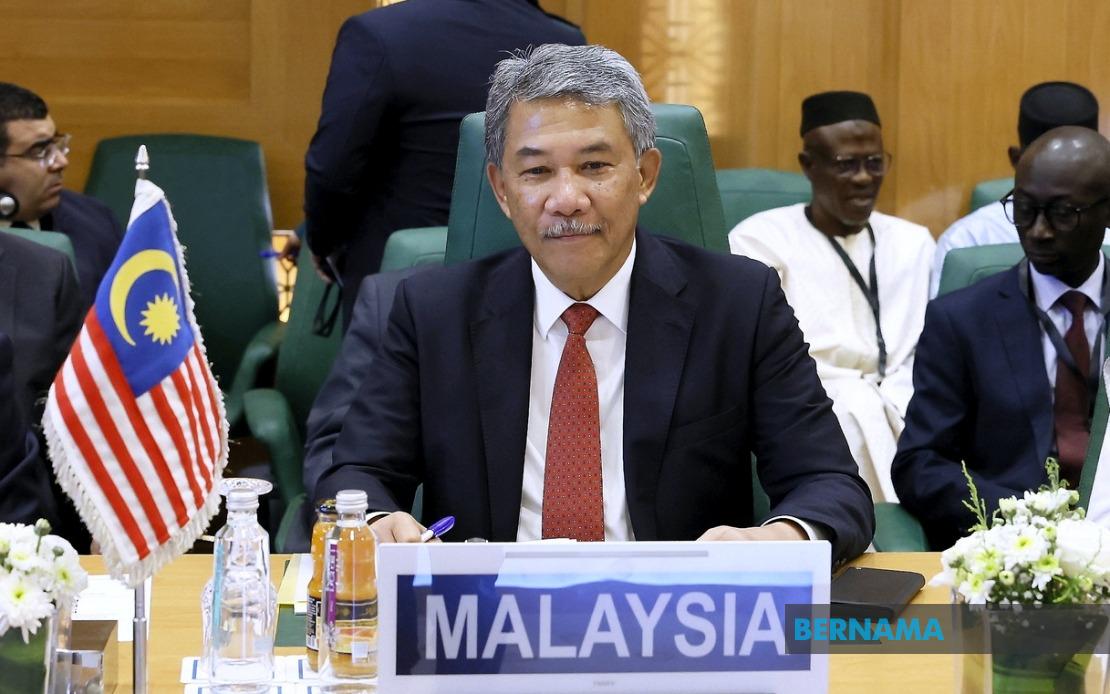
Malaysia has intensified its diplomatic pressure on fellow Islamic nations to take a unified stand against what it characterises as Israel's illegal settlement expansion scheme in the occupied Palestinian territories. Speaking at an Extraordinary Meeting of the OIC Council of Foreign Ministers in Jeddah on August 27, Foreign Minister Datuk Seri Mohamad Hasan delivered a forceful condemnation of Israel's settlement activities, specifically targeting a US$2.3 billion development initiative that Kuala Lumpur says threatens the prospects for Palestinian statehood.
The Malaysian government's position reflects a deepening concern about the trajectory of Israeli territorial consolidation, particularly in the West Bank and East Jerusalem. Mohamad emphasised that OIC member states possess a collective responsibility to enforce the July 19, 2024 Advisory Opinion issued by the International Court of Justice, which declared aspects of Israel's occupation incompatible with international law. By invoking this ICJ determination, Malaysia seeks to anchor its diplomatic campaign in established legal frameworks rather than relying solely on political rhetoric, a strategic choice that carries weight within international forums.
Central to Malaysia's argument is the contention that Israel's settlement expansion, including the controversial E1 development plan, systematically dismantles the geographical coherence necessary for a functional Palestinian state. The E1 corridor, which would connect settlements east of Jerusalem to the Dead Sea, represents a critical flashpoint because its development would effectively bisect Palestinian territories and undermine the possibility of a contiguous Palestinian entity. Malaysia's highlighting of this specific scheme suggests a sophisticated understanding of how territorial fragmentation operates as a de facto mechanism for preventing Palestinian self-governance, regardless of formal political agreements.
The Malaysian Foreign Minister also addressed the escalating threats to Islamic holy sites in Jerusalem, condemning what he described as provocative incursions by Israeli ministers, settlers and far-right figures into the Al-Aqsa Mosque compound on July 23. This dimension of Malaysia's critique extends beyond settlement issues into questions of religious freedoms and the preservation of Islamic heritage. By bringing attention to these incidents, Mohamad positioned the Palestinian question not merely as a territorial dispute but as a matter touching on religious sanctity and the rights of Muslims to access and protect sites sacred to Islam.
On the humanitarian catastrophe in Gaza, Malaysia expressed dismay at what it characterised as the international community's failure to compel Israel to cease military operations. Mohamad's reference to over 70,000 deaths in Gaza underscores how Malaysian officials frame the conflict as a profound moral crisis, one that tests whether the established international order possesses any meaningful capacity to protect civilian populations. The emphasis on nearly three years of international calls for ceasefire, unheeded by Israel according to this narrative, suggests Malaysian frustration with the apparent toothlessness of global diplomatic mechanisms.
Malaysia's call for greater OIC support in protecting and rebuilding Palestinian institutions points toward a longer-term strategic vision beyond immediate conflict resolution. By advocating for institutional strengthening, Mohamad implicitly acknowledges that Palestinian statehood requires not only territorial integrity but also functional governance capacity. This reflects a recognition that sustainable peace demands parallel attention to state-building, a perspective that distinguishes Malaysia's approach from purely condemnatory rhetoric common in some quarters.
The Malaysian position on Jerusalem's status deserves particular attention given the city's centrality to multiple religious traditions. Mohamad's call for protection of Al-Quds Ash-Sharif, coupled with explicit support for the historical Hashemite Custodianship over Islamic and Christian holy sites, reflects both religious conviction and awareness of Jordan's unique role as custodian of these sacred spaces. This acknowledgement respects established diplomatic frameworks while asserting Islamic interests in the city's governance and religious character.
Malaysia's invocation of the June 4, 1967 borders as the foundation for Palestinian statehood carries significant implications for regional understanding of legitimate territorial claims. These boundaries, established before Israel's occupation of the West Bank and Gaza, represent the internationally recognised baseline for Palestinian rights. By consistently referencing this date, Malaysia anchors its position in established international consensus rather than appearing to pursue novel territorial arrangements that might lack broader legitimacy.
The criticism of United Nations institutions' treatment by Israel, particularly the seizure of UNRWA's Kalandia Training Centre and legislation imposing capital punishment for Palestinians, elevates Malaysia's concerns beyond immediate military operations to encompass attempts to dismantle institutional protections for Palestinian refugees. This suggests Malaysian officials view current Israeli actions as systematic efforts to eliminate the infrastructure supporting Palestinian displacement communities, with implications for regional stability and refugee management across the Middle East.
For Southeast Asian observers, Malaysia's forthright stance carries importance as a reflection of how ASEAN's most prominent Muslim-majority nation approaches the Israeli-Palestinian conflict. While ASEAN as a bloc maintains studied distance from Middle Eastern disputes, Malaysian diplomacy demonstrates how individual member states assert their values and religious identity within broader international forums. The OIC platform provides Malaysia with particular leverage and responsibility given the organisation's 57 member states and collective weight in global affairs.
The emphasis on sustaining a rules-based international order, despite frustration with its apparent inefficacy in the Palestinian case, reveals a paradox in Malaysia's diplomacy. Even while criticising the international system's failure to constrain Israel, Malaysian officials insist that strengthening, rather than abandoning, international legal frameworks offers the only viable path toward Palestinian justice. This position reflects both idealism about what global institutions could achieve and pragmatism about the limited alternatives available to weaker states.
Malaysia's diplomatic efforts at the OIC Council represent an attempt to mobilise collective Islamic opinion toward concrete action beyond statements of solidarity. The challenge facing Kuala Lumpur involves converting rhetorical consensus into coordinated policy measures that might meaningfully impact Israeli decision-making. Given the diversity of OIC member interests and relationships with Israel's international partners, achieving such coordination remains persistently difficult, yet Malaysia's persistence in advocating for unified stances reflects determination to maintain Palestinian issues at the forefront of Islamic world concerns.

